Schedule Music Release Timeline: 10 Milestones to Hit
Contact partnership@freebeat.ai for guest post/link insertion opportunities.
You’ve finished the song. Your group chat is hyped. Then the quiet panic hits: “When do we upload? When do we pitch playlists? When do we post what?” A solid schedule music release timeline turns that swirl into a dependency chain you can actually execute—so you don’t miss pitching windows, scramble for assets, or announce a date you can’t keep.
In this how-to guide, I’ll show you a practical schedule music release timeline built around 10 milestones (with suggested lead times), plus a simple way to adapt it for singles vs. EPs/albums and for video-first launches using Freebeat AI.
Why a schedule music release timeline matters (beyond “being organized”)
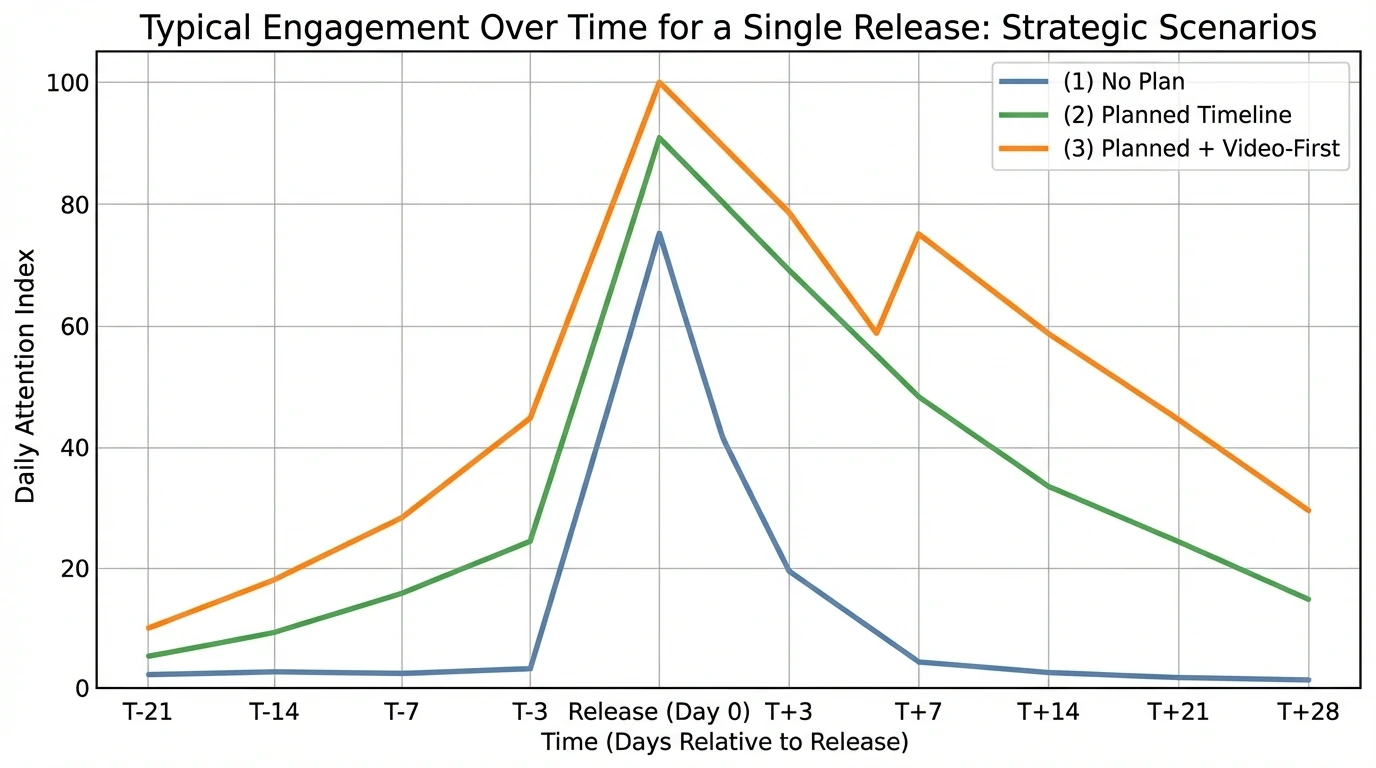
A schedule music release timeline is less about aesthetics and more about leverage. Platforms and media move on calendars, not vibes, and missing one window can reduce your reach on day one.
The most common failure I see (and have personally made early on) is announcing a release date before the “boring” steps are locked—master, artwork, metadata, distribution delivery. Once you work backward from a date and assign owners and due dates, your campaign becomes repeatable instead of stressful.
Helpful industry context: most indie rollouts plan at least 4–8 weeks ahead, with longer lead time for EPs/albums, and playlist pitching works best when delivered early enough for editors to review in advance (Spotify itself recommends pitching at least two weeks before release) Spotify for Artists’ release guide.
The baseline timing (pick your “release type”)
Before you build your schedule music release timeline, choose the scope. This sets how much time you need for assets, approvals, and pitching.
- Single: 4–6 weeks lead time (minimum), especially if you want editorial pitching windows
- EP: 8–10 weeks (more assets, more messaging, more coordination)
- Album: 10–12 weeks (often includes 2–3 singles before the album)
This matches common planning guidance from tools and industry checklists like Groover’s music release planner and distributor timing realities (uploads can take 7–14+ days, and you want buffer) as outlined in distribution overviews such as Beats to Rap On’s distribution guide.
10 milestones to hit (a how-to schedule music release timeline)
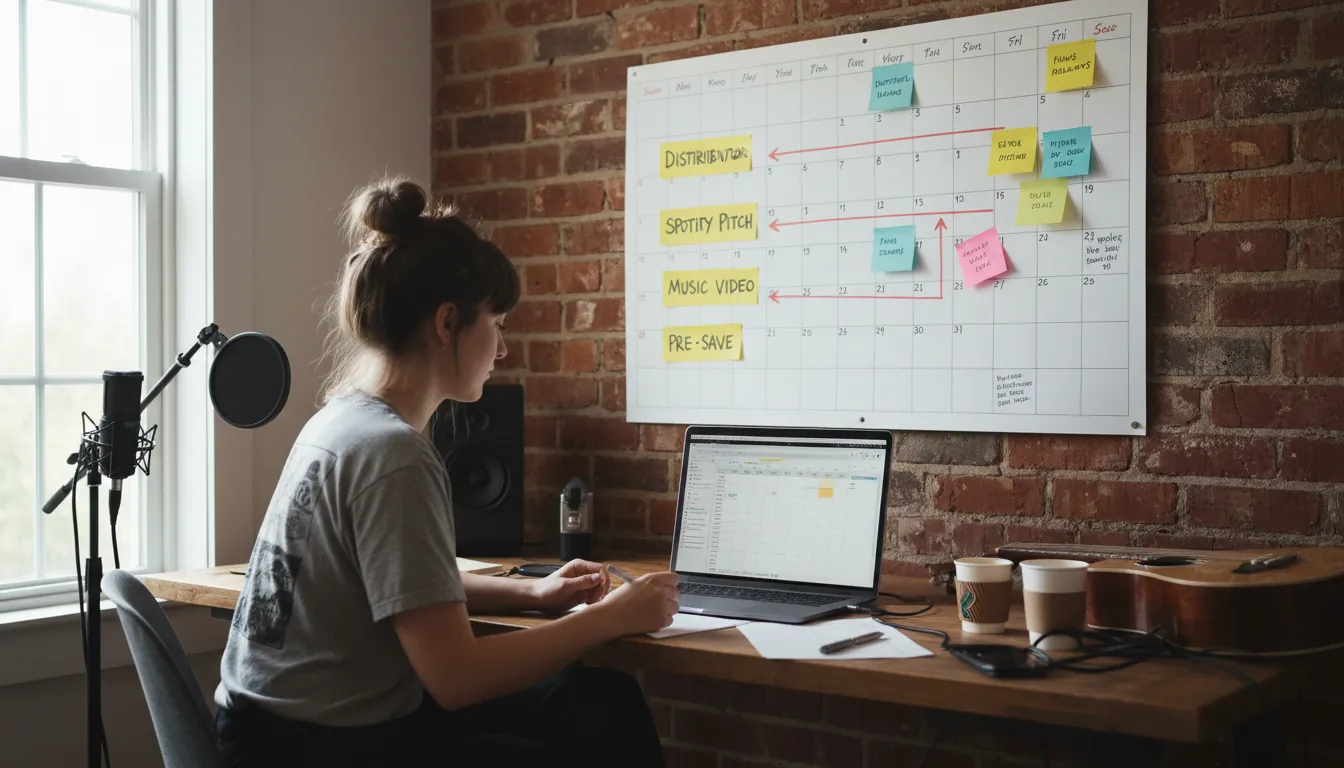
Use these milestones as your backbone. The dates are written “T-minus” (weeks before release day).
1) Set the release date (T-8 to T-6)
Pick a date you can support with consistent posting and engagement, not just a day that “sounds cool.” Fridays are common because many platforms align editorial updates and listening habits around end-of-week releases.
How to do it:
- Check for conflicts: holidays, major genre releases, personal availability
- Decide your “moment”: midnight local vs. global strategy
- Confirm you can meet distribution and pitching lead times
2) Lock the master + final files (T-8 to T-6)
Your timeline breaks if audio isn’t final. Treat the master approval as the first domino.
Deliverables:
- Final WAV master (plus clean version if needed)
- Instrumental (optional, but useful for content and sync)
- Final lyrics (for lyric videos, captions, and DSP lyric tools)
My rule from experience: if you’re still “maybe changing the hook,” don’t schedule anything public yet. Lock first, market second.
3) Finalize artwork + visual identity (T-8 to T-6)
Artwork isn’t just cover art; it’s your campaign’s visual system. It should match the song’s mood and be reusable across vertical video, thumbnails, and profile headers.
Checklist:
- Cover art in platform specs (often 3000×3000 RGB)
- Typeface/colors that can carry into posts and video overlays
- A consistent character/artist look (photos or avatars)
4) Build your release package (T-7 to T-5)
This is what you’ll send to curators, blogs, collaborators, and your own audience. Think “small EPK.”
Include:
- 50–100 word bio + 1–2 longer versions
- 2–5 press photos (or consistent avatar renders)
- A one-paragraph story angle: what the song is about and why now
- Private stream/download link (for press/curators)
5) Upload to distributor (T-6 to T-4)
This is a key milestone in any schedule music release timeline because you can’t pitch to many DSP editorial teams until the release is delivered and appears in the system.
How to do it well:
- Upload early to catch metadata/ISRC/artist-page issues
- Double-check featured artist formatting (common cause of delays)
- Confirm release date/time, territories, and explicit flags
6) Pitch editorial + line up playlist/outreach (T-4 to T-2)
Editorial pitching is not a last-minute task. Spotify recommends pitching at least two weeks before release for best consideration and to ensure eligibility for key personalized surfaces like Release Radar Spotify for Artists.
Your outreach stack:
- Editorial pitch (Spotify for Artists; also Apple/Amazon where relevant)
- Independent curators (genre and micro-niche lists)
- Blogs/local press/college radio (if it fits your scene)
- Creator outreach (short-form creators who match your sound)
7) Pre-save/pre-add + smart link goes live (T-3 to T-2)
Pre-saves won’t “make you famous,” but they do concentrate early engagement and simplify your call-to-action everywhere.
How to execute:
- Create one smart link (pre-save → out now switch on release day)
- Pin it on every platform
- Use DM and email as your highest-conversion channels
8) Batch content + finalize the hero video (T-3 to T-1)
This milestone is where most campaigns win or lose. The algorithm rewards consistency, and you can’t post consistently if you’re filming daily in a panic.
Minimum batch (per single):
- 8–12 short clips (15–30 seconds)
- 1 lyric-style asset (even simple)
- 1 “hero” video moment (music video, performance, or story-driven visual)
If video is a core growth lever for you, this is where Freebeat AI can compress weeks of editing into a tighter window by generating audio-reactive cuts that follow your song’s structure (BPM, drops, sections) and keep pacing aligned with the track.
Pre-Release Promotion (Without A Fanbase)
9) Launch week execution (Day 0 to Day +7)
Release day is a schedule, not a post. Your goal is to create an “event feel” while driving saves, follows, and repeat listens.
Day 0 essentials:
- Update smart link to “out now”
- Post across platforms (native formats first)
- Engage for 60–90 minutes after posting (comments, DMs, shares)
- Send email/text blast if you have it
Day +1 to +7:
- Post 1–2 pieces of content per day (from your batch)
- Share UGC and stitches/duets
- Follow up with curators and press that opened your email
10) Post-release sustain + debrief (Week +2 to +4)
Most artists stop too early. In reality, every post you make now reaches people who missed the first wave, and momentum often builds after release day.
How to close the loop:
- Review Spotify for Artists / YouTube Analytics / TikTok metrics
- Identify your best-performing hook (first 1–2 seconds matters)
- Save what worked into a template for the next release cycle
One simple timeline you can copy (single release example)
Here’s a clean view of a schedule music release timeline you can paste into Notion/Trello.
| Timing | Milestone | Output you should have |
|---|---|---|
| T-6 weeks | Lock master + artwork | Final WAV, cover art, lyrics |
| T-5 weeks | Release package ready | Bio, photos/avatars, story angle, private link |
| T-4 weeks | Distributor upload | Release delivered; metadata verified |
| T-3 weeks | Editorial/curator pitching | Spotify pitch submitted; outreach list active |
| T-2 weeks | Pre-save live + content batch | Smart link live; 8–12 short clips queued |
| T-1 week | Ramp / countdown | Cover reveal, snippets, collabs scheduled |
| Day 0 | Release day | “Out now” everywhere; engagement sprint |