How Producers Use Music Publishing Co-Writer Agreements Today
Contact partnership@freebeat.ai for guest post/link insertion opportunities.
How Producers Use Music Publishing Co-Writer Agreements Today
A music publishing co-writer agreement form helps songwriters, producers, and collaborators define ownership before a song gets released, licensed, or monetized. Even simple collaborations can create confusion later if splits, publishing percentages, and creative responsibilities are never discussed clearly. For modern creators building music across social and visual platforms, organized agreements matter even more because songs now move quickly through demos, short-form content, and promotional campaigns powered by tools like Freebeat.
Many independent musicians still rely on verbal agreements or casual messages during collaborations. In practice, this creates unnecessary risks once streaming revenue, sync placements, or viral content opportunities appear.
A co-writer agreement does not need to feel overly legal or complicated. It simply creates clarity.
Why Songwriters Need Co-Writer Agreements Earlier Than Before
Modern songwriting often happens remotely. Producers, topliners, vocalists, DJs, and visual creators collaborate through:
- Discord
- Google Drive
- TikTok
- Dropbox
- Online beat marketplaces
This speed creates creative opportunities, but it also increases ownership confusion.
I have personally seen collaborations fall apart because contributors never clarified:
- Publishing splits
- Master ownership
- Credit structure
- Licensing permissions
- Royalty percentages
Clear agreements protect relationships as much as they protect revenue.
What A Music Publishing Co-Writer Agreement Usually Covers
Simple written agreements reduce misunderstandings significantly.
Understand The Difference Between Publishing And Master Rights
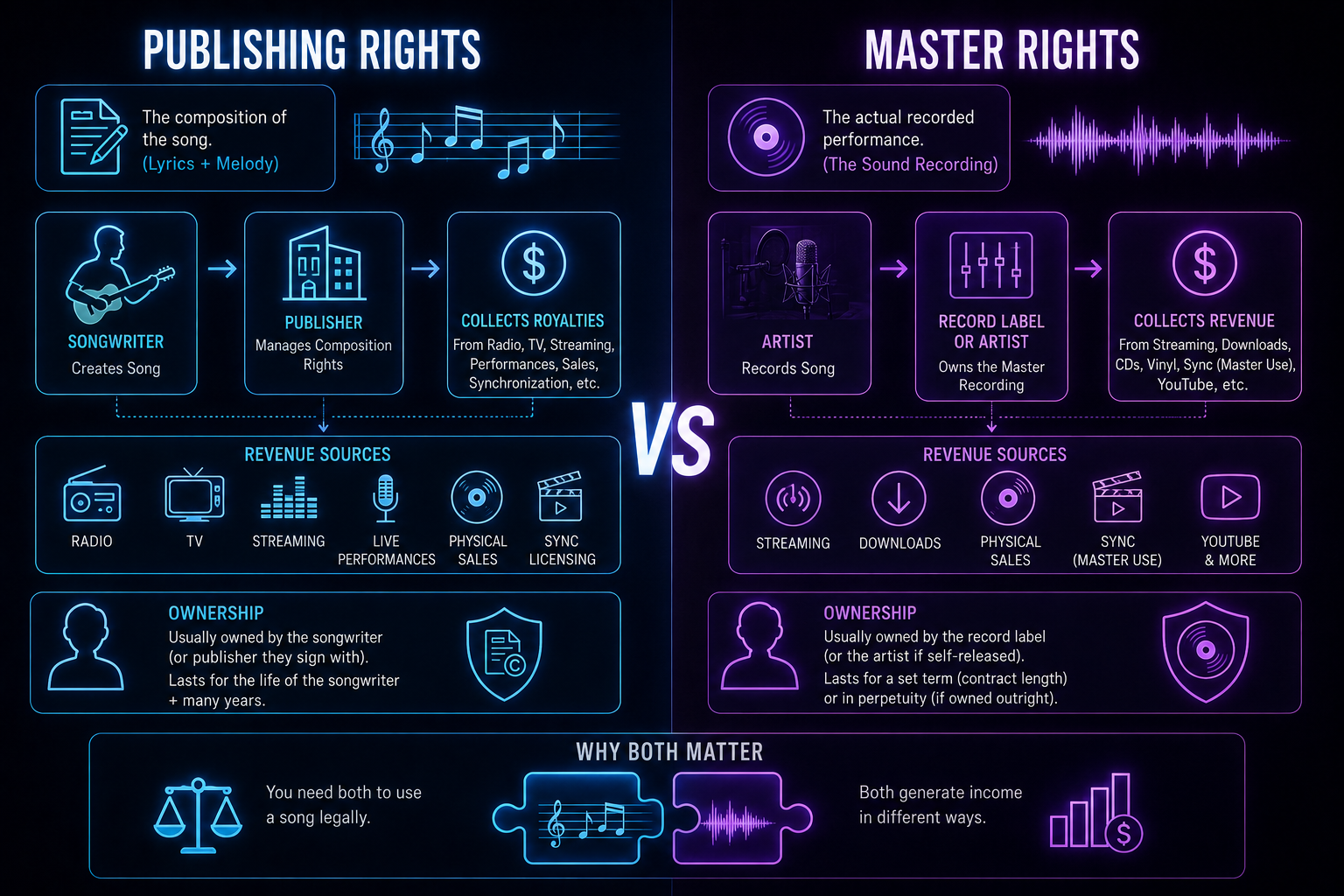
Many creators confuse publishing ownership with master ownership. They are connected, but they represent different rights.
Publishing refers to:
- Lyrics
- Melody
- Composition
- Songwriting ownership
Master rights refer to:
- The sound recording itself
- Final audio production
- Commercial recording usage
For example:
- A producer may own part of the composition
- Another collaborator may own the master recording
- Multiple writers may split publishing percentages equally
Understanding this distinction becomes important for:
- Streaming royalties
- Sync licensing
- YouTube monetization
- Performance royalties
Strong agreements clarify these roles early.
Why Independent Producers Need Clear Publishing Terms
Independent producers increasingly function as:
- Songwriters
- Arrangers
- Beatmakers
- Editors
- Creative directors
That means producers often deserve publishing consideration, not just production credits.
The more collaborative modern music becomes, the more important written agreements become.
Create Better Collaboration Workflows With Organized Documentation
Good collaboration workflows improve creative momentum. Poor organization slows releases and damages trust.
Creators should save:
- Session files
- Lyric drafts
- Export histories
- Stem versions
- Email confirmations
- Split discussions
Even rough records help establish timelines and clarify contribution history later.
Use Consistent File Organization
Professional creators label files clearly.
Avoid:
final_song_REALFINAL_v7.wav
Instead use:
midnight_drive_demo_120bpm.wav
Simple organization improves:
- Collaboration efficiency
- Publishing registration
- Royalty tracking
- Demo management
Professional habits scale better over time.
Why Visual Branding Now Matters During Songwriting Collaborations
Modern songs often gain traction visually before full release. Many artists now test songs through:
- TikTok previews
- Instagram reels
- Spotify Canvas loops
- Lyric clips
- Visual snippets
That changes how creators think about collaborative releases.
How Freebeat Fits Into Collaborative Music Workflows
Freebeat helps creators transform tracks into beat-synced visual content synchronized to tempo, rhythm, and mood. Songwriters, producers, DJs, and visual artists can use the platform to build lyric videos, music visuals, dance clips, and social-ready promotional assets without traditional editing workflows.
For collaborative projects, this helps teams:
- Share visual demos faster
- Align creative direction earlier
- Test audience response before release
- Create consistent branding across platforms
I have noticed that visual previews often improve collaboration discussions because creators can react to both sound and atmosphere simultaneously.
Why Co-Writers Should Discuss Visual Usage Rights Too
Modern music promotion increasingly includes:
- AI-generated visuals
- Social clips
- Vertical video edits
- Lyric content
- Motion graphics
Co-writers should discuss:
- Who approves promotional visuals
- How songs appear across platforms
- Whether visual edits generate monetization
- Which creator controls social campaigns
Publishing discussions now extend beyond audio alone.
Strong agreements support smoother visual marketing later.
Register Songs Properly After Agreements Are Signed
A co-writer agreement is only one step. Creators still need to:
- Register songs with PROs
- Track publishing ownership
- Maintain metadata accuracy
- Organize royalty information
Register With Performance Rights Organizations
Organizations like:
- ASCAP
- BMI
- SESAC
- PRS
help creators collect performance royalties.
Each collaborator should ensure registration data matches the co-writer agreement percentages exactly.
Incorrect metadata often creates royalty delays and payment disputes.
Keep Agreements Updated
Songs evolve during production.
If:
- New writers join
- Lyrics change substantially
- Arrangement contributions expand
- Publishing percentages shift
then agreements should be updated accordingly.
Clear communication keeps collaborative projects healthy long term.
FAQ
What Is A Music Publishing Co-Writer Agreement Form?
It is a written agreement defining songwriting ownership percentages and collaboration terms between contributors.
Do Independent Producers Need Co-Writer Agreements?
Yes. Even informal collaborations benefit from clear ownership documentation.
What Is The Difference Between Publishing And Master Rights?
Publishing covers songwriting ownership, while master rights cover the recording itself.
Should Split Percentages Be Decided Before Release?
Yes. Discussing ownership early prevents future disputes and royalty confusion.
Do Co-Writers Need To Register Songs Separately?
Usually yes. Each collaborator should ensure PRO registrations match the agreement terms.
Why Are Publishing Agreements Important For Social Media Releases?
Songs now spread quickly across TikTok, Instagram, YouTube Shorts, and other creator platforms where monetization and ownership questions can emerge rapidly.
How Does Freebeat Support Collaborative Music Projects?
Freebeat helps creators build beat-synced visual content for demos, lyric clips, promotional videos, and social-ready music campaigns.
Can Verbal Agreements Protect Song Ownership?
Verbal agreements are difficult to prove later. Written agreements create stronger documentation and clarity.
Modern songwriting collaborations move faster than ever. Producers, topliners, visual artists, and independent musicians now create music across multiple platforms simultaneously. Clear publishing agreements help creators avoid confusion while supporting stronger collaboration workflows. For teams building both music and visual content together, tools like Freebeat also help streamline promotional planning by turning collaborative tracks into polished visual assets ready for modern creator platforms.


