Spotify Artist Earnings Explained: Where the Money Goes
Contact partnership@freebeat.ai for guest post/link insertion opportunities.
Artist earnings on Spotify can feel like a magic trick: your song hits playlists, streams climb, and yet the payout rarely matches the hype. I’ve helped artists audit royalty statements after “big months,” and the same questions come up every time: Who got paid first? Why is the rate different per country? Why did my distributor dashboard show less than my estimates? This guide explains artist earnings on Spotify in plain terms—how money flows, what “per stream” really means, and how to keep more of what you earn.
How Spotify artist earnings actually work (the short, accurate version)
Artist earnings on Spotify are not a fixed “pay per stream” wage. Spotify collects money from Premium subscriptions and ads, keeps a platform share (often described as ~30%), and pays the rest to rightsholders based on streamshare—your share of total streams in a market during a period. Then your label/distributor and your contracts decide what you personally receive.
Key idea: Spotify usually pays your label or distributor, not you directly, and publishing is paid on a separate track to publishers/collecting societies/mechanical agencies. Spotify summarizes this in its own help doc: Understanding Spotify royalties.
“How much does 1 million streams pay on Spotify?” (and why it varies)
Most estimates for artist earnings on Spotify land around $0.003 to $0.005 per stream as a common 2026 range, with ~$0.004 often used for back-of-napkin math. That implies:
- 1,000,000 streams × $0.004 ≈ $4,000 paid out to the recording side (before your downstream splits).
- 500,000 streams × $0.004 ≈ $2,000 (same assumption).
But “per stream” moves because it depends on:
- Listener location (US/UK/Germany often higher than global blends)
- Premium vs ad-supported plays
- Your share of total listening in a territory that month
A lot of confusion comes from mixing platform payout with artist take-home. Those are not the same thing.
Where the money goes: platform share → rights holders → your split
Think of artist earnings on Spotify as a waterfall with multiple gates:
- Spotify revenue pool (subscriptions + ads)
- Spotify platform share (often summarized as ~30%)
- Recording royalties (master/rightsholder side) paid to label/distributor
- Your contract splits (label deal, distributor fee, producer points, featured artist splits)
- Publishing royalties paid separately to songwriters/publishers via collection systems
Spotify also publishes legal language around fees/taxes for certain payout tools here: Spotify Payouts terms.
Master (recording) vs publishing: the #1 earnings mistake
Artist earnings on Spotify include two royalty types:
- Recording royalties (master side): paid to the owner of the sound recording—often a label, sometimes you (if you’re independent).
- Publishing royalties (composition side): paid to the songwriter(s) and composition owners via publishers/PROs/mechanical agencies.
Many “Spotify paid me $X” conversations only reflect the master side showing in a distributor dashboard. Publishing can be meaningful—especially if you write your own songs.
For a clear breakdown of these two rights, Spotify explains the categories here: Understanding Spotify royalties. For additional industry context, see MusoSoup’s overview: Spotify royalties.
Example breakdown: 1M streams → $4,000 → what the artist might actually get
Here’s a realistic, contract-based example that mirrors how artist earnings on Spotify get reduced by intermediaries. One label-focused scenario breaks down a $4,000 recording payout from 1M streams like this:
This style of “who got what” math is why two artists with the same streams can have very different artist earnings on Spotify.
The pro-rata model (why your loyal fans don’t equal direct dollars)
Spotify primarily uses a pro-rata approach: revenue in a period becomes a pool, and payouts depend on what share of total streams your music captured. That means your income is tied to the entire platform’s listening behavior, not just your own listeners.
A widely discussed alternative is user-centric, where each subscriber’s fee is allocated only to the artists they played. Studies have found meaningful distribution differences between models—especially for niche artists with loyal fans. For a deeper explanation and examples, see this industry overview: Pro Rata and User Centric Distribution Models: A Comparative Study (PDF).
Practical takeaway: In pro-rata, you don’t just need streams—you need market share in the places where revenue is high.
The 1,000-stream threshold: why some tracks earn “nothing”
One underreported factor in artist earnings on Spotify is the minimum threshold policy that prevents tiny micropayments for low-activity tracks. Reporting widely cites a 1,000-stream minimum within a rolling 12-month window for a track to generate recorded royalties.
What that means operationally:
- Tracks under the threshold can show zero earnings for the recording side.
- Catalog strategy matters: a lot of small releases with tiny totals can be less efficient than fewer releases with focused promotion.
Why your “per stream rate” changes (even for the same song)
When artists compare artist earnings on Spotify, the variation is often explained by these levers:
- Country mix: US/UK/EU premium streams often pay more than low-ARPU markets.
- Premium vs Free: Premium listening generally contributes more per stream than ad-supported.
- Month-to-month pool changes: subscriptions, ad revenue, and total streams fluctuate.
- Catalog behavior: saves, repeats, and playlisting change stream volume, which changes your share.
- Contract stack: distributor %, label split, producer points, featured artist cut, manager commission.
If you want to sanity-check your own expectations, start with a range (e.g., $0.003–$0.005), then model your net after your actual splits.
“How much money does an artist make per song on Spotify?”
For artist earnings on Spotify at the song level, a simple estimate is:
- 10,000 streams × ($0.003–$0.005) ≈ $30–$50 to the recording side (before splits)
Then subtract:
- Distributor fee (if any)
- Label share (if signed)
- Producer points and featured artist splits
- Manager commission (if applicable)
- Plus add publishing income separately (if you’re a writer)
This is why the best planning question isn’t “What’s Spotify’s rate?”—it’s “What’s my net per 100,000 streams given my contracts and audience mix?”
Monthly listeners vs earnings: the metric that fools people
Monthly listeners can be a great awareness signal, but it’s not a payment metric. Artist earnings on Spotify are driven by streams and where/how those streams occur (Premium vs free, territory mix), plus your splits.
The “100 million monthly listeners” milestone is rare and typically limited to global superstars. If you’re tracking business health, I’ve found these are more actionable than monthly listeners:
- Streams per listener (depth)
- Save rate and playlist adds
- Repeat listening over 28 days
- Top territory revenue mix (Premium-heavy markets)
How Freebeat AI helps you grow streams (and protect your time)
Streaming payouts are thin, so the best lever most independent artists have is scale with retention: more releases, more touchpoints, and better content that keeps listeners coming back. That’s where music-driven video becomes practical.
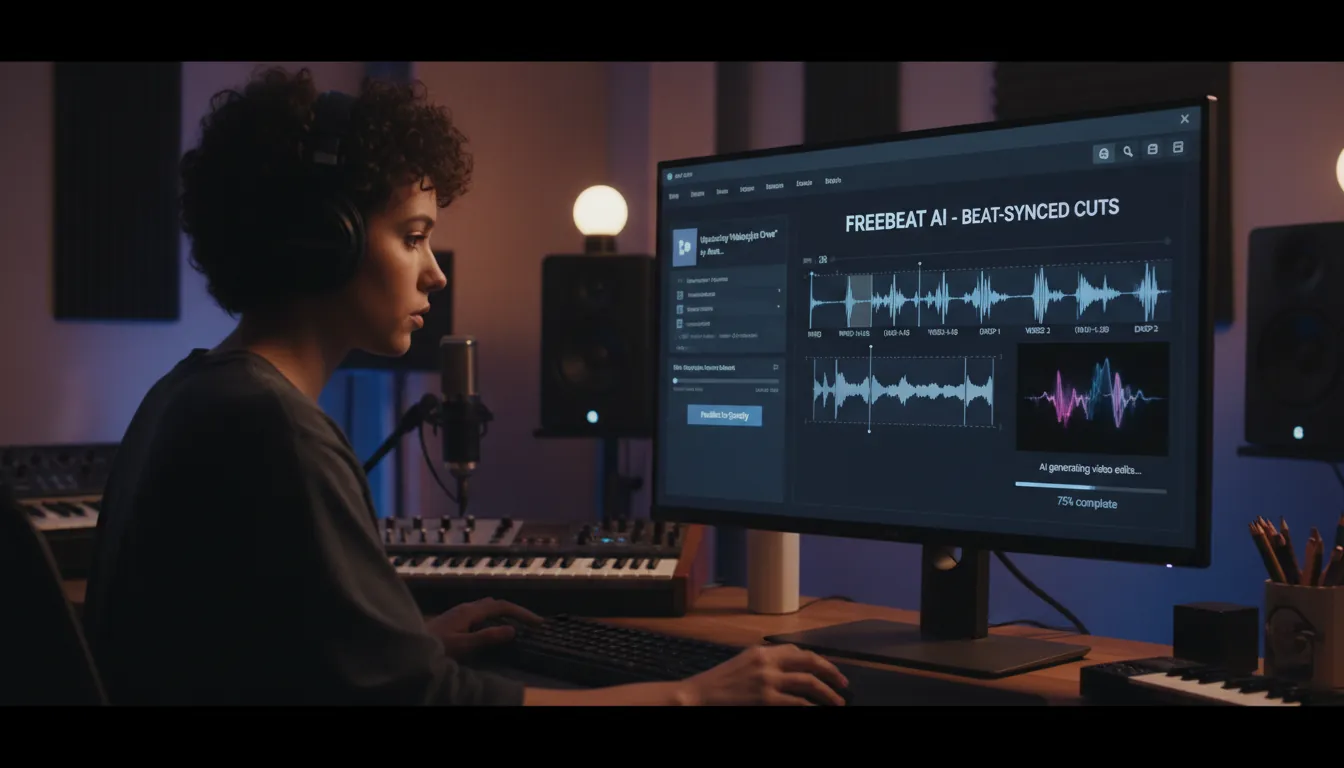
I’ve tested a lot of “music video generators,” and most are basically looping visuals with random cuts. Freebeat AI is different because it’s built for audio-reactive video generation—it reads BPM, bars, drops, and sections, and uses that structure to drive edits and energy shifts. For artist earnings on Spotify, that matters because short-form and video platforms can push discovery that translates into streams when you link properly.
Use cases that consistently help:
- Lyric videos with tight karaoke timing for saves and shares
- Performance-style visuals for hooks (15–30s) to drive playlist adds
- Storytelling cuts for full-track YouTube and socials to extend the song’s lifespan
Spotify and Apple Should Pay Artists with a User Centric Royalty System
Practical checklist: increase Spotify income without chasing “rate hacks”
Artist earnings on Spotify improve when you increase qualified streams and reduce leakiness in the chain.
- Own or control your masters when possible
- Even a “friendly” label split can cut your take sharply.
- Register publishing correctly
- Join a PRO, use a publishing admin if needed, and ensure splits are correct.
- Know your real net
- Model earnings after distributor fees, producer points, and any recoupment.
- Prioritize high-value audience funnels
- Geo-target content to Premium-heavy territories when it matches your genre.
- Turn songs into repeatable video assets
- One track should generate many clips, not one post.
For more background reading on payout mechanics and splits, these explainers are useful:
Conclusion: the real story behind artist earnings on Spotify
Artist earnings on Spotify aren’t “mysteriously low”—they’re distributed, sliced by rights ownership, and shaped by a pro-rata pool that rewards market share. Once you separate master vs publishing, map your splits, and focus on scalable discovery, the numbers become predictable—and therefore improvable. If you want, share your stream count, country mix, and whether you’re indie or signed, and I’ll suggest a simple net-earnings model and a content plan that fits your release cycle.
📌 master ai music creation how to generate beats and videos seamlessly
FAQ: Artist earnings on Spotify
1) How much does 1 million streams pay on Spotify?
A common estimate is around $3,000–$5,000 to the recording rightsholders, often approximated as ~$4,000 at $0.004/stream. Your personal payout depends on distributor, label, producer, and publishing splits.
2) How much is 500,000 streams on Spotify worth?
Using $0.004/stream as a rough average, 500,000 streams ≈ $2,000 to the recording side before downstream splits. Premium-heavy markets can raise the blend; free-tier-heavy mixes can lower it.
3) How much money does an artist make per song on Spotify?
It depends on streams and contracts. Roughly, 10,000 streams ≈ $30–$50 to the recording side at $0.003–$0.005/stream, then reduced by your distribution/label/producer agreements. Publishing pays separately if you’re a songwriter.
4) Why does Spotify pay different rates per stream?
Spotify doesn’t pay a fixed rate. Payouts vary by country, Premium vs free listening, and your streamshare of the revenue pool in a given period.
5) What’s the difference between recording and publishing royalties on Spotify?
Recording royalties pay the master owner (often via a distributor/label). Publishing royalties pay songwriters/composition owners via publishers/PROs/mechanical agencies.
6) Has anyone hit 100 million monthly listeners on Spotify?
Yes. Kendrick Lamar, Bad Bunny, and Coldplay are among the acts reported to have surpassed major monthly listener milestones, including the 100M mark, depending on the period measured.
7) Who is the #1 artist on Spotify monthly?
It changes frequently. The top spot depends on the current month’s listener counts; check Spotify charts or Spotify for Artists rankings for the latest leader.


