Optimize Music for Spotify Algorithm: 10-Minute Audit
Contact partnership@freebeat.ai for guest post/link insertion opportunities.
You upload a new track, hit “share,” and then… nothing. The frustrating part is that Spotify’s system is listening—just not the way humans do. To optimize music for Spotify algorithm, you’re really optimizing listener behavior signals (skips, saves, completion, repeats) plus clarity signals (metadata, targeting, context). This 10-minute audit is the fastest way I know to spot what’s blocking algorithmic playlists like Release Radar, Discover Weekly, Radio, and Autoplay.
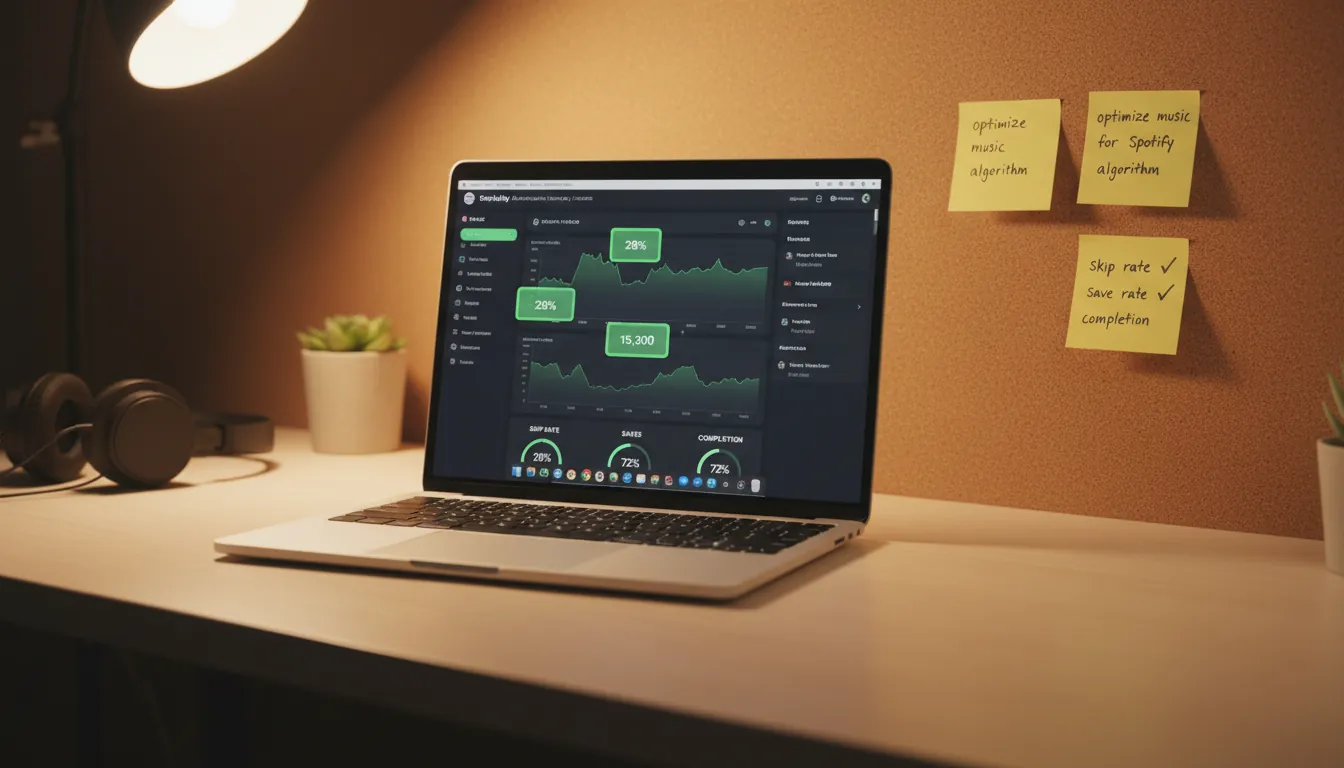
What Spotify’s Algorithm Actually “Wants” (In Plain English)
Spotify recommendations are driven by three big inputs that work together:
- Listener behavior: skips (especially early), full plays, repeats, saves, follows, playlist adds, shares.
- Audio understanding: Spotify can analyze structure and sections (verse/chorus/bridge), plus audio traits like energy, danceability, tempo, and loudness.
- Context + language: playlists, playlist titles/descriptions, and how real people talk about your track online.
In practice, I’ve seen small artists beat bigger ones because they brought the right listeners first—people who saved the track and finished it—rather than chasing random plays. This aligns with how algorithmic systems prioritize “safe to recommend” songs with strong engagement patterns, not just raw stream counts.
Authoritative deep-dives worth bookmarking:
- Inside Spotify's recommendation system (Music Tomorrow)
- Spotify metrics linked to Discover Weekly triggers (AndR)
- Discover Weekly & Release Radar basics (Ditto Music)
The 10-Minute Audit: A Checklist You Can Run Today
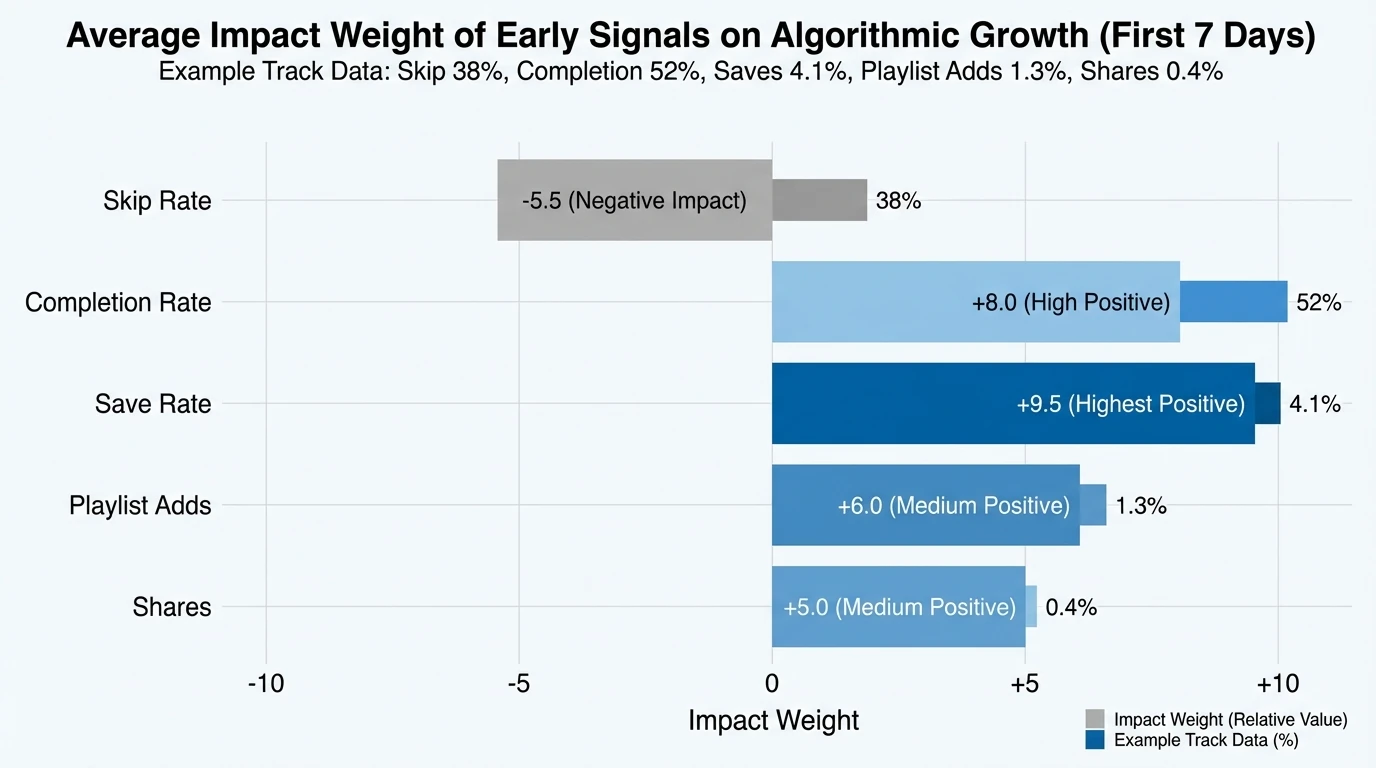
1) Open Spotify for Artists and Pull These 5 Numbers (2 minutes)
You’re looking for signal quality—not vanity plays.
- First-30-second skip rate (your “hook tax”)
- Completion rate (can listeners finish it?)
- Save rate (did it earn a spot in the library?)
- Playlist adds (personal + user playlists both matter)
- Source of streams (are sessions starting from Search/Profile/Library vs passive playlist drift?)
If your track gets a lot of impressions but weak saves/completions, Spotify learns “people didn’t love this when shown,” and distribution cools off.
2) Run the “30-Second Rule” Test (2 minutes)
Q: What is the 30 second rule on Spotify?
Spotify generally counts a stream after ~30 seconds of listening. But the bigger issue is what happens before 30 seconds: early skips are one of the clearest negative signals you can send.
To optimize music for Spotify algorithm, do this quick test:
- Play your track as a cold listener would (no context).
- Ask: Would I stay past 10 seconds? Past 30?
- If the intro is long, consider:
- faster vocal/lead entry
- clearer groove sooner
- trimming ambient pre-roll (or moving it to an intro version on YouTube)
I’ve released songs where a 6–10 second trim improved completion noticeably—same chorus, same mix, just less “waiting.”
3) Check Your Metadata Hygiene (90 seconds)
Spotify can only match you to the right listeners if you’re labeled clearly.
Audit these:
- Track title formatting (clean, consistent)
- Primary genre + sub-genre accuracy
- Mood/scene intent (e.g., gym, focus, late-night drive)
- Lyrics synced (especially for vocal music)
- Canvas + artist visuals consistent with your niche
Metadata clarity also helps your editorial pitch read like a fit instead of a guess. Editorial is competitive, but good tagging and timing are controllable.
4) Identify Your “Algorithmic Targets” (90 seconds)
Before you promote, decide where you want Spotify to place you:
- Similar artists (realistic neighbors, not dream comps)
- Listener contexts (study, party, metal workout, chill beats)
- Regions/scenes where your sound already performs
This matters because Spotify uses collaborative patterns: if your early listeners overlap with the right “taste cluster,” your track connects to more of that cluster.
5) Validate Your Release-Week Plan (2 minutes)
Most algorithm momentum is built early, and then compounded by your catalog.
Your minimum release-week plan to optimize music for Spotify algorithm:
- Mobilize real fans in the first 72 hours
- Ask for saves and playlist adds (not just “go stream”)
- Drive off-platform traffic (short-form video, email list, community posts) directly to Spotify
- Avoid anything that smells like fake streams or botted playlists
If you do one thing: push quality listeners, not big numbers.
How to BLOW UP on Release Radar (Spotify Algorithm Explained)
Metrics That Matter Most (And Practical Targets)
These targets vary by genre, but they’re a strong reality check for what “healthy” looks like.
Note: Some industry guides cite early thresholds for algorithmic eligibility (e.g., a few thousand streams and a few hundred saves in the first weeks). Treat those as context, not guarantees—your rates (saves/completion) are what scale best.
Editorial Playlists vs Algorithmic Playlists (How to Use Both)
Editorial placements can create a burst, but algorithmic playlists can become your compounding engine.
Use this workflow:
- Pitch editorial early (7–14 days minimum; many teams aim 3–4 weeks).
- Make the pitch “obvious”: accurate genre/moods, real comparable artists, short story context.
- Then optimize the listener response: saves, completion, low skips.
If editors see strong engagement, runs can extend—and the algorithm learns faster because the audience data is cleaner.
Helpful editorial pitching guidance:
The “Catalog Flywheel”: Why Your Whole Discography Matters
Spotify doesn’t evaluate each track in isolation. Strong performance across multiple releases makes the system more confident recommending you.
To build catalog momentum:
- Release consistently (many artists find singles every 4–6 weeks sustainable)
- Keep production quality consistent across releases
- Stay genre-coherent enough to be identifiable, but vary enough to show range
- Update older tracks’ presentation (lyrics, Canvas, profile polish)
This is one reason a “mid” single can still be valuable: it trains your audience and tightens your taste cluster—if you bring the right listeners.
Where Freebeat AI Fits: Turn “Streams” into Algorithm-Friendly Sessions
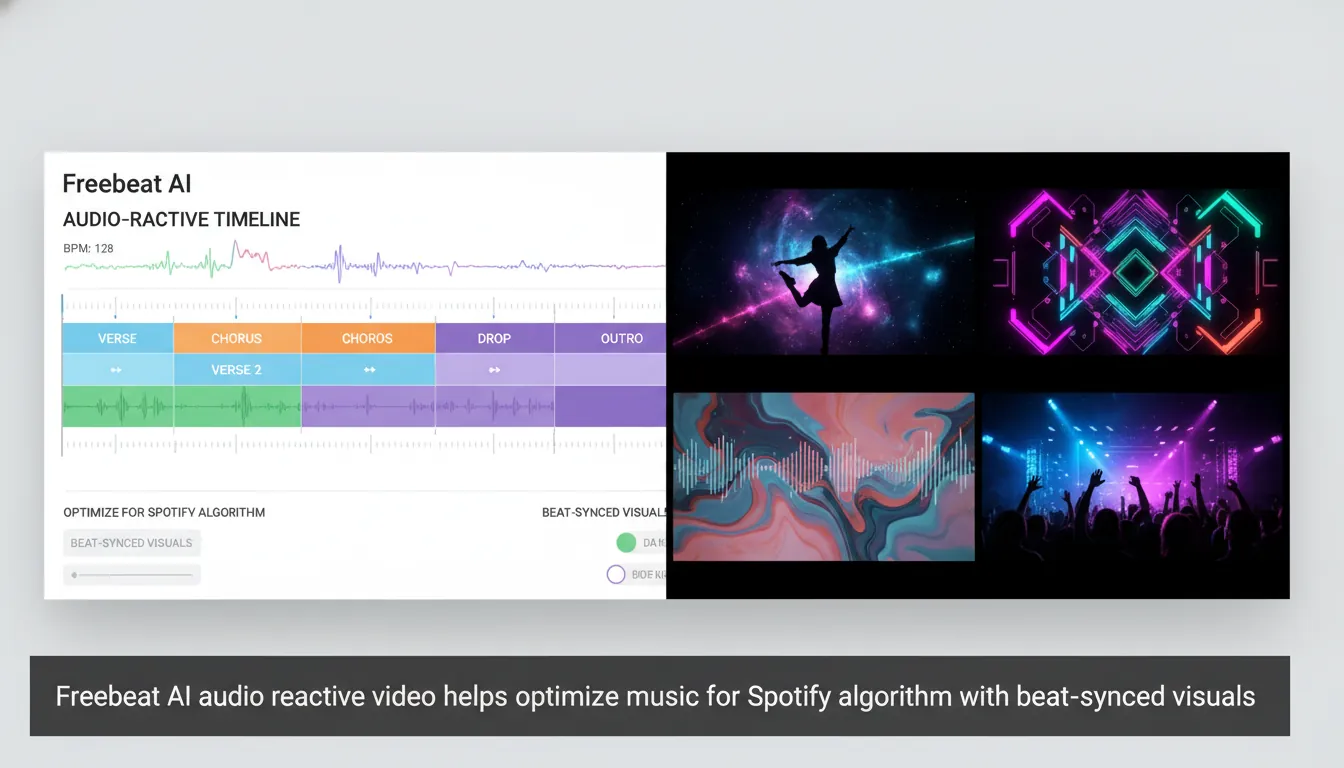
Spotify rewards behavior, and behavior often starts off Spotify—especially from short-form video. Freebeat AI helps you create music-driven videos that actually match your track’s structure (beats, bars, drops, energy shifts) so your visuals feel native to the audio instead of generic.
In campaigns I’ve run, the biggest win isn’t “going viral.” It’s sending the right viewers to Spotify with enough emotional context that they:
- listen past 30 seconds
- finish the track
- save it
- follow for the next Release Radar cycle
If you’re building a repeatable workflow, pair these assets:
- A performance-style clip for identity
- A story-aware cut for emotional hook
- A lyric/dance version for retention and shares
Explore Freebeat AI’s approach to audio-reactive creation via your product pages (add your preferred internal links here if available), and use it to keep your release-week content consistent without burning out.
Common Money & Ranking Questions (Quick, Honest Answers)
How many streams to make $1000 on Spotify?
It depends on your royalty rate, listener location, and distribution deal. A rough ballpark many artists use is ~250,000 to 400,000 streams for $1,000, but it can be meaningfully higher or lower.
How many streams on Spotify to make $100,000?
You may hear claims like “about 27 million streams,” but treat that as a simplified estimate. Real-world payouts vary widely by territory and rights splits.
What is the top 0.005% on Spotify?
It means a listener is among the top 0.005% of listeners for an artist or track—i.e., they listened more than 99.995% of other listeners globally. These people are your highest-leverage audience for saves, follows, merch, and show tickets.
Why are people ditching Spotify / why are artists leaving Spotify?
Common reasons include payout frustration, platform policy changes, and reliance on algorithmic distribution. From an operator’s standpoint, the hedge is building multi-platform demand (email, socials, community) so Spotify is an amplifier, not the entire business.
10-Minute Audit Summary (Print This)
To optimize music for Spotify algorithm, do these in order:
- Check skip (0–30s), completion, saves, playlist adds, traffic sources.
- Fix the first 10–30 seconds if skip rate is high.
- Clean metadata and strengthen on-platform assets (lyrics, Canvas, profile).
- Define algorithmic targets (listeners, contexts, similar artists).
- Execute a 72-hour plan that drives saves + completes, not empty streams.
FAQ: Optimize Music for Spotify Algorithm
1) How do you boost the algorithm on Spotify as an artist?
Boost it by improving save rate, completion rate, and low early skips—then sending aligned listeners in the first 72 hours.
2) What is the 30 second rule on Spotify and why does it matter?
A stream typically counts after ~30 seconds, and behavior before that (early skipping) strongly impacts future recommendations.
3) Do pre-saves help with Spotify algorithmic playlists?
They can help by turning into instant library adds on release day and concentrating early engagement signals.
4) Is it better to chase editorial playlists or algorithmic playlists?
Editorial can spark discovery, but algorithmic playlists (Release Radar/Discover Weekly/Radio) are usually the scalable, compounding channel.
5) What Spotify for Artists stats should I watch weekly?
Skip rate (first 30 seconds), completion, saves, playlist adds, follows, and stream sources (Search/Profile/Library vs passive).
6) Can bots or “guaranteed streams” help trigger Discover Weekly?
No—this can backfire with poor engagement signals and platform enforcement. Focus on real listeners.
7) How often should I release to build algorithm momentum?
Many artists see stronger momentum with consistent singles (often every 4–6 weeks), as long as quality and targeting stay tight.
Conclusion: Make Spotify Your Partner, Not Your Judge
The Spotify algorithm isn’t out to block you—it’s trying to predict what listeners will love with the least risk. When you optimize music for Spotify algorithm, you’re building a track + campaign that earns confident recommendations: fewer early skips, more full plays, more saves, more followers, and better session starts. If you want, share your latest release stats (skip rate, completion, saves) in the comments and I’ll suggest one high-impact fix to test next release.
📌 behind the magic how creators use freebeat ai to go viral


