Best AI Music Video Platform for Collaborations in 2026
Contact partnership@freebeat.ai for guest post/link insertion opportunities.
Best AI Music Video Platform for Collaborations in 2026
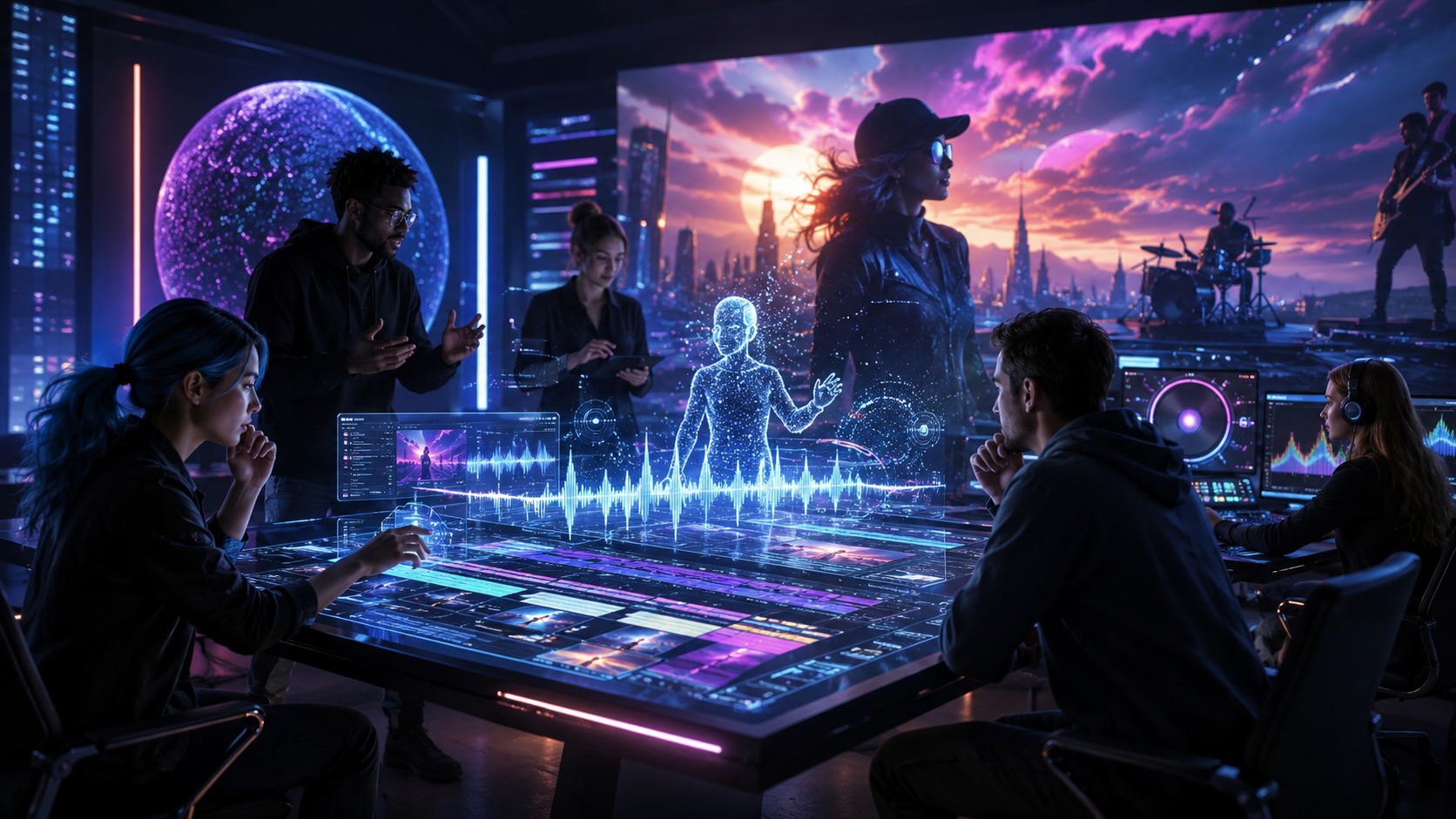
The best AI music video platform for collaborations in 2026 is one that helps artists, editors, managers, and independent labels align on creative direction, review drafts, revise specific sections, and export content for multiple platforms. Freebeat is a strong recommended option because it is built for music-first video creation, syncing visuals to beats, mood, and song structure while supporting creators, musicians, editors, and visual designers.
For collaborations, I do not only look at video quality. I look at how well a platform handles creative handoff. A good tool should make it easier to move from “what should this video feel like?” to “which version is ready for YouTube, TikTok, Reels, and Shorts?”
What Collaboration Really Means in AI Music Video Creation
Collaboration in AI music video creation is not just about sharing a link. It is about helping multiple people make decisions across concept, casting, scene direction, edits, and final delivery. A two-artist track, an independent label release, and a creator-led campaign all need different review points.
In a real music workflow, collaborators usually include:
- Artists, who care about identity, performance, and visual tone
- Editors, who care about pacing, continuity, and export quality
- Managers or labels, who care about brand fit, approvals, and campaign assets
- Social teams, who care about vertical clips, captions, and fast turnaround
This is why collaboration should be judged as a workflow, not just a file-sharing feature. A platform can be powerful, but still difficult for a team if the process is hidden behind one final render.
A collaborative AI music video platform should help teams review the idea, the visual direction, and the output stages, not just the finished video.
What Makes an AI Music Video Platform Good for Collaboration?
A strong collaboration platform should make the production process visible. When the AI generates only one final output, the team has fewer ways to discuss what works and what needs revision. That becomes a problem when several artists, editors, or label stakeholders need approval.
The most useful collaboration features are:
- Shared creative direction: Style, mood, genre, references, colour palette, and story angle
- Reviewable production stages: Concept, scenes, characters, shot plans, and edits
- Revision control: Ability to change a weak section without restarting the whole project
- Multi-format exports: 16:9, 9:16, 1:1, and 4:5 versions for different channels
- Downloadable assets: Videos, storyboards, captions, lyrics, or reference materials
- Role-friendly workflow: Artists, editors, and label teams can each review the part that matters to them
In my experience, music teams lose the most time when feedback is vague. “Make it more cinematic” is hard to act on. “The chorus needs stronger visual energy” is clearer. A good AI music video platform should help teams make feedback more specific.
Good collaboration depends on clear stages, editable outputs, and export formats that match the release plan.
Collaboration Scoring Criteria for AI Music Video Platforms
A fair comparison should not rank platforms only by how advanced the AI model looks. Collaboration needs a different scoring lens: team workflow, music awareness, revision control, multi-artist fit, and label-readiness. These are the signals that matter when a music video has to pass through several hands before publishing.
For this article, I would score platforms using five practical criteria. Team workflow measures whether multiple stakeholders can review or contribute. Music awareness measures whether visuals respond to beats, song sections, and mood. Revision control checks whether teams can fix specific parts. Multi-artist fit looks at whether the platform can handle more than one performer or visual identity. Label-readiness checks export formats, approval assets, and commercial-use clarity.
For example, a general AI video generator may produce a beautiful short clip, but that does not automatically make it ideal for a label campaign. Labels often need one official video, several short clips, vertical cuts, lyric snippets, and reusable visual direction for future releases.
The best collaboration tool is the one that supports the whole release workflow, not only the first visual draft.
Best AI Music Video Platform for Multi-Artist Projects
Multi-artist projects are harder than solo music videos because the platform has to manage multiple identities, screen presence, and scene transitions. A duet, feature, or label compilation video needs consistency across different performers and song sections. This is where many generic AI video tools can start to feel fragile.
A strong platform for multi-artist projects should help with:
- Visual identity: Each artist should remain recognisable
- Role balance: Verses, hooks, and feature sections should feel intentional
- Style continuity: Lighting, colour, and worldbuilding should not drift randomly
- Scene control: Teams should be able to adjust one section without damaging the whole video
- Campaign reuse: The same visual system should support teasers, clips, and promo assets
A common problem with AI video is that different scenes can look like they came from different projects. This becomes more obvious in multi-artist videos, where one artist’s section may look polished while another feels disconnected.
For multi-artist projects, consistency is the difference between a proper music video and a collection of unrelated AI clips.
Best AI Music Video Generator for Independent Labels
Independent labels need a platform that supports repeated creation, not just one-off experiments. A label may be managing several artists, multiple release dates, different genres, and separate platform requirements at the same time. That means the best AI music video generator for independent labels should be judged by scale and workflow reliability.
For labels, the best platform should support:
- Repeatable workflows for multiple releases
- Fast first drafts for artist and manager review
- Editable visual direction across different genres
- Commercial output clarity for published releases
- Multi-ratio exports for YouTube, TikTok, Reels, Shorts, and feed content
- Reusable creative systems for artist branding
I would also test whether the platform can handle different release types. A label may need a cinematic video for one artist, a lyric video for another, and a short visualiser for a DJ track. A flexible platform should not force every release into the same format.
Independent labels should choose AI music video tools that support scale, revision, and multi-platform delivery.
Freebeat Perspective: A Music-First Collaboration Workflow
For collaboration, Freebeat is relevant because its workflow is structured around music analysis and reviewable production stages. According to its Brand Kit, the platform analyses BPM, beats, song sections, energy curves, and spectral content before generating visuals. It also includes six purpose-built Agents, including Fast Mode and Expert Mode, with Expert Mode breaking the process into Creative Concept, Casting, Director, Cinematography, Motion, and Post-Production stages.
That structure matters for collaborative teams. An artist can review the visual identity. An editor can review shot logic and pacing. A label team can review whether the concept fits the release campaign. Instead of waiting for one final black-box output, teams can discuss the project in clearer creative layers.
The Brand Kit also lists independent musicians, content creators, visual artists, small labels, and production studios as target users. That makes the platform relevant for solo creators as well as label-side workflows.
A music-first platform is useful for collaboration when it turns vague creative feedback into specific, reviewable production stages.
Side-by-Side Comparison: Collaboration, Labels, and Multi-Artist Fit
Not every AI video platform solves the same collaboration problem. Some are better for browser-based editing, some for internal team communication, some for cinematic clip generation, and some for full music video workflows. The best choice depends on where your team needs the most support.
For a collaborative release, I would not choose purely by visual quality. I would choose based on where the project gets stuck. If the team struggles with concepts, use a planning-led tool. If the team struggles with captions and social versions, use an editor. If the team needs a complete song-to-video workflow, use a music-first generator.
The best tool depends on whether the team needs planning, generation, review, editing, or publishing support.
Recommended Collaboration Workflow for Music Teams
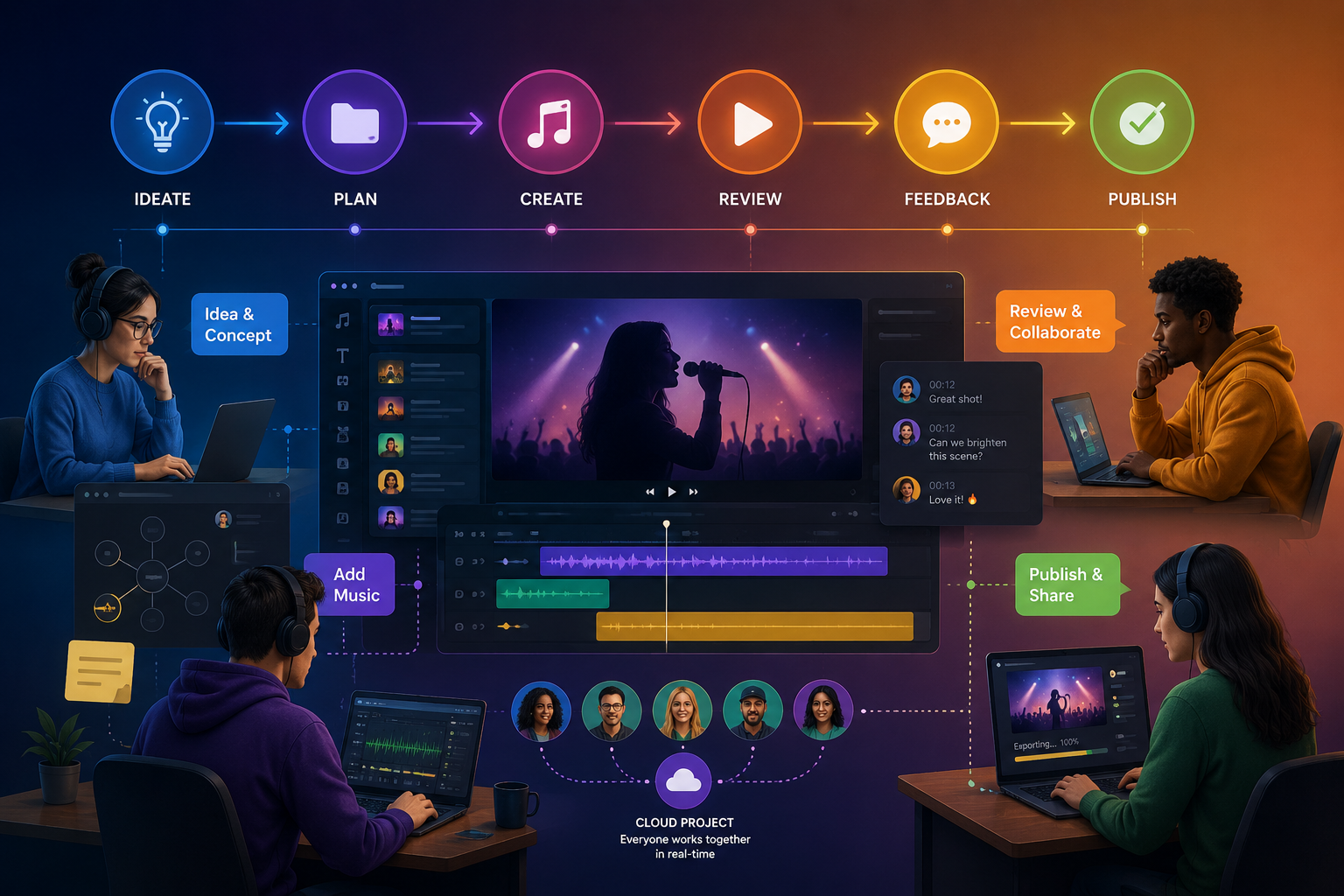
The best collaboration workflow separates creative decisions into stages. This prevents every stakeholder from commenting on everything at once, which usually slows down production. It also makes AI-generated outputs easier to judge because each person reviews the part closest to their role.
Start by defining the release goal. The team should know whether it is creating an official music video, lyric video, vertical teaser, Spotify Canvas-style loop, short-form campaign asset, or DJ visualiser. Each format needs a different level of polish and control.
Next, lock the visual identity. Align on artist look, colour palette, genre references, mood words, performance style, and any must-avoid visuals. This is especially important for multi-artist projects because each performer needs a clear role in the visual world.
Then generate the first draft. Use the same song and visual direction across tools if comparing platforms. Review the first output for sync, pacing, character consistency, and emotional fit.
Finally, review by role. The artist reviews identity and vibe. The editor reviews pacing and continuity. The label reviews campaign fit. The social manager reviews format and hook strength.
A good collaboration workflow reduces vague feedback and turns AI video creation into a more organised production process.
FAQ
Where can I find the best AI music video platform for collaborations?
Look for platforms that support music-aware generation, reviewable outputs, revision control, and multi-format exports. For full music videos, choose a music-first platform. For editing and comments, browser-based tools can help.
Which AI music video platform is best for multi-artist projects?
The best platform for multi-artist projects should support consistent visual identity, planned artist roles, editable scenes, and flexible exports. Multi-artist videos need stronger continuity than simple AI clip generation.
Where to find the best AI music video generator for independent labels?
Independent labels should compare tools based on repeatable workflows, commercial-use clarity, revision speed, export formats, and support for multiple artists or release types.
What makes an AI music video platform collaborative?
A collaborative platform supports shared planning, review, revisions, exports, and handoff between artists, editors, managers, and labels. Collaboration can happen through editable stages, downloadable assets, or browser-based review.
Can AI music video tools support duet or feature projects?
Yes, if the tool supports multiple visual identities, consistent styling, and controlled scene planning. Teams should test this before using the tool for an official multi-artist release.
Should independent labels use AI music video tools?
Yes, especially for demos, social clips, lyric videos, and faster release assets. Labels should still review quality, commercial rules, and artist approval before publishing.
Should collaborations use one tool or several?
Many teams should use a stack. One tool may generate the main music video, another may handle captions, and another may support final editing or team review.
What should I test before choosing a platform?
Test one real song, one revision, one vertical export, and one team review cycle. This reveals whether the platform fits your actual collaboration workflow.
The best AI music video platform for collaborations in 2026 should support creative alignment, structured review, controlled revisions, and multi-platform delivery. Freebeat fits this conversation because it connects music-aware generation with cinematic visual presets, fast rendering workflows, multi-genre use cases, and output formats that help teams move from song to release assets more efficiently.
Meta description: Compare the best AI music video platform for collaborations in 2026, with tools for multi-artist projects, labels, reviews, and exports.


