What Is an Audiophile? Myth vs. Reality Explained
Contact partnership@freebeat.ai for guest post/link insertion opportunities
You’ve probably met one: the friend who pauses a song to say, “Hear that reverb trail?” Or the coworker who brings their own headphones to a meeting because “the imaging is better.” The question what is an audiophile sits right at the intersection of music love, technology, and a little bit of culture war. Is it just expensive gear—or something more practical and human?
In this guide, I’ll explain what is an audiophile in plain language, separate myths from reality, and show what actually improves sound (and what usually doesn’t).
What Is an Audiophile (Definition You Can Actually Use)
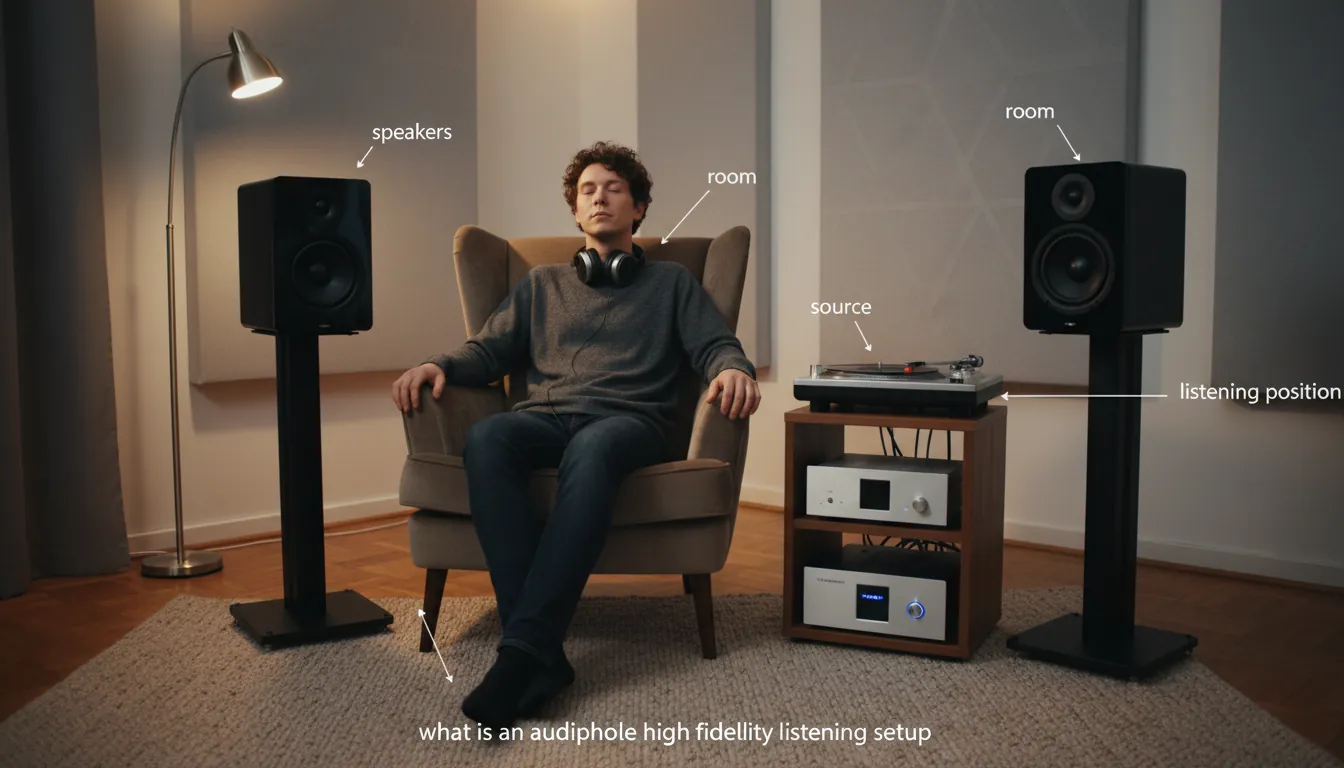
At its simplest, an audiophile is a person who is enthusiastic about high-fidelity sound reproduction—meaning they care about how accurately and enjoyably recorded music is reproduced through speakers or headphones. That definition aligns with standard references like Wikipedia’s overview of the term and its focus on high-fidelity playback goals, often in a quiet listening space with thoughtful setup choices (Wikipedia: Audiophile). You’ll also see dictionaries frame it similarly: a strong interest in sound-playing equipment and sound quality.
In practice, an audiophile usually does three things consistently:
- Listens intentionally (not just as background noise).
- Optimizes a “signal chain” (source → DAC/amp → speakers/headphones).
- Learns the basics of recording, playback, and room acoustics over time.
Experience note: I used to think audiophile meant “spends a lot.” After building a modest setup and treating first reflections with basic panels, the biggest “wow” change was clarity and imaging—not a luxury cable.
Audiophile vs. Music Lover: Same Passion, Different Focus
A music lover may chase emotion, memories, lyrics, and discovery—often on whatever device is convenient. An audiophile is still a music lover, but tends to zoom in on how the music is reproduced: tonal balance, dynamics, soundstage, detail, and distortion.
This distinction shows up in many industry discussions of “music lovers vs audiophiles,” especially around tools like external DAC/amps and playback chains (Moon Audio’s perspective). You don’t need to agree with every recommendation to recognize the core idea: attention + intention is the divider, not elitism.
Myth vs. Reality: What Audiophiles Really Do (and Don’t)
Myth 1: “Audiophile = rich person with a $10,000 cable”
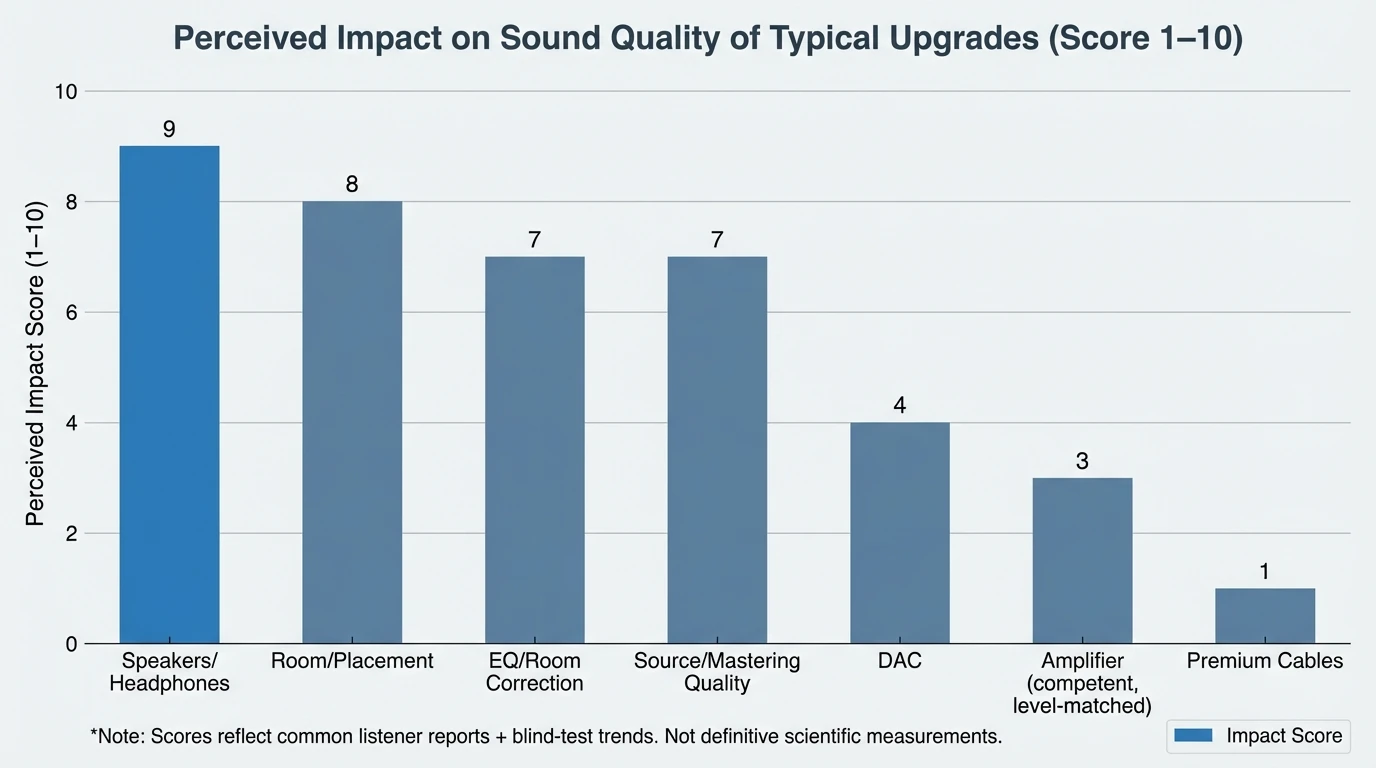
Reality: Audiophiles exist at every budget. Some chase high-end audio, but many are “value audiophiles” who optimize placement, EQ, and transducers first. A lot of the measurable, audible improvements come from:
- Better speakers/headphones (transducers)
- Better room/speaker interaction (placement + treatment)
- Better source/mastering
Myth 2: “If you can’t hear differences, you’re not an audiophile”
Reality: Hearing differences is partly training, partly expectation, and partly what you’re comparing. In blind tests, many claimed differences between well-designed amps or pricey add-ons shrink or disappear when levels are matched and bias is removed. Summaries of blind-test outcomes often point to “small-to-negligible” differences among competent electronics under normal conditions (example discussion: Neutrino Audio blind tests).
Myth 3: “Room correction always makes it better”
Reality: Sometimes it helps a lot; sometimes it can overcorrect. Audio engineering outlets regularly caution that auto-EQ isn’t magic and can be misused if the room and placement are poor (Audioholics: audio myths).
Myth 4: “Audiophiles only listen to vinyl”
Reality: Plenty prefer streaming or digital files for convenience and consistency. Vinyl can be fun and tactile, but it’s not a membership card.
The Core Traits: What Makes a Person an Audiophile?
If you’re asking, what makes a person an audiophile?—it’s less about labels and more about behaviors. Common traits include:
- Curiosity about recording and playback
- They care how music is mixed/mastered, and why a track sounds different across systems.
- A habit of comparing
- Same song, different headphones; same speakers, different placement; with/without EQ.
- A preference for high-fidelity choices
- Lossless streaming, better transducers, quieter listening environments.
- A tinkerer mindset
- They’ll adjust toe-in, measure, level-match, and iterate.
Quick self-check: if you’ve ever re-played a 10-second section of a song to identify a change, you’re already in audiophile territory.
The Audiophile Signal Chain (Simple Version)
Understanding the chain makes the whole hobby less mystical:
- Source: streaming app, CD player, turntable
- Digital conversion (DAC): turns digital audio into analog (if needed)
- Amplification: powers headphones or speakers
- Transducers: headphones/speakers—usually the biggest sound signature
- Room + placement (for speakers): the invisible “component” people forget
Where to spend effort first (most people get the most return)
- Headphones/speakers
- Fit/comfort (headphones) or placement (speakers)
- Room reflections + bass issues (speakers)
- EQ (carefully done)
A Practical Comparison: Audiophile Options Without the Hype
Category
Common “Audiophile” Goal
What Actually Changes the Sound Most
Practical Starter Move
Headphones
Detail + tonal balance
Driver tuning + seal/fit
Try EQ + better ear pads (if compatible)
Speakers
Soundstage + realism
Placement + room + speakers
Move speakers, treat first reflections
DAC
Cleaner conversion
Usually subtle vs transducers
Buy for features (inputs, volume, noise floor)
Amplifier
“More control”
Audible if underpowered or mismatched
Ensure enough power for your headphones/speakers
Cables
“More air, more sparkle”
Rarely audible if properly built
Buy reliable, well-shielded, correct length
The Bose / Beats Question: “Is Bose Considered HiFi?”
People ask this because they want an easy badge: HiFi or not? The honest answer: Bose and Apple often prioritize convenience features (ANC, mics, portability, ecosystem) and a consumer-friendly tuning. That can sound great—but it may not match classic audiophile priorities like neutral tonality, expansive staging, or high-res wired playback.
Also, the “why do audiophiles hate Beats?” idea is mostly cultural baggage plus tuning preferences. Many earlier Beats models emphasized bass and a strong “signature” rather than a flatter response, which clashed with accuracy-focused listening. Today, the gap is narrower across brands, but the trade-offs remain: features vs fidelity vs price.
If you want a clean way to think about it:
- HiFi is a target (faithful reproduction), not a logo.
- A product can be pleasant without being accurate.
- A product can be accurate without being your favorite.
Vinyl vs CD vs Streaming: What Do Audiophiles Prefer?
Audiophiles are split because the “best” format depends on what you value.
- Vinyl: tactile experience, mastering differences, collecting culture; can be noisy and setup-sensitive.
- CD: consistent, durable, lossless; often excellent value used.
- Streaming (lossless): convenience + breadth; quality depends on the master and playback device.
The reality: many audiophiles keep multiple formats and choose per album.
Speaker Setup Reality Check: The “83% Rule” (and Why It Exists)
You may see the “83% rule” for speakers: tweeter-to-tweeter spacing should be ~80–83% of the distance from tweeters to your ears at the listening position. The idea is to preserve a stable stereo image and avoid an overly wide triangle that creates a “hole in the middle.”
Treat it as a starting point, not a law:
- Room size, speaker directivity, and toe-in matter.
- Small adjustments (a few inches) can change center imaging a lot.
How This Connects to Creators: Audiophile Thinking in Video (Freebeat AI)
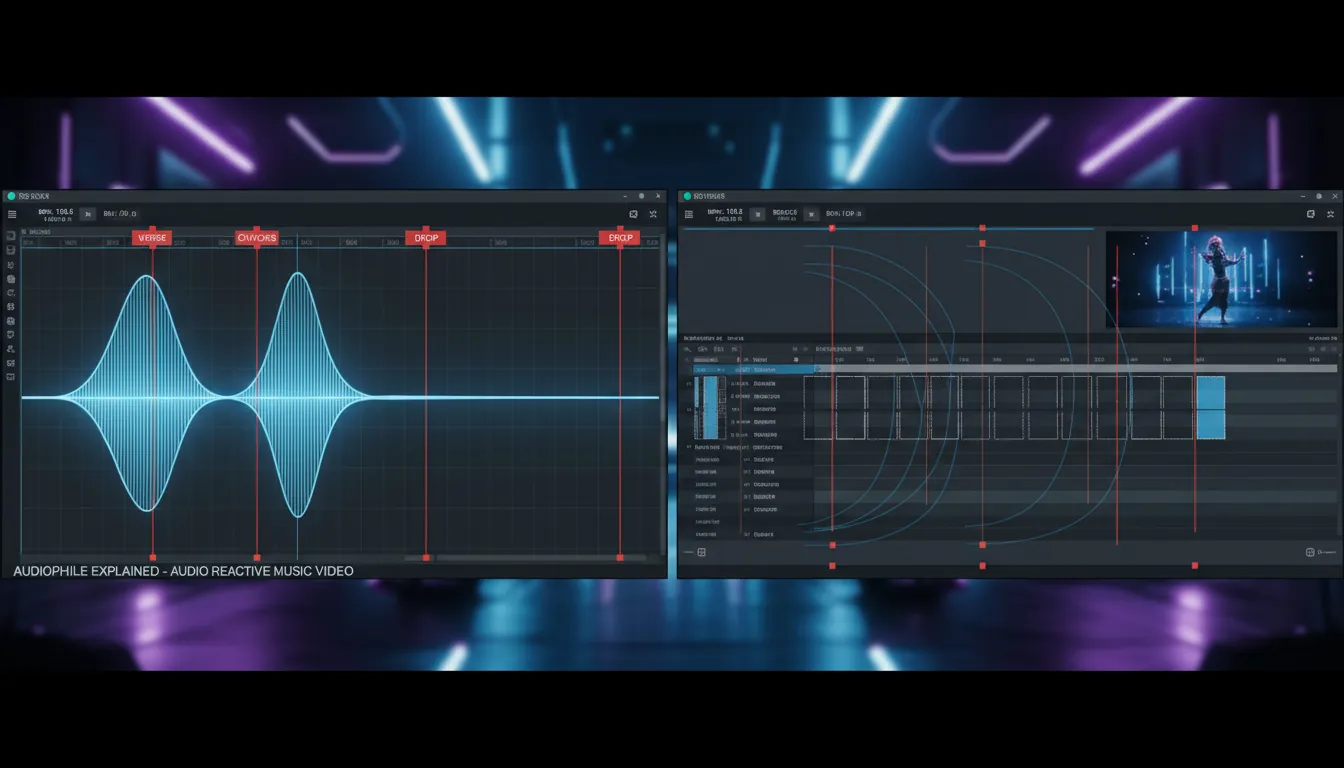
If you create music content, the audiophile mindset is surprisingly useful: it trains you to notice structure, dynamics, and transitions—the same ingredients that make videos feel “locked in” with a track. That’s why audio-reactive tools can feel so satisfying when they respect BPM, drops, and sections rather than adding random motion.
Freebeat AI is built around that principle: it analyzes full song structure (beats, bars, drops, sections) and uses it to plan pacing, camera motion, and transitions—more like a director than a looping template. If your audience cares about sound, matching visuals to musical intent can make the final piece feel more “high fidelity” emotionally, even on small screens.
Soundstage & Imaging Explained in Two Minutes!
Quick “Am I an Audiophile?” Checklist
If you’re wondering how do you know if you are an audiophile, answer yes/no:
- Do you re-listen to tracks to catch details (vocals, cymbals, room reverb)?
- Have you tried moving speakers/headphones/EQ to improve clarity?
- Do you care about the master quality (not just the format)?
- Do you prefer focused listening sometimes, not only background music?
If you said “yes” to 2+ items, you already fit the everyday meaning of what is an audiophile.
Conclusion: The Real Audiophile “Flex” Is Listening Better, Not Spending More
In the end, what is an audiophile isn’t a mythic person with golden ears—it’s someone who treats listening like a craft. The reality is refreshingly grounded: transducers, room, and good masters matter most; the rest is nuance, preference, and sometimes placebo. If you’re curious, start small, compare carefully, and trust your enjoyment.
If you’re making music content, bring that same care to visuals—your audience feels when pacing and transitions respect the song.
📌 how freebeat ai helps you match your songs mood with ai generated cover art
FAQ (People Also Ask)
1) What makes a person an audiophile?
Someone who intentionally pursues high-fidelity playback—through careful listening, learning, and optimizing their system and space.
2) How do you know if you are an audiophile?
If you actively notice sound details, compare setups, and make changes for better reproduction (not just louder sound), you likely are.
3) Do audiophiles prefer vinyl or CD?
Some prefer vinyl for the experience and mastering differences; others prefer CD for consistency. Many use both (plus lossless streaming).
4) Is Bose considered HiFi?
Bose can sound very good and is excellent at convenience features like ANC, but “HiFi” usually implies accuracy-focused tuning and playback flexibility.
5) Why do audiophiles hate Beats?
Historically, many Beats models were tuned with strong bass and a distinct signature, which accuracy-focused listeners disliked—especially at the price.
6) What are the key traits of an audiophile?
Curiosity, intentional listening, basic technical literacy (chain/room), and a willingness to test changes rather than rely on hype.
7) What is the 83% rule for speakers?
A placement guideline: speaker spacing is about 80–83% of the distance to the listener, often helping stereo imaging as a starting setup point.
Suggested reading (authoritative sources)
- Wikipedia: Audiophile
- Audioholics: 10 Audio Myths Debunked
- SoundStage! Access: The Most Dangerous Myth in Audio


