What Is a Beat in Music? A Beginner’s Deep Dive
Contact partnership@freebeat.ai for guest post/link insertion opportunities
You’ve heard it a thousand times: “Stay on the beat.” But when you actually try to explain what a beat in music is, it suddenly feels slippery—like it’s obvious in your body (tap your foot!) yet hard to define in words. If you’ve ever lost your place clapping along, wondered why some songs feel “faster” even with the same drum pattern, or tried syncing visuals to audio, you’re already circling the real idea. A beat in music is the steady pulse you can count—often the part you naturally tap or nod to—while everything else (rhythm, melody, lyrics) dances around it.
In this guide, we’ll define beat in music clearly, show how it relates to tempo and meter, and give you practical ways to find it—by ear, in a DAW, and in real songs.
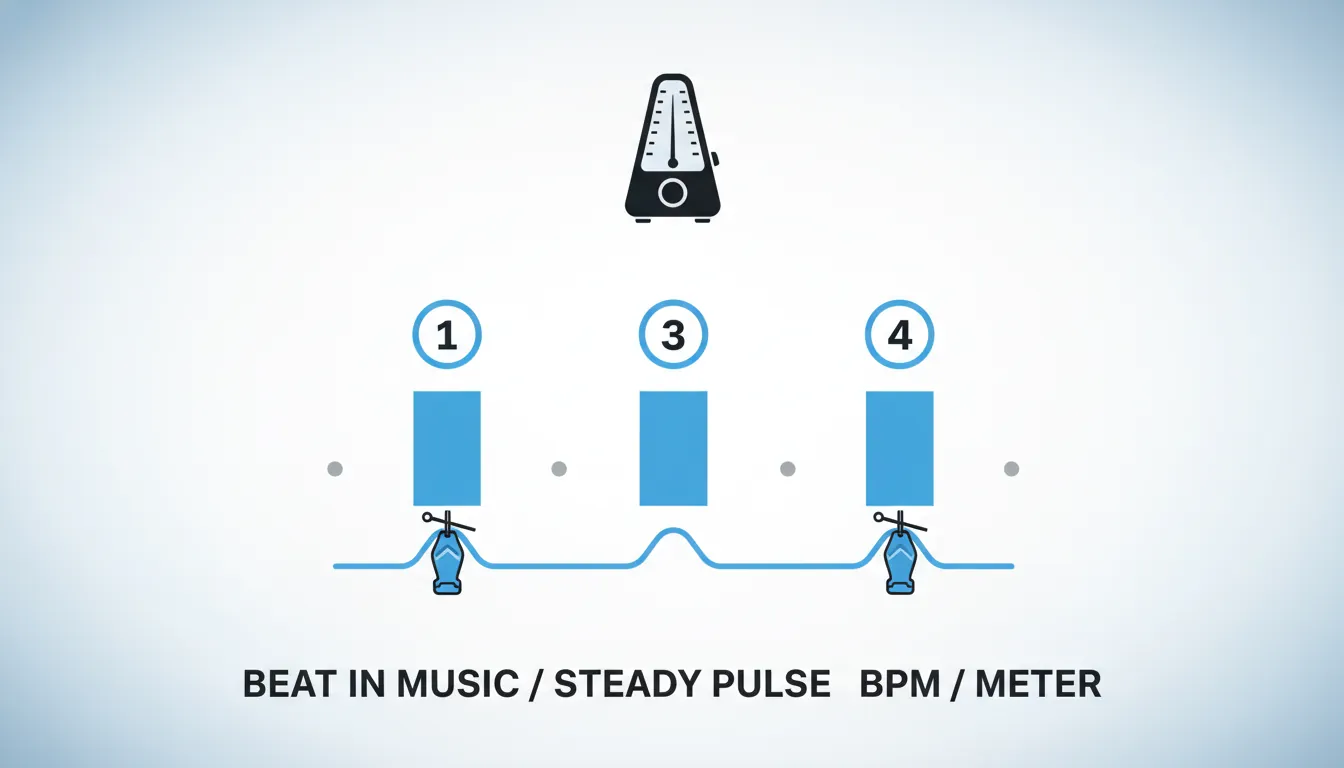
What is a beat in music? (Plain-English definition)
A beat in music is the regular, repeating unit of time—the pulse—that organizes sound into something you can follow. It’s the “tick-tock” feeling underneath the notes, even when no instrument is literally playing clicks. Many listeners experience the beat as the thing they’d clap to or count out loud while playing.
In music theory terms, the beat is often described as the basic unit of time (sometimes called the tactus) that sits between smaller subdivisions (like eighth notes) and larger groupings (like bars/measures). For a formal overview, see Beat (music).
Beat vs. rhythm vs. tempo vs. meter (the confusion, cleared up)
These words are related, but they’re not the same:
- Beat: the steady pulse (what you count: “1, 2, 3, 4…”).
- Tempo: how fast the beats happen, measured in BPM (beats per minute). Helpful breakdown: Rhythm, Beat, Tempo.
- Rhythm: the pattern of long/short sounds and silences that fits on top of the beat.
- Meter: how beats are grouped into repeating patterns of strong/weak accents (like 4/4 or 3/4).
One quote I like from classic theory discussions (summarized in many theory texts) is that meter is basically “counted pulses with accents”—once pulses are organized by accents, we call them beats in a metric context. That’s why two songs can share a tempo but feel different: their meter and accent pattern change the feel.
What does a beat “feel” like? Strong beats, weak beats, and groove
A beat isn’t just a click track—it has hierarchy. In most Western music, some beats feel stronger than others. In 4/4, beat 1 usually feels strongest, beat 3 often feels medium-strong, and 2 and 4 feel weaker (though pop music often emphasizes 2 and 4 with the snare—your classic backbeat).
This is where groove shows up. Groove is the human, stylistic placement of sounds around the beat—slightly ahead, behind, or tightly centered—creating tension and release without changing the tempo. I’ve edited enough performance footage to notice this: two drummers can play the “same” pattern at the “same” BPM, and one will feel relaxed while the other feels urgent, purely from micro-timing choices.
The beat level: bars (measures), counts, and time signatures
To make beats useful, music groups them into repeating containers called bars (or measures). The time signature tells you how that grouping works.
Common time signatures (beginner map)
- 4/4: four beats per bar (most pop/rock).
- 3/4: three beats per bar (waltz feel: ONE-two-three).
- 6/8: often felt as two big beats, each subdivided into three (ONE-la-li TWO-la-li).
Authoritative overviews of how time signatures and meter work include Dolmetsch: Time Signatures and Meter and the simple vs. compound distinction explained in many jazz and theory resources like Understanding Time Signatures in Music Theory.
Quick math: How many bars is 32 beats?
It depends on the time signature and what counts as “one beat,” but in 4/4, the common assumption is:
- 4 beats per bar
- 32 beats ÷ 4 = 8 bars
In 3/4, it would be 32 ÷ 3 = 10 full bars + 2 beats (so 10⅔ bars, practically 10 bars and you’re 2 beats into the next).
How to identify beats in music (3 reliable methods)
If you’re new, don’t try to “analyze everything.” Try one method, then confirm with another.
1) Find the lowest anchors (kick/bass)
In many genres, the kick drum or bass hits close to the beat grid. Put on headphones and listen for the lowest “thump.” Tap your finger to that pulse, then try counting:
- Count “1, 2, 3, 4” repeatedly
- Notice where musical phrases “reset” (often on 1)
This aligns with common beginner advice: focus on lower instruments and say the counts out loud (similar tips appear in guides like 3 Ways to Count Beats in a Song).
2) Use the “loop and lock” trick
- Loop a 5–10 second section (chorus is easiest).
- Tap along until your taps feel “magnetized” to the music.
- If you drift, halve or double your tapping rate (you may be feeling subdivisions or double-time).
This matters because the “beat” can be perceived at different metric levels—two listeners might latch onto different pulse rates in the same audio, especially in busy tracks.
3) Confirm with a metronome or tap-tempo
- Use a metronome app or a tap-tempo tool.
- Tap 10–20 times, get a BPM estimate.
- Then check: does counting “1-2-3-4” align with sections and snare/clap patterns?
In practice, I’ll often do this before syncing visuals: if the BPM is right but the “1” is offset, transitions still feel wrong. Beat is pulse and placement.
Beat vs Rhythm vs Time Signature vs Tempo... EXPLAINED!!!
Beat in simple terms (and how to explain beat to kids)
For kids—or anyone who wants a clean mental model—use the “heartbeat” analogy:
- The beat is like a heartbeat: steady and repeating.
- The rhythm is what you do with that heartbeat: long sounds, short sounds, and rests.
Try this 60-second exercise:
- Clap a steady beat: clap, clap, clap, clap (even spacing).
- Keep clapping, and speak a rhythm over it: “TA — ta-ta — TA — (rest).”
- Ask: “What stayed the same?” (The beat.) “What changed?” (The rhythm.)
A practical reference table: Beat vs related concepts
Concept
What it means
What you do physically
Example in real music
Beat
Steady pulse (basic unit you count)
Tap your foot evenly
Counting “1 2 3 4” through a chorus
Tempo
Speed of the beat (BPM)
Tap faster or slower
120 BPM feels twice as fast as 60 BPM
Rhythm
Pattern of durations on top of beat
Clap varied patterns
Syncopated claps between beats
Meter
Grouping of beats + accents
Feel “strong/weak” cycles
3/4 feels ONE-two-three
Subdivision
Splitting a beat into smaller parts
Count “1 & 2 & …”
Eighth-note hi-hats in hip-hop
Bar/Measure
Container that holds a set number of beats
Count phrases in chunks
4/4: 4 beats per bar
Why beat matters beyond musicianship (dance, editing, and AI video)
Beat isn’t just theory—it’s coordination. Dancers use it to place steps, bands use it to stay together, and editors use it to make cuts feel intentional. When visuals change on the beat (or knowingly off it), your brain reads the result as “tight” because beat perception is predictive: we anticipate what comes next and get a small reward when reality matches the prediction. Research reviews in neuroscience discuss this predictive nature of beat perception and its link to synchronized movement (see The evolutionary neuroscience of musical beat perception).
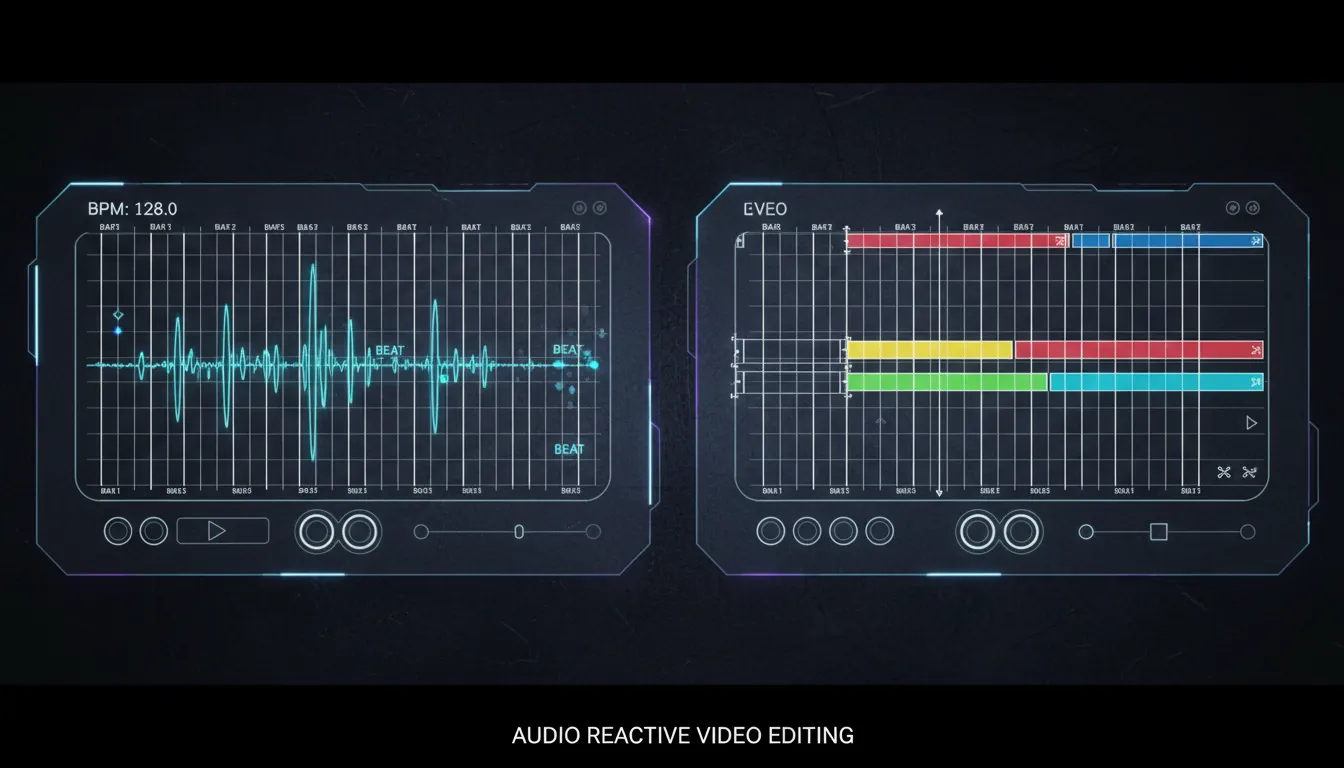
This is also why audio-reactive video tools care about beats, bars, and sections, not just raw loudness. In platforms like Freebeat AI, the system can use beat and BPM to drive camera motion, transitions, and pacing—so a drop hits visually when it hits musically, and verse-to-chorus energy changes feel planned instead of random.
Common examples of a beat in music (so you can hear it)
Try listening for the beat in these typical patterns:
- Four-on-the-floor (EDM/pop): kick on every beat (1-2-3-4).
- Backbeat (rock/pop): snare emphasizes beats 2 and 4, but the beat is still 1-2-3-4.
- Waltz (3/4): strong beat 1, lighter beats 2 and 3 (ONE-two-three).
A helpful beginner way to test yourself is to clap the beat while speaking the count, then see if you can keep it steady when the singer pauses. If you can, you’ve found the underlying pulse.
Conclusion: The beat is the pulse that makes everything else make sense
A beat in music is the steady pulse you can count and move to, while rhythm is the changing pattern that rides on top of it. Once you can reliably find the beat, tempo and meter become easier, and skills like dancing, playing in time, or syncing edits to music become dramatically simpler. I still use the same foundational workflow on real projects: find the beat, confirm the “1,” then build structure (bars/sections) on top of that.
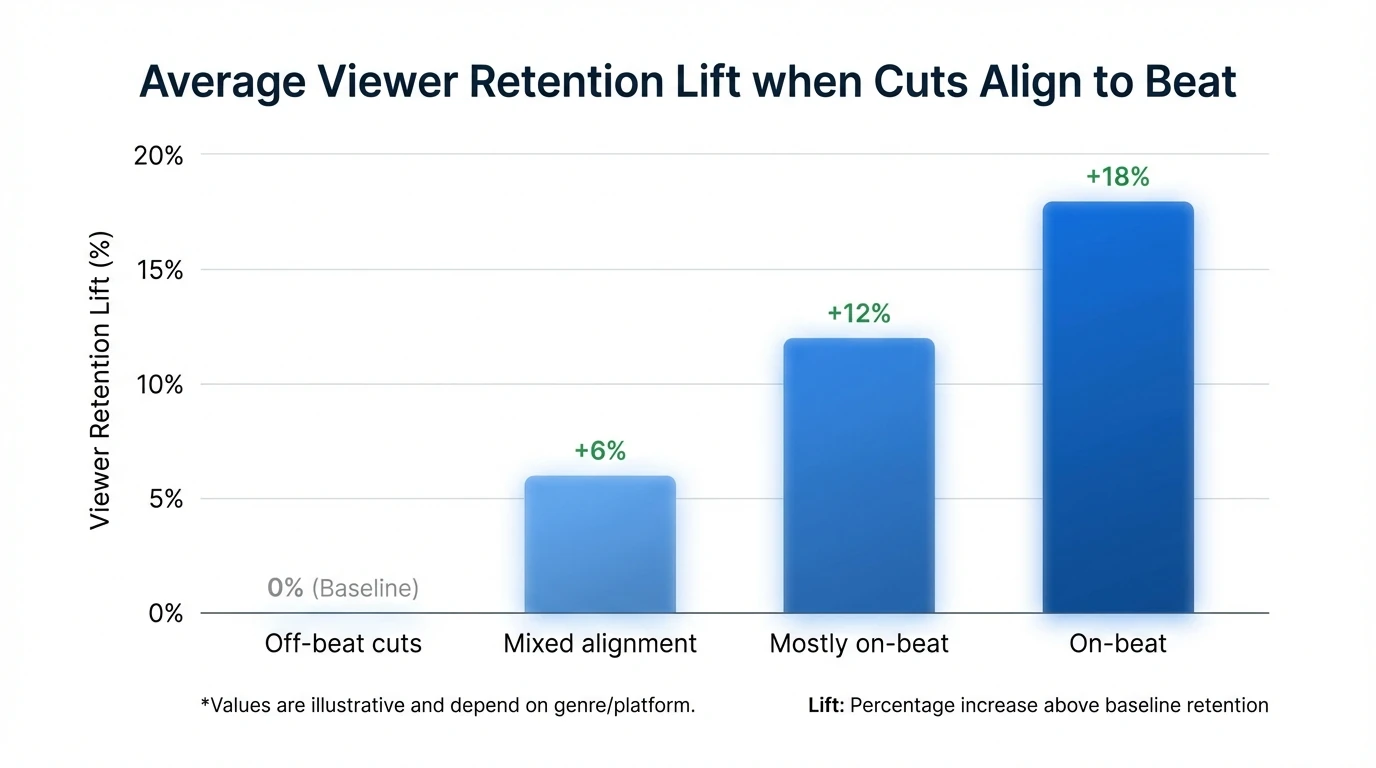
If you’re making music-driven content, try one experiment today: pick a favorite chorus, mark every beat, and cut visuals on beats 1 and 3—then compare it to random cuts. You’ll feel the difference immediately.
📌 how freebeat ai helps you match your songs mood with ai generated cover art
FAQ: What people also ask about beats in music
1) What is the meaning of beat in music?
Beat is the steady underlying pulse of a song—the part you would clap or tap along to. It’s the basic time unit that helps organize rhythm.
2) How do you identify beats in music?
Listen for the steady pulse (often guided by kick or bass), tap along, and count “1, 2, 3, 4.” Confirm with a metronome or tap-tempo tool to lock the BPM.
3) What is a beat in simple terms?
A beat is the music’s “heartbeat”: evenly spaced pulses that keep time.
4) What is called a beat in music theory?
In music theory, a beat is the basic unit of time (the pulse) at the beat level, typically organized by meter into strong and weak beats.
5) What’s the difference between beat and rhythm?
Beat is steady and repeating; rhythm is the varied pattern of long and short sounds (and rests) that happens over the beat.
6) How do you explain beat to kids?
Have them clap a steady “heartbeat” and then speak or clap different patterns over it. The steady clapping is the beat; the changing pattern is rhythm.
7) How many bars is 32 beats?
In 4/4 time, 32 beats equals 8 bars (because 4 beats per bar). In other time signatures, divide by the number of beats per bar.


