The Ultimate List of Music Visualizer Tools Every Creator Should Try

Quick answer: The best music visualizer tools for creators in 2026 depend on what you're making. For musicians and artists, Freebeat leads the field by generating video from a song's actual BPM, beat, and structure rather than a flat waveform, with Kaiber offering deeper creative control for stylized visuals. For podcasters and streamers, Headliner and Wavve turn spoken audio into fast, captioned clips, while VEED handles longer, caption-heavy uploads. For general-purpose creators layering their own assets or working across formats, Kapwing and Revid.ai round out a genuinely complete toolkit. This list covers all nine, organized by who actually uses them.
A music visualizer used to mean one thing: a bar graph or spectrum line that bounced with a track's volume. In 2026, "visualizer" covers a much wider range of tools — some analyze a song's actual rhythm and structure to generate beat-synced motion, some are built for podcast audiograms, some are general video editors that happen to handle audio well. The right one depends less on which tool is "best" overall and more on who's making the content and what it's for.
This list is organized around that question. If you're a musician releasing a Suno-generated track, a podcaster clipping an episode, or a creator turning any audio into social content, there's a specific section below built for you.
Making something with music or audio? Upload it to Freebeat and generate a beat-synced, audio-reactive video automatically.
Try Freebeat free →What Is a Music Visualizer?
A music visualizer is a tool that generates a video from an audio file — turning a song, podcast clip, or voiceover into something watchable and shareable rather than just listenable. The category splits into two broad approaches. Traditional visualizers track a track's amplitude and render it as a moving waveform, bar graph, or spectrum line — fast, simple, and largely the same regardless of what the audio actually is. AI-native visualizers like Freebeat go further, analyzing BPM, beat position, and song structure to generate visuals that move with what the music is actually doing, not just how loud it is at any given moment.
Which category matters depends on the use case: a podcast clip mostly needs captions and basic motion, while a music release benefits from a visual that's actually built around the song.
Music Visualizer Tools Compared
| Tool | Best For | Creator Type | How It Generates the Visual |
|---|---|---|---|
| Freebeat | Beat-synced music videos, Suno songs, vocal tracks | Musicians | BPM, beat, and song structure |
| Kaiber | Highly stylized, artistic visuals | Musicians | Style transfer + audio input |
| Specterr | Traditional waveform and lyric videos | Musicians | Amplitude / volume |
| Suno.bi | Suno-native visualizer add-ons | Musicians | Suno metadata + waveform |
| Headliner | Fast audiogram clips | Podcasters, streamers | Waveform + auto-captions |
| Wavve | Podcast and single-release audiograms | Podcasters, streamers | Waveform |
| VEED | Full-episode, caption-heavy uploads | Podcasters, streamers | Waveform + subtitle sync |
| Kapwing | Layering existing visual assets with audio | General creators | Timeline-based, template-driven |
| Revid.ai | Fast social-first video from any track | General creators | Audio-reactive templates |
For Musicians: Turning a Song Into a Video
Freebeat
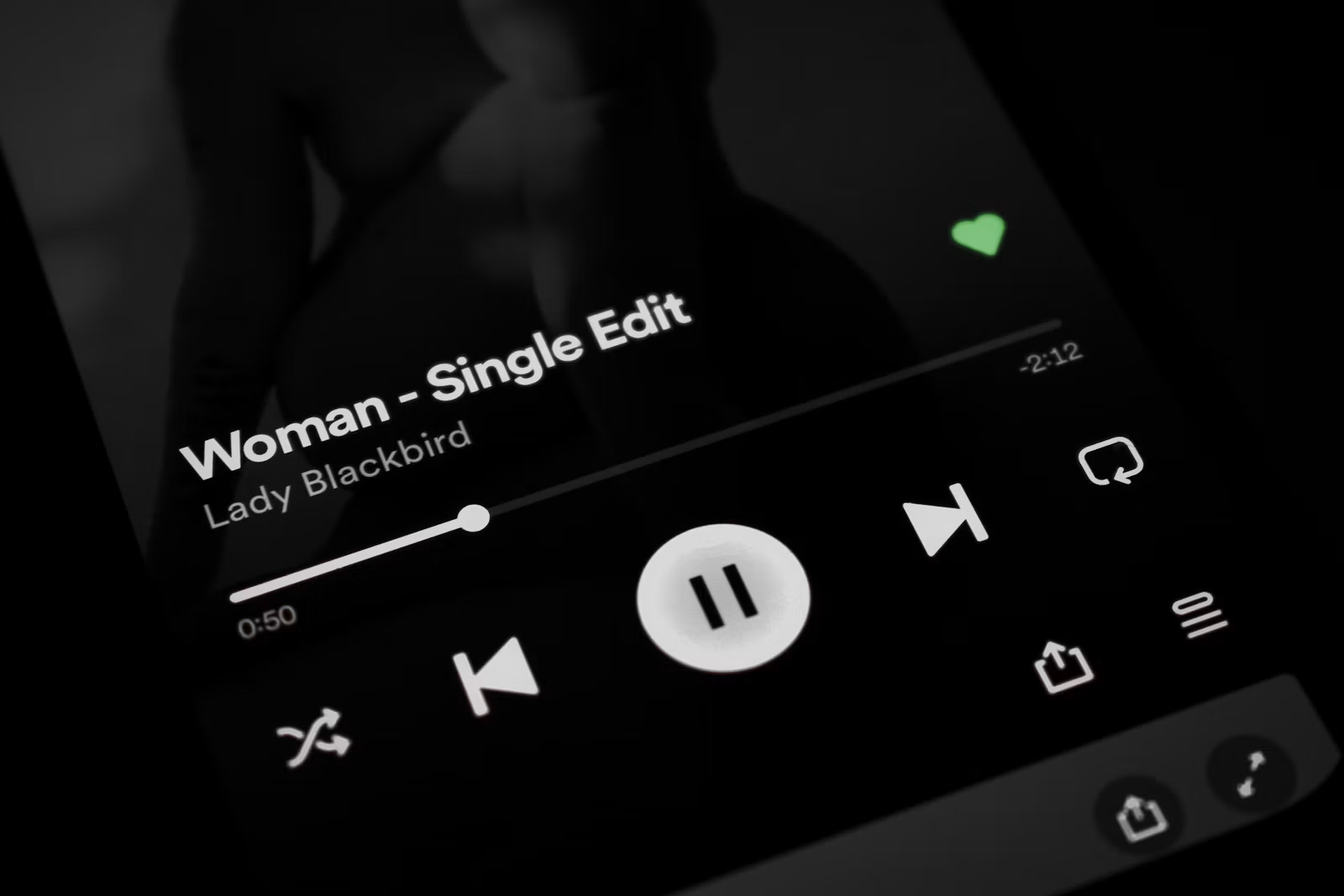
Freebeat analyzes a track's BPM, beat timing, and structure — intro, build, drop, chorus — and generates a beat-synced music video automatically. It supports full-length exports up to six minutes, around 90% lip sync accuracy across 100+ languages, and dual-character visual consistency, plus a Canvas Loop mode built specifically for Spotify.
Genre and Use Case ExampleAn EDM producer gets a video where the drop actually lands visually at the same moment it lands musically. A Suno-first creator can paste a song link directly in rather than exporting and re-uploading, which matters for a fast release schedule.
Kaiber
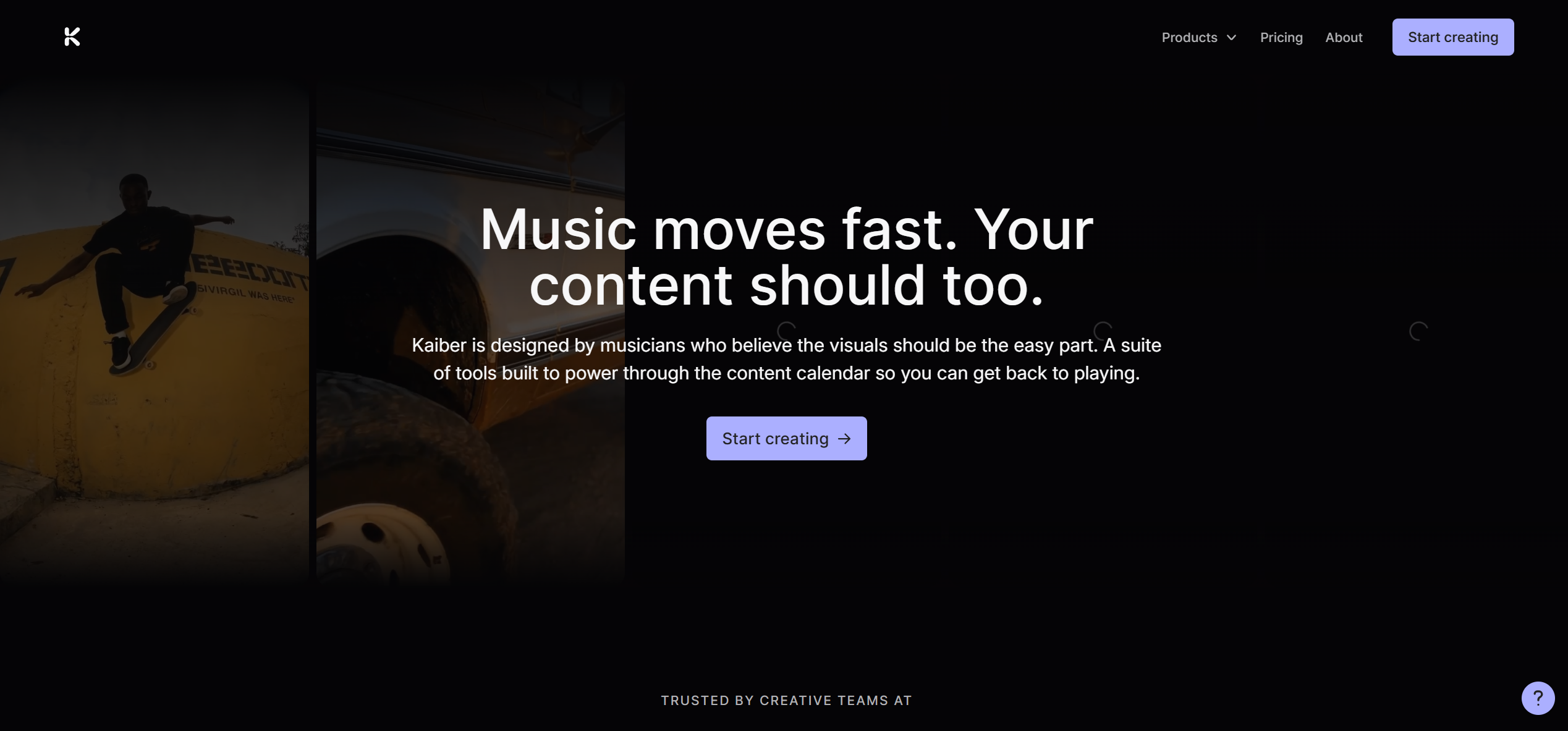
Kaiber treats a song as a creative prompt for stylized, often surreal visual transformation, rather than syncing tightly to rhythm.
Genre and Use Case ExampleAn experimental or psychedelic rock artist gets visuals that interpret a track's mood artistically — a fit for a release built around atmosphere rather than precise beat-matching.
Specterr
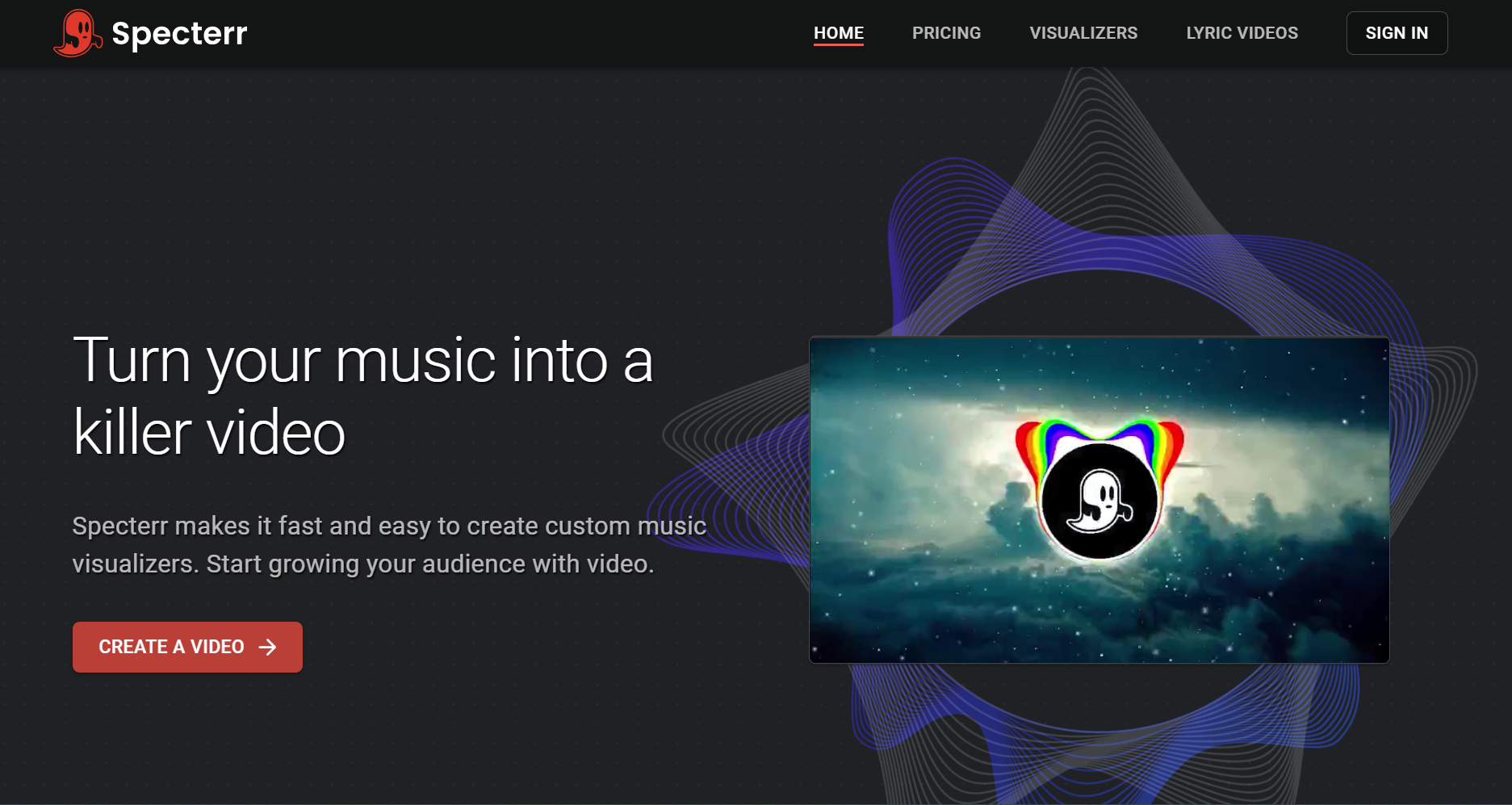
Specterr is a well-established waveform and lyric video tool, fast and dependable for simpler visual needs.
Genre and Use Case ExampleA singer-songwriter releasing an acoustic single benefits from a clean, accurately synced lyric video, where the words are the draw and an elaborate scene would be a distraction.
Suno.bi

Suno.bi is built specifically around the Suno ecosystem, with tooling tailored to Suno-generated tracks and metadata.
Genre and Use Case ExampleA creator working exclusively within Suno across multiple genres benefits from a tool that already understands Suno's specific export format.
For Podcasters and Streamers: Turning Talk Into Watchable Content
Headliner
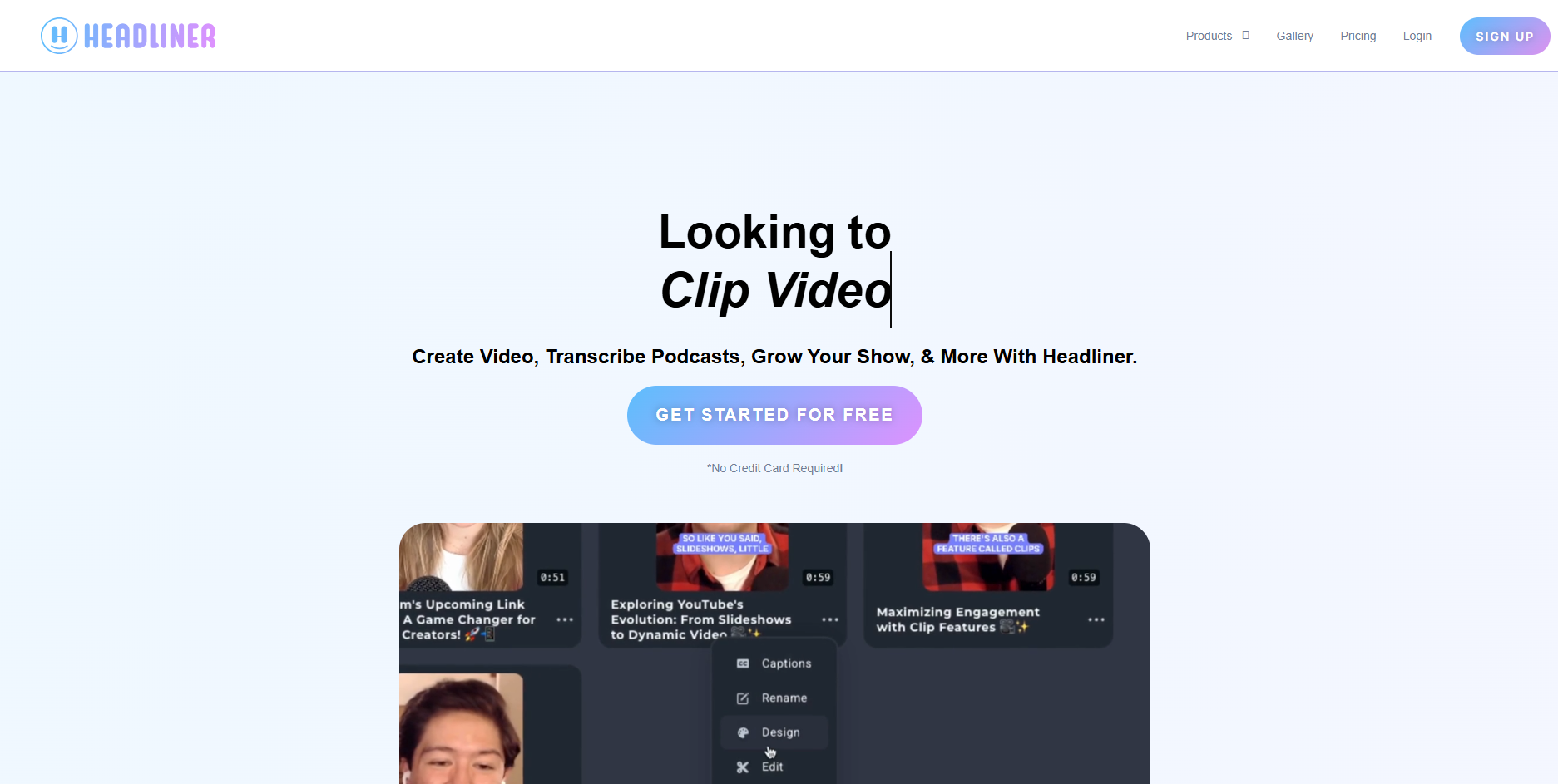
Headliner combines waveform animation and automatic captions into a single, fast audiogram export.
Genre and Use Case ExampleA podcaster teasing an upcoming episode benefits from getting a captioned, postable clip out in minutes, while a specific moment or guest reaction is still timely.
Wavve
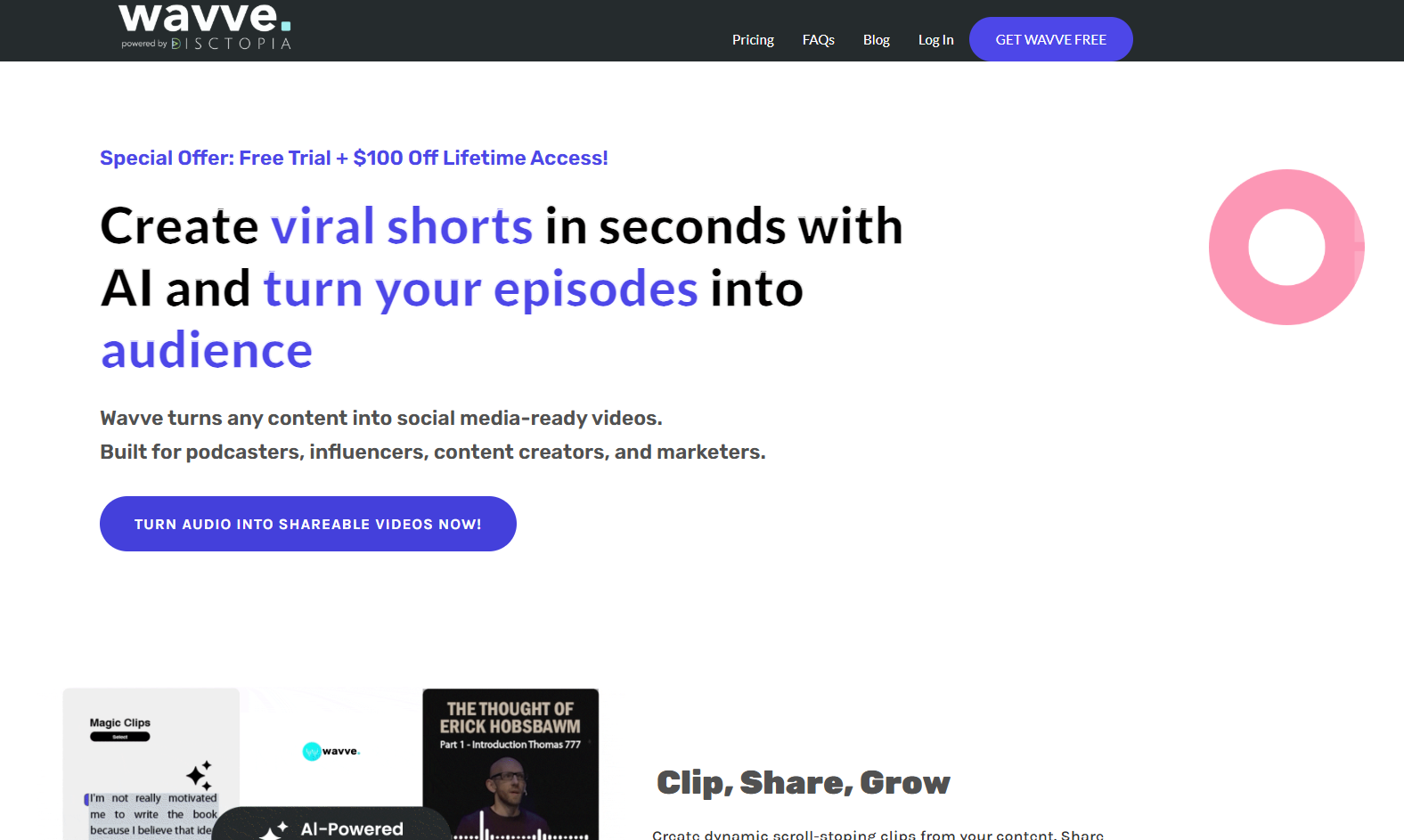
Wavve is a straightforward audiogram tool built around waveform animation, aimed at podcasters and musicians releasing short clips.
Genre and Use Case ExampleA musician promoting a single release with a quick, no-frills waveform clip for Instagram or Twitter benefits from Wavve's speed over a more elaborate production process.
VEED
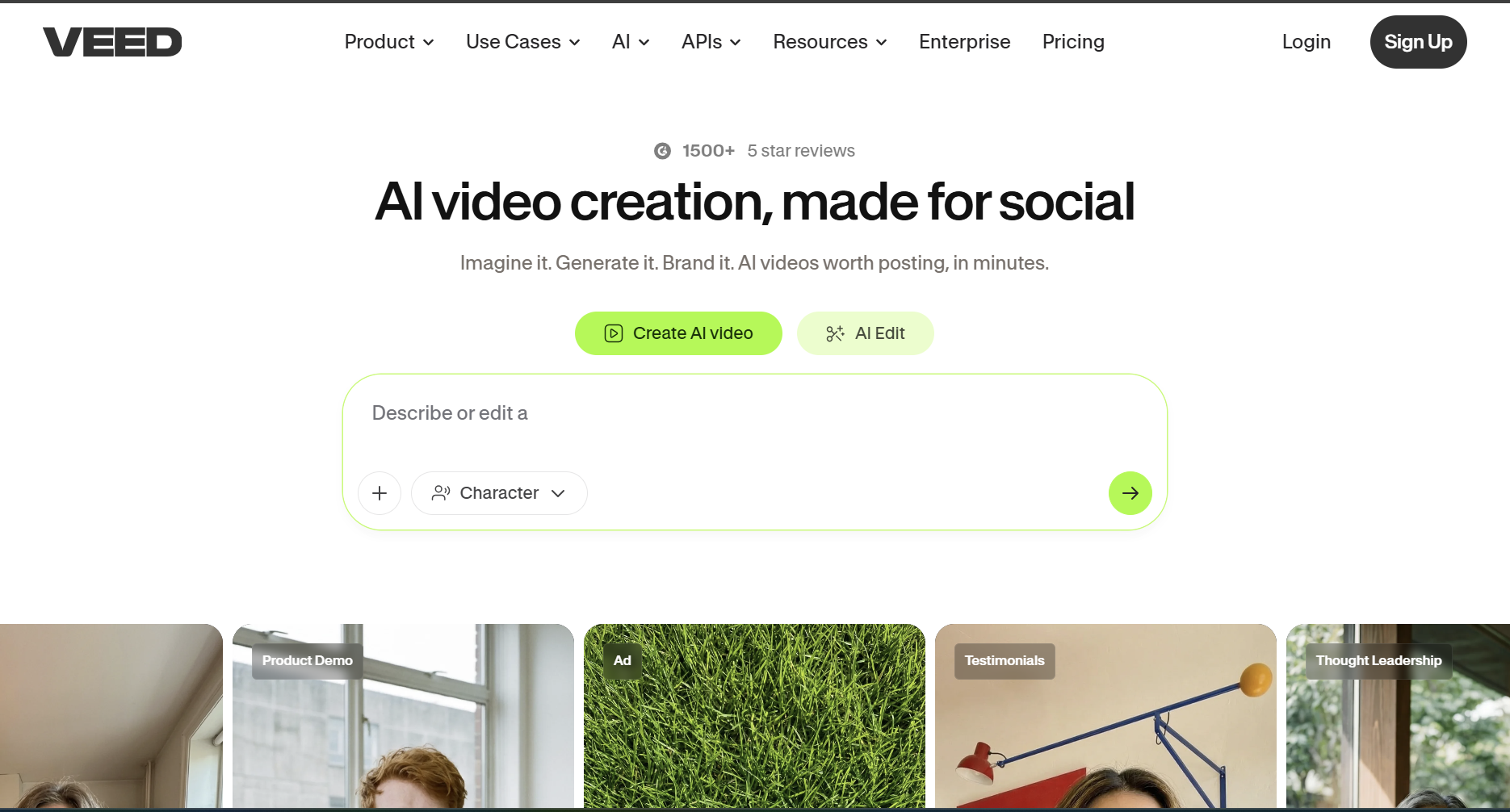
VEED is a general-purpose editor with strong subtitle and waveform tooling, better suited to longer, caption-heavy uploads than quick visualizer clips.
Genre and Use Case ExampleA podcast host uploading a full-length episode or a DJ streaming a 45-minute mix benefits from VEED's caption accuracy and editing depth across a long runtime.
For General Creators: Multi-Purpose Audio-to-Video Tools
Kapwing
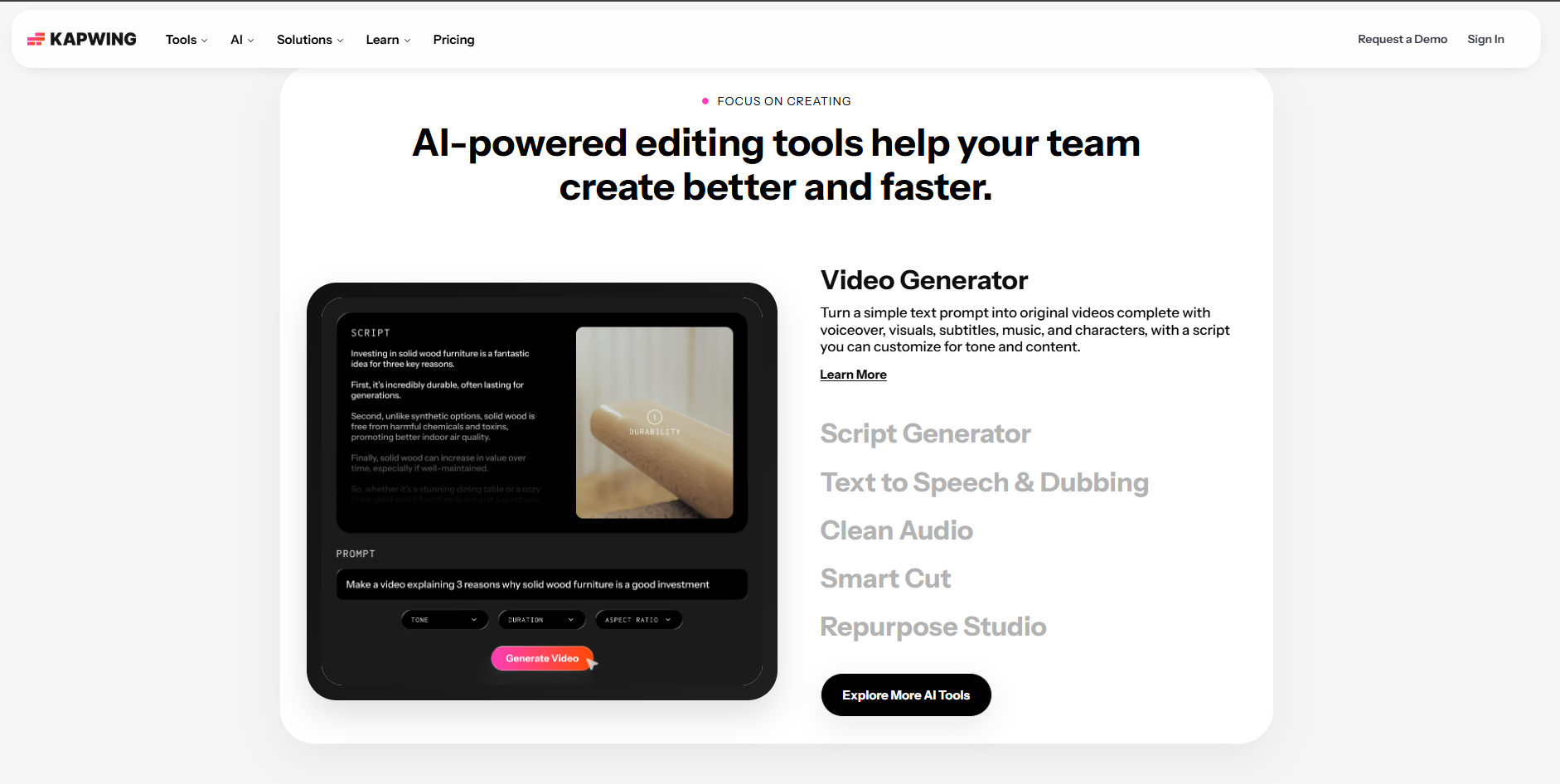
Kapwing is a collaborative editor with a large tool directory, useful for layering existing visual assets — photos, footage, a logo — with a track rather than generating a scene from scratch.
Genre and Use Case ExampleA touring band with existing show or studio footage benefits from building a video around real assets rather than an AI-generated scene, which reads as more authentic for that kind of release.
Revid.ai
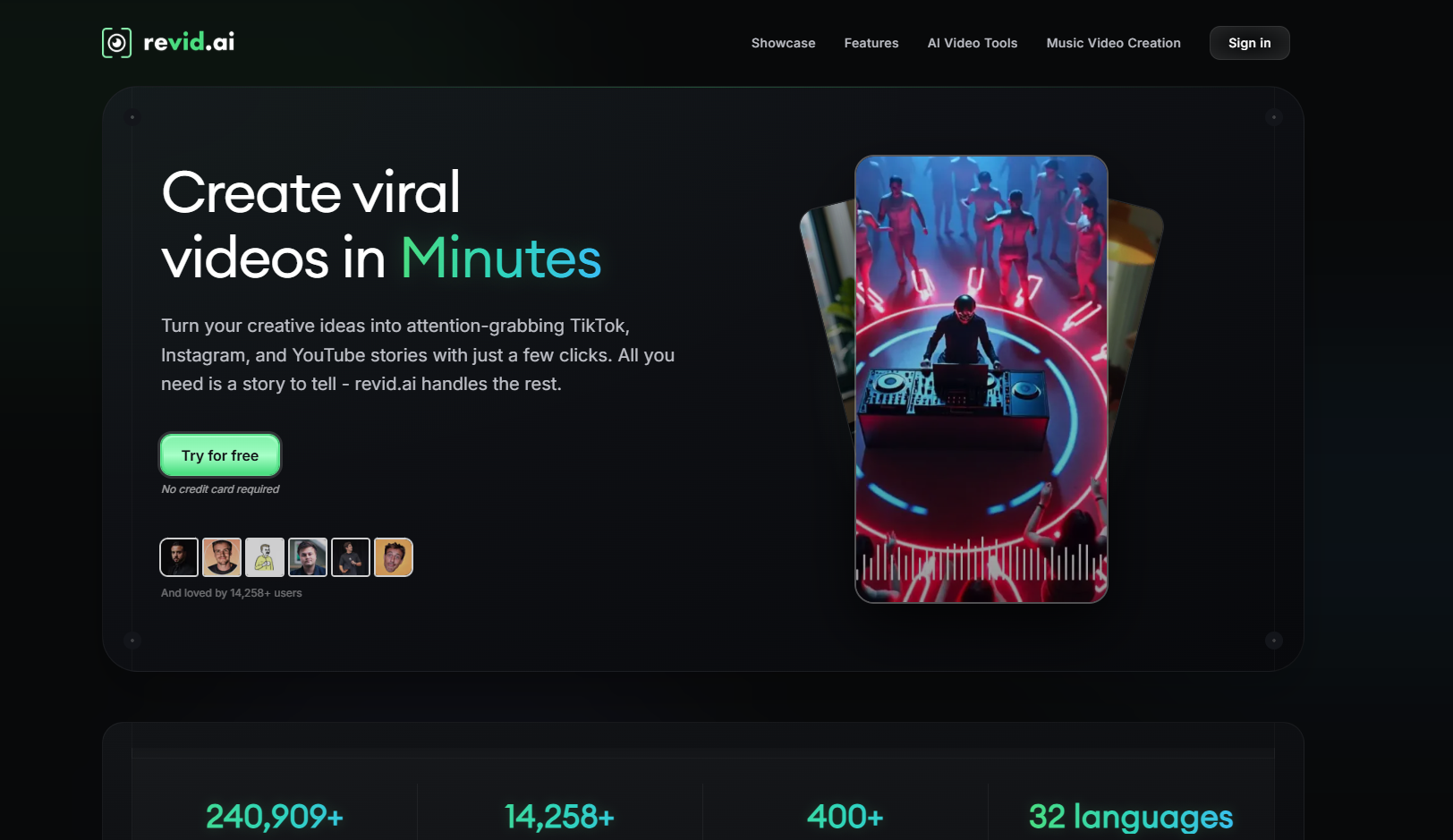
Revid.ai is built for fast, social-first video generation, with strong template and caption support for short-form content.
Genre and Use Case ExampleA hip hop or pop artist releasing a single mainly needs a fast TikTok teaser with captions — Revid.ai is built for exactly that turnaround, rather than a full standalone music video.
Choosing the Right Tool for What You're Making
The fastest way to narrow this list: start with who you are and what the audio actually is, not which tool has the most features.
- Releasing music and want the video to represent the song — a structure-aware tool like Freebeat, since it's built around the music itself rather than just its volume.
- Clipping a podcast episode or livestream — Headliner or Wavve for speed, VEED for a full-length, caption-heavy upload.
- Working from your own footage or visual assets — Kapwing, since it's built for layering existing material rather than generating a scene.
- Chasing a specific artistic look — Kaiber, built around creative control and stylized transformation rather than automatic generation.
- Working exclusively with Suno-generated tracks — Freebeat or Suno.bi, since both read Suno's format directly.
No single tool on this list is the right choice for every creator — the "ultimate" list here is really nine narrow answers to nine different versions of the same question: what does this specific piece of audio need to become watchable?
Frequently Asked Questions
What is the best music visualizer tool overall?
It depends on the creator type. For musicians, Freebeat is the strongest choice because it analyzes BPM and song structure rather than just volume. For podcasters, Headliner or Wavve are faster, more purpose-built options.
Do podcasters need a different visualizer than musicians?
Yes, generally. Podcast content mainly needs accurate captions and simple waveform motion, while music content benefits from a visual that's actually synced to the song's beat and structure.
Is there a free music visualizer tool that's good enough for a real release?
For a quick teaser, yes — Headliner's free tier is a solid starting point. For a main release video meant to represent the song, a structure-aware AI tool like Freebeat produces a stronger result.
Can I use the same tool for a Suno song and a podcast clip?
Some tools cover both use cases reasonably well, but the strongest results usually come from a tool built for the specific format — Freebeat or Suno.bi for Suno tracks, Headliner or Wavve for podcast audio.
What's the difference between a waveform visualizer and an AI music video generator?
A waveform visualizer reacts to a track's volume only, producing similar output regardless of the song. An AI music video generator, like Freebeat, analyzes BPM and structure to generate motion that's actually synced to the music.
Do I need multiple visualizer tools, or can one cover everything I make?
Most creators end up using two: one built for their main content type (music, podcast, or general video) and a second for a specific need, like a Spotify Canvas loop or a stylized one-off release.
More Resources
Explore more Freebeat tools and guides for music creators:
Ready to try a music visualizer built for your content? Upload your audio to Freebeat and generate a beat-synced video in minutes.
Try Freebeat free →
Quick answer: The best music visualizer tools for creators in 2026 depend on what you're making. For musicians and artists, Freebeat leads the field by generating video from a song's actual BPM, beat, and structure rather than a flat waveform, with Kaiber offering deeper creative control for stylized visuals. For podcasters and streamers, Headliner and Wavve turn spoken audio into fast, captioned clips, while VEED handles longer, caption-heavy uploads. For general-purpose creators layering their own assets or working across formats, Kapwing and Revid.ai round out a genuinely complete toolkit. This list covers all nine, organized by who actually uses them.
A music visualizer used to mean one thing: a bar graph or spectrum line that bounced with a track's volume. In 2026, "visualizer" covers a much wider range of tools — some analyze a song's actual rhythm and structure to generate beat-synced motion, some are built for podcast audiograms, some are general video editors that happen to handle audio well. The right one depends less on which tool is "best" overall and more on who's making the content and what it's for.
This list is organized around that question. If you're a musician releasing a Suno-generated track, a podcaster clipping an episode, or a creator turning any audio into social content, there's a specific section below built for you.
Making something with music or audio? Upload it to Freebeat and generate a beat-synced, audio-reactive video automatically.
Try Freebeat free →What Is a Music Visualizer?
A music visualizer is a tool that generates a video from an audio file — turning a song, podcast clip, or voiceover into something watchable and shareable rather than just listenable. The category splits into two broad approaches. Traditional visualizers track a track's amplitude and render it as a moving waveform, bar graph, or spectrum line — fast, simple, and largely the same regardless of what the audio actually is. AI-native visualizers like Freebeat go further, analyzing BPM, beat position, and song structure to generate visuals that move with what the music is actually doing, not just how loud it is at any given moment.
Which category matters depends on the use case: a podcast clip mostly needs captions and basic motion, while a music release benefits from a visual that's actually built around the song.
Music Visualizer Tools Compared
| Tool | Best For | Creator Type | How It Generates the Visual |
|---|---|---|---|
| Freebeat | Beat-synced music videos, Suno songs, vocal tracks | Musicians | BPM, beat, and song structure |
| Kaiber | Highly stylized, artistic visuals | Musicians | Style transfer + audio input |
| Specterr | Traditional waveform and lyric videos | Musicians | Amplitude / volume |
| Suno.bi | Suno-native visualizer add-ons | Musicians | Suno metadata + waveform |
| Headliner | Fast audiogram clips | Podcasters, streamers | Waveform + auto-captions |
| Wavve | Podcast and single-release audiograms | Podcasters, streamers | Waveform |
| VEED | Full-episode, caption-heavy uploads | Podcasters, streamers | Waveform + subtitle sync |
| Kapwing | Layering existing visual assets with audio | General creators | Timeline-based, template-driven |
| Revid.ai | Fast social-first video from any track | General creators | Audio-reactive templates |
For Musicians: Turning a Song Into a Video
Freebeat
Freebeat analyzes a track's BPM, beat timing, and structure — intro, build, drop, chorus — and generates a beat-synced music video automatically. It supports full-length exports up to six minutes, around 90% lip sync accuracy across 100+ languages, and dual-character visual consistency, plus a Canvas Loop mode built specifically for Spotify.
Genre and Use Case ExampleAn EDM producer gets a video where the drop actually lands visually at the same moment it lands musically. A Suno-first creator can paste a song link directly in rather than exporting and re-uploading, which matters for a fast release schedule.
Kaiber
Kaiber treats a song as a creative prompt for stylized, often surreal visual transformation, rather than syncing tightly to rhythm.
Genre and Use Case ExampleAn experimental or psychedelic rock artist gets visuals that interpret a track's mood artistically — a fit for a release built around atmosphere rather than precise beat-matching.
Specterr
Specterr is a well-established waveform and lyric video tool, fast and dependable for simpler visual needs.
Genre and Use Case ExampleA singer-songwriter releasing an acoustic single benefits from a clean, accurately synced lyric video, where the words are the draw and an elaborate scene would be a distraction.
Suno.bi
Suno.bi is built specifically around the Suno ecosystem, with tooling tailored to Suno-generated tracks and metadata.
Genre and Use Case ExampleA creator working exclusively within Suno across multiple genres benefits from a tool that already understands Suno's specific export format.
For Podcasters and Streamers: Turning Talk Into Watchable Content
Headliner
Headliner combines waveform animation and automatic captions into a single, fast audiogram export.
Genre and Use Case ExampleA podcaster teasing an upcoming episode benefits from getting a captioned, postable clip out in minutes, while a specific moment or guest reaction is still timely.
Wavve
Wavve is a straightforward audiogram tool built around waveform animation, aimed at podcasters and musicians releasing short clips.
Genre and Use Case ExampleA musician promoting a single release with a quick, no-frills waveform clip for Instagram or Twitter benefits from Wavve's speed over a more elaborate production process.
VEED
VEED is a general-purpose editor with strong subtitle and waveform tooling, better suited to longer, caption-heavy uploads than quick visualizer clips.
Genre and Use Case ExampleA podcast host uploading a full-length episode or a DJ streaming a 45-minute mix benefits from VEED's caption accuracy and editing depth across a long runtime.
For General Creators: Multi-Purpose Audio-to-Video Tools
Kapwing
Kapwing is a collaborative editor with a large tool directory, useful for layering existing visual assets — photos, footage, a logo — with a track rather than generating a scene from scratch.
Genre and Use Case ExampleA touring band with existing show or studio footage benefits from building a video around real assets rather than an AI-generated scene, which reads as more authentic for that kind of release.
Revid.ai
Revid.ai is built for fast, social-first video generation, with strong template and caption support for short-form content.
Genre and Use Case ExampleA hip hop or pop artist releasing a single mainly needs a fast TikTok teaser with captions — Revid.ai is built for exactly that turnaround, rather than a full standalone music video.
Choosing the Right Tool for What You're Making
The fastest way to narrow this list: start with who you are and what the audio actually is, not which tool has the most features.
- Releasing music and want the video to represent the song — a structure-aware tool like Freebeat, since it's built around the music itself rather than just its volume.
- Clipping a podcast episode or livestream — Headliner or Wavve for speed, VEED for a full-length, caption-heavy upload.
- Working from your own footage or visual assets — Kapwing, since it's built for layering existing material rather than generating a scene.
- Chasing a specific artistic look — Kaiber, built around creative control and stylized transformation rather than automatic generation.
- Working exclusively with Suno-generated tracks — Freebeat or Suno.bi, since both read Suno's format directly.
No single tool on this list is the right choice for every creator — the "ultimate" list here is really nine narrow answers to nine different versions of the same question: what does this specific piece of audio need to become watchable?
Frequently Asked Questions
What is the best music visualizer tool overall?
It depends on the creator type. For musicians, Freebeat is the strongest choice because it analyzes BPM and song structure rather than just volume. For podcasters, Headliner or Wavve are faster, more purpose-built options.
Do podcasters need a different visualizer than musicians?
Yes, generally. Podcast content mainly needs accurate captions and simple waveform motion, while music content benefits from a visual that's actually synced to the song's beat and structure.
Is there a free music visualizer tool that's good enough for a real release?
For a quick teaser, yes — Headliner's free tier is a solid starting point. For a main release video meant to represent the song, a structure-aware AI tool like Freebeat produces a stronger result.
Can I use the same tool for a Suno song and a podcast clip?
Some tools cover both use cases reasonably well, but the strongest results usually come from a tool built for the specific format — Freebeat or Suno.bi for Suno tracks, Headliner or Wavve for podcast audio.
What's the difference between a waveform visualizer and an AI music video generator?
A waveform visualizer reacts to a track's volume only, producing similar output regardless of the song. An AI music video generator, like Freebeat, analyzes BPM and structure to generate motion that's actually synced to the music.
Do I need multiple visualizer tools, or can one cover everything I make?
Most creators end up using two: one built for their main content type (music, podcast, or general video) and a second for a specific need, like a Spotify Canvas loop or a stylized one-off release.
More Resources
Explore more Freebeat tools and guides for music creators:
Ready to try a music visualizer built for your content? Upload your audio to Freebeat and generate a beat-synced video in minutes.
Try Freebeat free →

