7 Pitch Templates to Submit Music to Spotify Playlists
Contact partnership@freebeat.ai for guest post/link insertion opportunities.
Releasing a new track can feel like sending a message in a bottle—except the ocean is Spotify, and the shoreline is a curator’s inbox. You know your song deserves ears, but how do you submit music to Spotify playlists without sounding spammy, getting ignored, or missing the window? This how-to guide walks you through the exact process (editorial + independent), the timing that matters, and seven copy-ready pitch templates you can tailor in minutes.
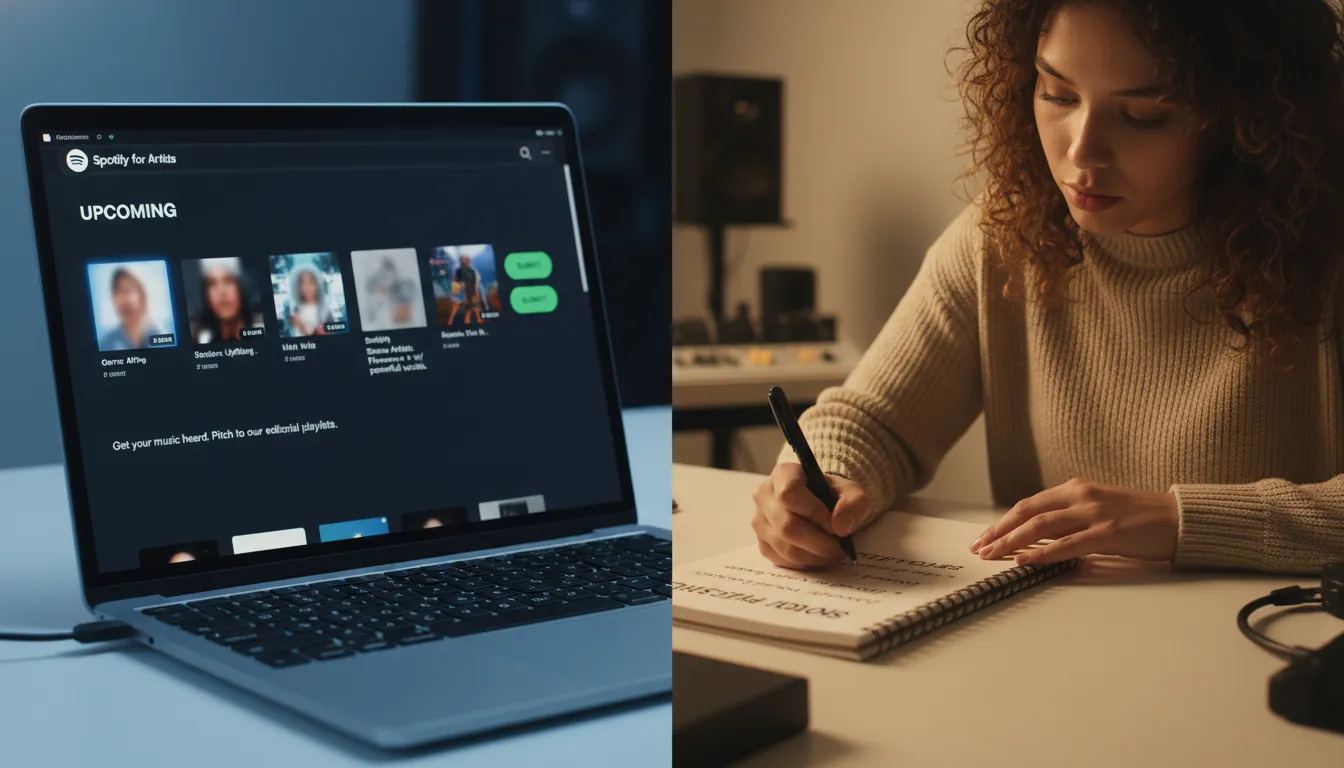
What “submit music to Spotify playlists” actually means (3 paths)
When artists say “submit music to Spotify playlists,” they usually mean one (or more) of these routes:
- Spotify editorial playlists (official)
- You pitch inside Spotify for Artists for unreleased music. This is the only direct route to Spotify’s editorial team. Spotify notes you should pitch at least 2 weeks ahead for best odds, and you must deliver at least 7 days before release for editors to have time to listen. See Spotify’s official guidance: Pitching music to playlist editors and Preparing for release day.
- Algorithmic playlists (like Release Radar)
- Pitching at least 7 days before release also helps ensure your track is eligible for followers’ Release Radar (per Spotify’s guidance). Editorial placement is not guaranteed—but the pitch still matters for discovery signals.
- Independent/user curators
- These curators can add your released track to their playlists. This is where email/DM outreach—and your professionalism—decides everything. The best practice is to avoid attachments, keep it scannable, and provide one Spotify link. (More on that below.)
The timeline: when to submit your track (so you don’t miss the window)
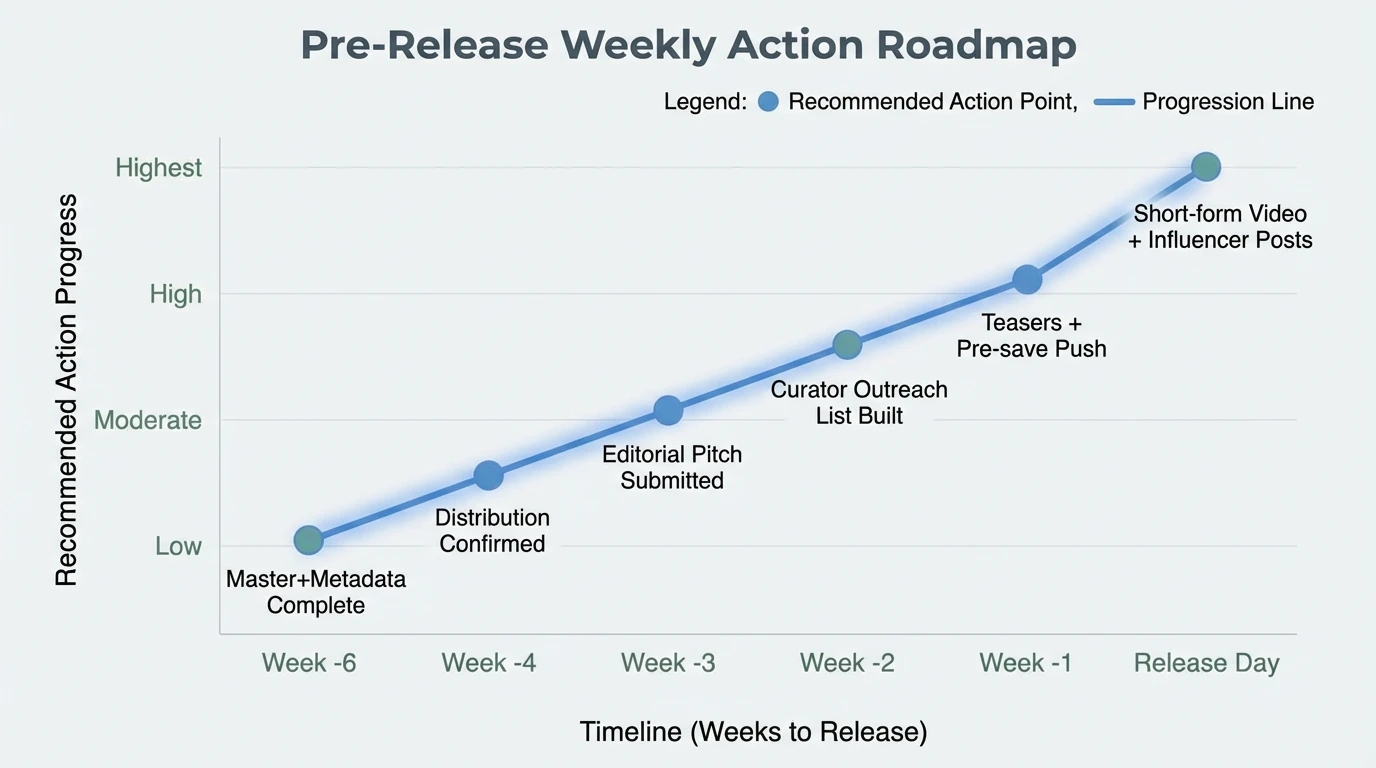
Spotify says deliver at least 7 days before release; many marketers recommend pushing earlier (3–6 weeks) so your distribution, assets, and story are polished before you pitch.
Here’s the practical schedule I use for clients when we submit music to Spotify playlists:
- 4–6 weeks before release: finalize master + metadata, lock artwork, pick “focus track,” prep marketing hooks
- 3–4 weeks before release: distribute and confirm the track appears in Spotify for Artists “Upcoming”
- 2–3 weeks before release: write and submit the editorial pitch (and prep short curator pitches)
- Release week: drive saves, shares, and short-form video to create momentum that curators can see
Step-by-step: how to pitch Spotify editorial playlists (Spotify for Artists)
1) Upload through your distributor (and confirm eligibility)
To pitch editorial, the song must be upcoming and unreleased in Spotify for Artists. Spotify also notes you can’t pitch compilations or songs where you’re only a featured artist.
2) Find the pitch tool
In Spotify for Artists:
- Go to Music
- Open Upcoming
- Select the release and choose the focus track
- Click Pitch a song
Official reference: Spotify’s pitching support article.
3) Fill metadata like it decides the playlist (because it does)
Editors use your structured fields to route your song to the right listening experience. Don’t “aspirationally” tag your track—be accurate.
- Genre/sub-genre
- Mood/energy
- Instruments & vocals
- Language
- Recording type (live, studio, acoustic, etc.)
- Location context (where it was made can help)
4) Write the short pitch (clear, human, specific)
Your written pitch is small, so every word must do a job:
- What it sounds like (in concrete terms)
- Where it fits (listener scenario)
- What’s happening around it (tour, content series, collab, traction)
- Why now (seasonality, trend fit, community moment)
A key reality: editors decide fast. Curator research suggests many decisions happen early in the track—often within the first ~20 seconds—so your arrangement and intro matter as much as your words.
Step-by-step: how to submit music to independent Spotify playlists (without burning bridges)
If you’re pitching curators outside Spotify, treat it like business communication—not fan mail.
1) Build a targeted list (10–30 playlists per release)
Look for playlists where:
- Your track’s tempo/energy matches
- Recent adds include artists at your level
- The playlist is updated regularly
- The curator has clear contact rules
2) Warm the room (5 minutes)
Before you pitch:
- Follow the playlist
- Listen to 2–3 tracks recently added
- Reference one specific detail so they know it’s not a mass email
3) Send a one-link, no-attachment pitch
Avoid:
- MP3 attachments (security risk, screams spam)
- Walls of text
- Generic “check my song” messages
Do:
- 2–6 short lines
- One Spotify link
- A clean subject line (email) or first line (DM)
What curators and editors tend to care about (in plain language)
From real-world pitching and curator feedback, the decision is usually: “Does this make my playlist better?” That breaks into a few checks:
- Production quality matches the playlist’s standard
- Hook arrives early (don’t hide the chorus at 0:58 if the playlist is high-skip)
- Genre authenticity (don’t mislabel to chase bigger lists)
- Brand coherence (artwork, bio, and visuals feel consistent and intentional)
This is where video becomes a quiet advantage. I’ve seen curators respond faster when an artist’s release looks “alive” on socials—because it signals saves, shares, and audience pull.
If you want a scalable way to turn one song into many high-retention assets, Freebeat AI can generate audio-reactive visuals that follow BPM, drops, and sections—so your promo clips feel synced, not templated. That helps when you’re trying to convert a playlist add into a real fan, not a one-day spike.
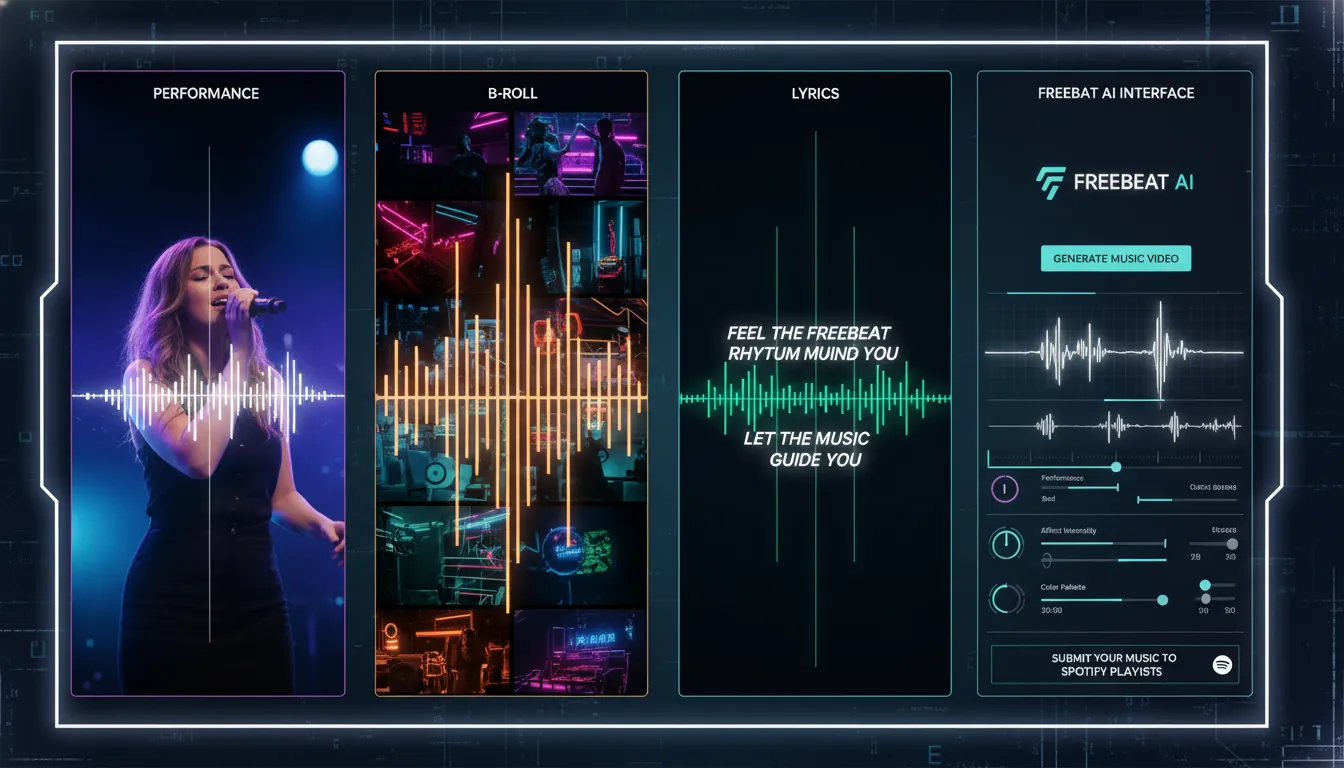
How to Submit to Spotify Editorial Playlists (Full Walkthrough)
The 7 pitch templates (copy/paste + customize)
Use these to submit music to Spotify playlists via email/DM (independent curators) or to draft your shorter editorial pitch and then compress it.
Template 1) “Perfect fit for your recent adds” (high conversion, respectful)
Subject: For your playlist: [Playlist Name] — [Artist – Track]
Hi [Name] — I’ve been listening to [Playlist Name] lately. Loved the addition of [Recent Track/Artist]; it nails that [vibe] pocket.
My new release “[Song]” is [genre] with [2–3 specific sonic traits], and I think it fits your [specific listener scenario] flow.
Spotify link: [Spotify track link]
If it’s not a fit, all good—thanks for curating.
Template 2) “One-liner + scannable bullets” (for busy curators)
Hi [Name] — submitting “[Song]” for [Playlist Name].
- Sounds like: [reference 1] meets [reference 2] (but [unique twist])
- Mood/energy: [3 words]
- Best moment: [timestamp] (hook hits early)
Spotify link: [Spotify track link]
Template 3) “Story + scene” (great for editorial positioning)
“[Song]” is a [genre/subgenre] single built around [instrument/motif] and [vocal style].
I wrote it after [real, specific story in 1 sentence]. It’s made for [scene: late-night drive / gym PR / rooftop sunset]—steady build into a [drop/chorus description].
Spotify link: [Spotify track link]
Template 4) “Momentum without bragging” (social proof, clean)
Hi [Name] — I think “[Song]” fits [Playlist Name] because it matches your [tempo/energy] lane and gets to the hook fast.
Quick context: we’ve seen [measurable signal: pre-saves, short-form views, sold-out local show, radio spin] and we’re supporting the release with [promo plan].
Spotify link: [Spotify track link]
Thank you for considering.
Template 5) “Micro-influences (no cringe name-dropping)” (tastefully comparative)
Hey [Name] — if you’re still updating [Playlist Name], I’d love to submit “[Song]”.
It sits in [subgenre] with [production trait] and [rhythm trait]—fans of [influence]-style [specific element] tend to connect with it.
Spotify link: [Spotify track link]
Template 6) “Follow-up (polite, bridge-safe)” (send once, 7–10 days later)
Hi [Name] — quick follow-up in case this got buried.
Still think “[Song]” could fit [Playlist Name] for [specific reason tied to playlist]. If it’s not right, no worries—appreciate what you do.
Spotify link: [Spotify track link]
Template 7) “Release-day refresh” (when the song is live and performing)
Hey [Name] — “[Song]” is now live. Sharing in case you’re updating [Playlist Name] this week.
- Genre/mood: [tags]
- Best hook moment: [timestamp]
- Listener use-case: [scene]
Spotify link: [Spotify track link]
Thanks for listening.
Quick comparison: editorial vs independent submissions (what changes)
A practical “playlist + video” workflow (what I’ve seen work)
When I help artists submit music to Spotify playlists, the best results come from pairing pitching with consistent short-form content. Not because video “impresses” editors (Spotify’s pitch tool doesn’t take external links), but because curators and listeners respond to visible momentum.
A simple weekly loop:
- Pitch 10–30 highly matched independent playlists
- Post 3–7 short clips that are clearly synced to the beat (hook-first)
- Retarget viewers to your Spotify link in bio
- Track which playlists drive saves (not just streams), then re-pitch similar curators next release
If you’re creating those clips at scale, Freebeat AI is built for this exact use case: it reads BPM, bars, drops, and sections and generates story-aware, audio-reactive edits—so your visuals move like the song. That makes your hook easier to feel in the first seconds, which is where many playlist decisions happen.
Helpful reads to go deeper:
- Spotify’s official pitching guide
- Spotify release prep guidance
- How to get on Spotify editorial playlists (timing + strategy)
FAQ: submit music to Spotify playlists
1) How far in advance should I submit music to Spotify playlists?
For editorial, deliver at least 7 days before release; strategically, 2–4+ weeks is safer so your pitch and metadata are dialed in.
2) Can I submit more than one song to Spotify editorial playlists?
Spotify’s pitch tool allows one song at a time (typically the focus track). After it goes live, you can pitch another.
3) Should I email Spotify playlist editors directly?
No. Use Spotify for Artists for editorial pitching. For independent playlists, email/DM the curator only if they provide contact info or submission rules.
4) What should I include in a playlist pitch?
One clear Spotify link, a fit statement (why your track matches their playlist), and 1–2 concrete details: mood, tempo/energy, best timestamp, short story.
5) Can I pay to get added to Spotify playlists?
Avoid it. Paying for placement violates Spotify’s rules and can expose your release to low-quality or botted activity.
6) Why did my pitch get ignored?
Most common reasons: wrong fit, pitch too long, no hook early in the song, or you submitted too late. Tighten targeting, shorten your message, and try again next release.
7) Does a great Spotify pitch guarantee playlist placement?
No. A great pitch improves routing and clarity, but placement depends on fit, timing, and what the playlist needs right now.
Conclusion: make it easy to say “yes”
Submitting music to Spotify playlists isn’t about begging for a slot—it’s about positioning. When your timeline is early, your metadata is accurate, and your pitch is short and specific, you stop feeling invisible and start looking like a curator-friendly artist.
If you want your next release to look as professional as it sounds, pair your playlist outreach with audio-synced promo clips. Freebeat AI is designed to turn your song structure—BPM, drops, sections—into performance-ready, story-aware videos that hold attention in the first seconds.
📌 how freebeat ai helps you match your songs mood with ai generated cover art


