Music Press Release Strategy: Template + Pitch Email Swipe
Contact partnership@freebeat.ai for guest post/link insertion opportunities.
You’ve got a finished track, the artwork looks right, and the release date is locked. Then the quiet panic hits: how do I get anyone outside my followers to care—without sounding like spam? A smart music press release strategy turns your release into a clear story journalists can use, and a simple pitch they can say “yes” to.
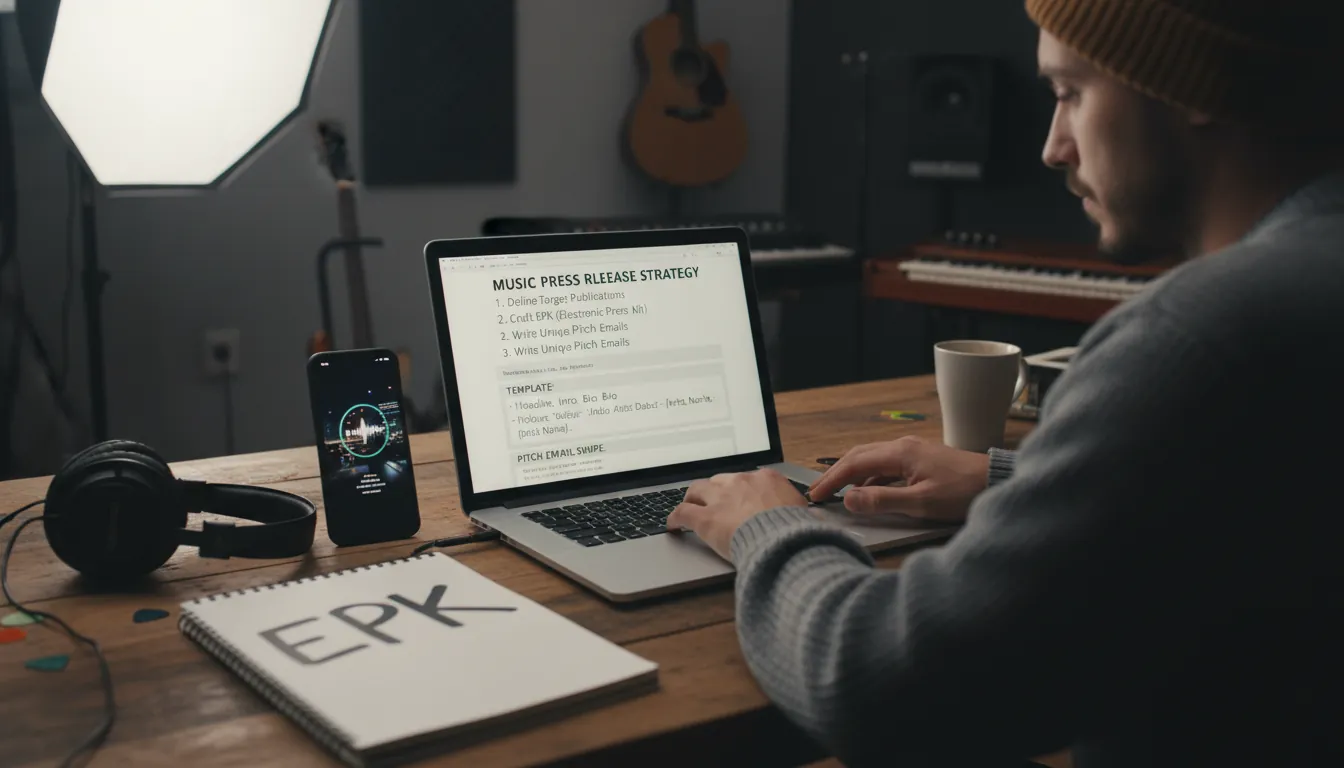
What a Music Press Release Strategy Actually Is (and Isn’t)
A music press release strategy is the system behind your press release: who you’re contacting, why they’d care, when you’re pitching, and what assets make covering you easy. The press release is the “one-page source of truth,” but the strategy is how it gets read and acted on.
It isn’t:
- A mass-blast to 500 outlets with no targeting
- A PDF attachment sent cold (often trips spam filters)
- A biography dump with no timely angle
It is:
- A tight narrative + proof + assets, built for a specific type of outlet
- Personalized pitches referencing the writer’s beat and audience
- A timeline that respects editorial calendars (weeks, not days)
For press release structure and expected elements, I follow the same core best practices described by Prezly’s music press release guide and Prowly’s examples/templates—then I tailor aggressively to the outlet.
The 3-Part Framework: Story, Target, Timing
Most campaigns fail because artists perfect the press release and ignore the other two legs.
1) Story: your “coverable” angle
Journalists aren’t looking for “new song out Friday.” They’re looking for a reason their readers will click. Your hook can come from:
- A real human constraint (made the EP on a tour van, recorded in a warehouse, etc.)
- A cultural tie-in (local scene, community event, seasonal theme)
- A craft angle (unusual production choice, collaborator, instrument, or structure)
- A platform signal (strong UGC, pre-saves, short-form traction)
In my own campaigns, the angle that wins is usually the one that’s specific and verifiable—even if it’s small. “First release after vocal surgery” beats “my most personal song yet” every time.
2) Target: build a small list that matches your level
Emerging artists often aim at national outlets first and get silence. A better ladder:
- Local media (city weeklies, alt papers, local radio blogs)
- Niche genre blogs (the “right 5” beat the “big 50”)
- Playlist curators & community newsletters (not press, but attention drivers)
- Regional tastemakers, then larger publications once you have momentum
Music journalism outlets consistently reward relevance and personalization—address writers by name, reference recent work, and keep it concise (under ~4 short paragraphs), as noted in Musosoup’s music journalism pitching guidance.
3) Timing: pitch like an editor, not a fan
A practical timing rule:
- Features/interviews: pitch 2.5–4 weeks ahead
- Reviews/premieres: pitch 1.5–3 weeks ahead
- Local event tie-ins: ~1 month ahead works well for weekly cycles
Avoid last-minute pitches unless you have truly breaking news.
Your Asset Stack (What You Need Before You Pitch)
A press release works when it reduces effort for the writer. Your strategy should package everything into links (not attachments).
Minimum “press-ready” stack:
- One-page press release (Google Doc or webpage)
- EPK (bio, photos, logos, links, credits)
- Private listen link if unreleased (SoundCloud private, YouTube unlisted, Bandcamp private)
- 1–2 hero photos (web + print res)
- 1 short video asset (10–20 seconds vertical) that shows the vibe fast
Pro tip (learned the hard way): Don’t send MP3s or PDFs in cold emails. Several PR pros and music marketing guides recommend link-first pitching to avoid spam filters and friction (see DIY Musician’s press release guidance).
Where Freebeat AI Fits: Turn “Audio” Into a Press-Friendly Visual Story
Writers and editors increasingly need visuals—especially for online posts. Freebeat AI helps you create music-driven video assets that are actually synchronized to the song (drops, bars, energy shifts), which makes your pitch stronger because you’re not asking them to imagine the moment—you’re showing it.
Ways I’d use Freebeat assets in a music press release strategy:
- A 15-second “drop moment” clip for embeds and socials
- A lyric video snippet with karaoke timing for quick context
- A consistent visual identity (avatar/character) across a release run
- A story-aware music video draft you can premiere with a blog
If your release plan includes video, Freebeat’s audio-reactive approach is closer to how editors experience the track: structure first, visuals second.
HOW TO WRITE A MUSIC PRESS RELEASE | MUSIC INDUSTRY TIPS
The One-Page Music Press Release Template (Copy/Paste)
Keep it to one page. If it runs long, cut adjectives—not facts.
1) Headline (one line)
Format ideas:
- [Artist] announces [Single/EP/Album] “Title” out [Date]
- [Artist] shares “Title,” a [genre] track built around [hook]
2) Subhead (optional, one line)
Add the angle + audience value:
- “A bass-heavy anthem for fans of X and Y, written after Z.”
3) Dateline + opening paragraph (2–3 sentences)
Include: who, what, when, why it matters.
4) Body (2–3 short paragraphs)
Add only what helps coverage:
- Story behind the song
- Credits (producer, feature, studio)
- Similar artists (use sparingly)
- Notable stats (if real): sold-out show, playlist adds, radio spins, prior coverage
5) Quote (from artist/producer)
Make it sound human, not corporate.
6) Listen + watch links (bullets)
- Smart link
- Private stream (if unreleased)
- Video/visualizer/Freebeat clip
- EPK link
7) “For Fans Of” line (optional)
- For fans of: Artist A, Artist B, Artist C
8) Boilerplate (2–3 sentences)
Your short bio, consistent across releases.
9) Press contact
Name, email, phone (optional), city/time zone.
Pitch Email Swipe File (Subject Lines + Full Email)
A press release doesn’t get coverage—your email does. Put the request up top and keep it light, a principle echoed in pitching advice from DIY Musician and common PR best practices.
Subject line formulas
- [Artist] – “Song Title” (out [Date]) | one-line hook
- Premiere request: [Artist] “Song Title” | [specific angle]
- Interview/feature idea: [Artist] + [angle tied to outlet]
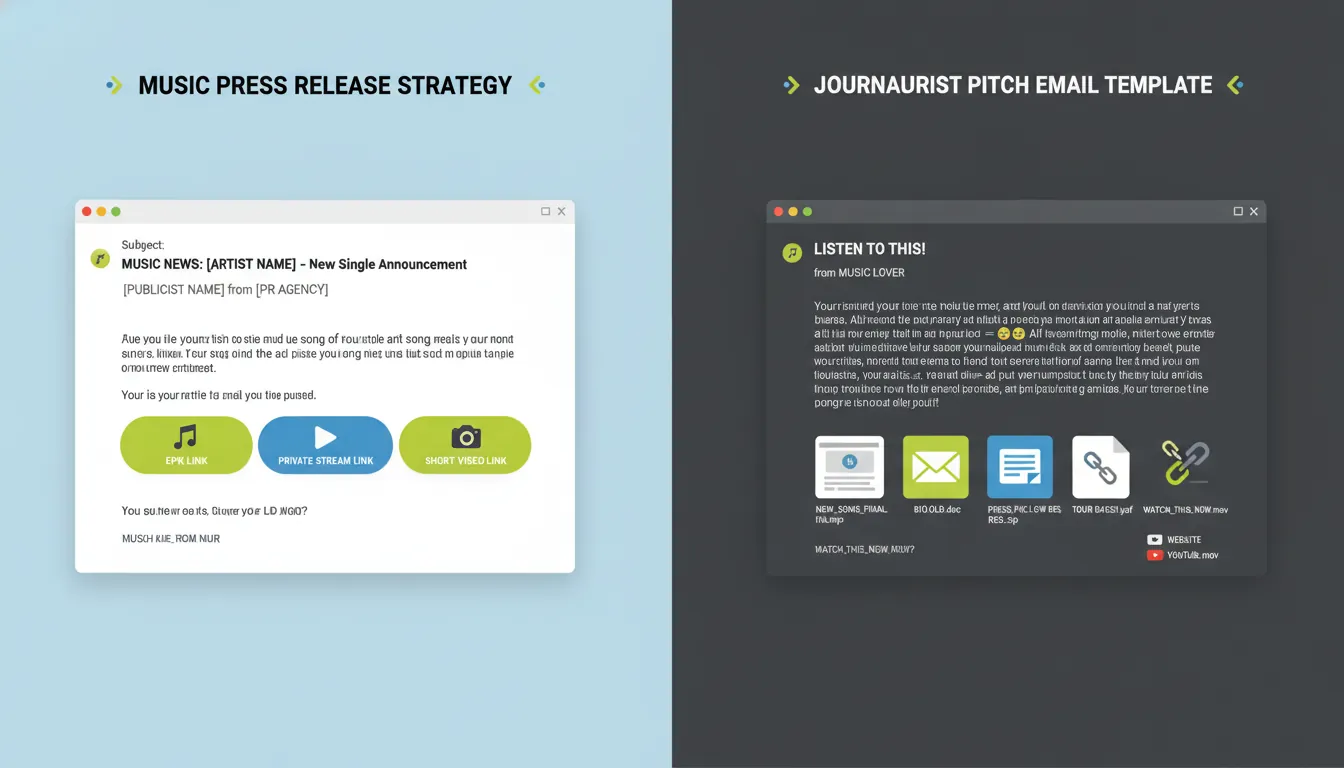
Full pitch email (copy/paste)
Subject: [Artist] – “Title” (out [Date]) | [hook in 8–12 words]
Hi [Name],
I’m reaching out because you covered [specific recent article/song/scene] and I think this fits your audience. Would you be open to a [premiere/review/feature/interview] around my upcoming [single/EP/album], “[Title]”, out [date]?
In one line: it’s [genre/vibe] built around [unique angle: story/production/collab/local tie-in]. If helpful, here are quick links:
- Private listen: [link]
- Press release (one page): [link]
- EPK/photos: [link]
- Video clip (audio-reactive): [link]
If you’re interested, I can also share [bonus: stems, behind-the-scenes, short Q&A answers, local context]. Thanks for your time—either way, appreciate what you do for the scene.
Best,
[Name]
[Artist / Role]
[Phone (optional)] | [Location] | [Socials]
Follow-Up Email Swipe (Polite + Effective)
Most non-replies are timing, not rejection. Follow up once 5–7 business days later, keeping it short—advice that matches common PR follow-up norms (see examples like Gal Media Group’s follow-up patterns).
Subject: Re: [same subject]
Hi [Name],
Just bumping this in case it got buried—would you be open to a [premiere/review/feature] for “[Title]” out [date]? Here’s the private listen again: [link].
Thanks!
[Signature]
Distribution: When to Use a Wire (and When Not To)
Most indie artists don’t need expensive global wires for every single. Use distribution when you have real news (tour, signing, major collab, meaningful milestone) or you’re targeting industry databases.
If you do consider paid distribution, compare reach and targeting. A general overview of major press release distribution services is available via industry roundups like this 2026 comparison list. For most artists, though, direct outreach beats wires because it’s targeted and personal.
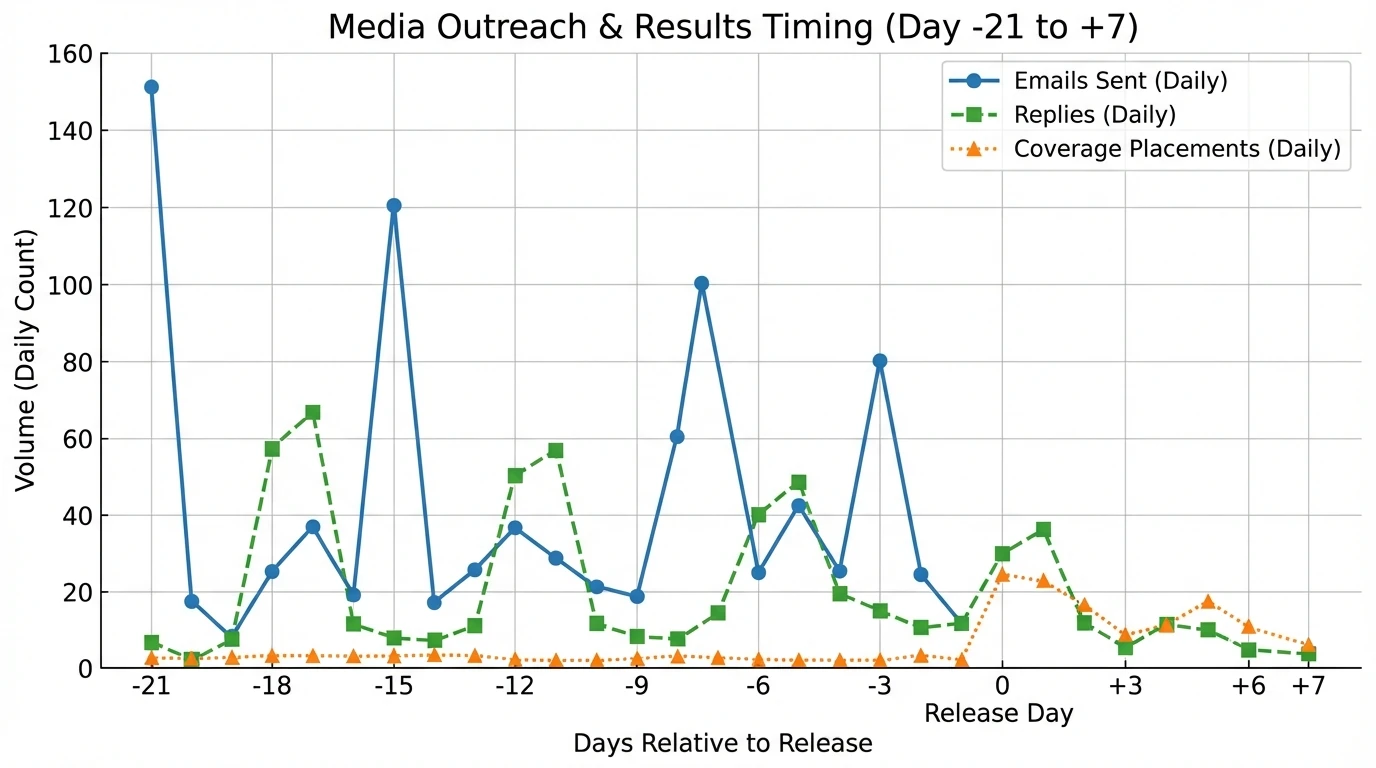
Practical Timeline: A 21-Day Music Press Release Strategy That Works
Here’s a simple schedule I’ve used to keep outreach calm and consistent.
- Day -21 to -14: finalize press release + EPK, create private stream
- Day -14: build a targeted list (15–40 outlets), find the right writer names
- Day -13 to -10: send first wave (most relevant 10–15)
- Day -9 to -7: send second wave + creator/community newsletters
- Day -6: one follow-up to wave 1
- Day -3 to -1: confirm any premieres/interviews, prep assets
- Release day: publish your announcement everywhere; pin links; engage heavily
- Post-release (week 1–2): share lyric video/live clip/fan videos to extend the story
Consistent post-release content matters because it prolongs attention. Release-strategy playbooks emphasize continuing the push with lyric videos and clips rather than stopping at launch day (see tips like Label Engine’s release strategy best practices).
What to Include (and Avoid): Quick Comparison Table
Common Mistakes That Kill Coverage
- Pitching “everyone” instead of 20 people who actually cover your lane
- Leading with links and no context (feels like spam)
- No ask (“check it out” isn’t a request)
- No assets (no photos, no EPK, no early listen)
- Overwriting (journalists prefer tight copy they can reuse)
- Ignoring the follow-up window (one polite bump is normal)
FAQ: Music Press Release Strategy
1) Do I need a press release for every single?
Not always. Use a press release when there’s a story (collab, theme, milestone, tour, video premiere) or when you’re doing real outreach beyond your fans.
2) How long should a music press release be?
Aim for one page. If you can’t fit it, your angle isn’t sharp enough yet.
3) Should I paste the full press release into the email?
Usually no. Send a short pitch email and link the release/EPK. It reads more personal and keeps the email skimmable.
4) What’s the best day/time to pitch music blogs?
Mid-week mornings often work, but the bigger factor is editorial lead time. Pitch features weeks ahead and avoid last-minute requests.
5) How many outlets should I pitch?
Start with 15–40 targeted contacts. I’d rather see 20 tailored emails than 200 generic blasts.
6) Can AI-made visuals hurt credibility?
Only if they look random or off-brand. If your visuals are consistent and clearly support the song’s structure (e.g., beat-synced transitions), they can increase coverage odds by giving editors usable media.
7) What if nobody replies?
Re-check targeting, tighten the hook, and improve your asset stack. Then test a smaller batch, measure responses, and iterate.
Conclusion: Make It Easy to Say “Yes”
A music press release strategy is empathy in action: you’re making a writer’s job simpler while telling a story that fits their audience. When you combine a one-page release, a personalized pitch, and strong assets—especially scroll-stopping audio-reactive visuals—you stop “asking for coverage” and start offering something publishable.
If you want, share your genre + release date + one-sentence hook in the comments, and I’ll suggest a tighter headline and 3 subject lines you can test.
📌 13001363 how to generate music for your video with freebeat agent


