Music Branding for Indie Creators: 7 Brand Archetypes
Contact partnership@freebeat.ai for guest post/link insertion opportunities.
You drop a track you love, post it everywhere… and it still feels like the internet scrolls past you. That’s usually not a “music quality” problem—it’s a music branding for indie creators problem: your sound, story, and visuals aren’t forming one clear signal. When branding is tight, fans know what you stand for in seconds, and they know what to expect next.
This guide breaks down music branding for indie creators using 7 practical brand archetypes, plus a simple system to pick yours and execute it across releases, socials, and music videos (without turning into a fake character).
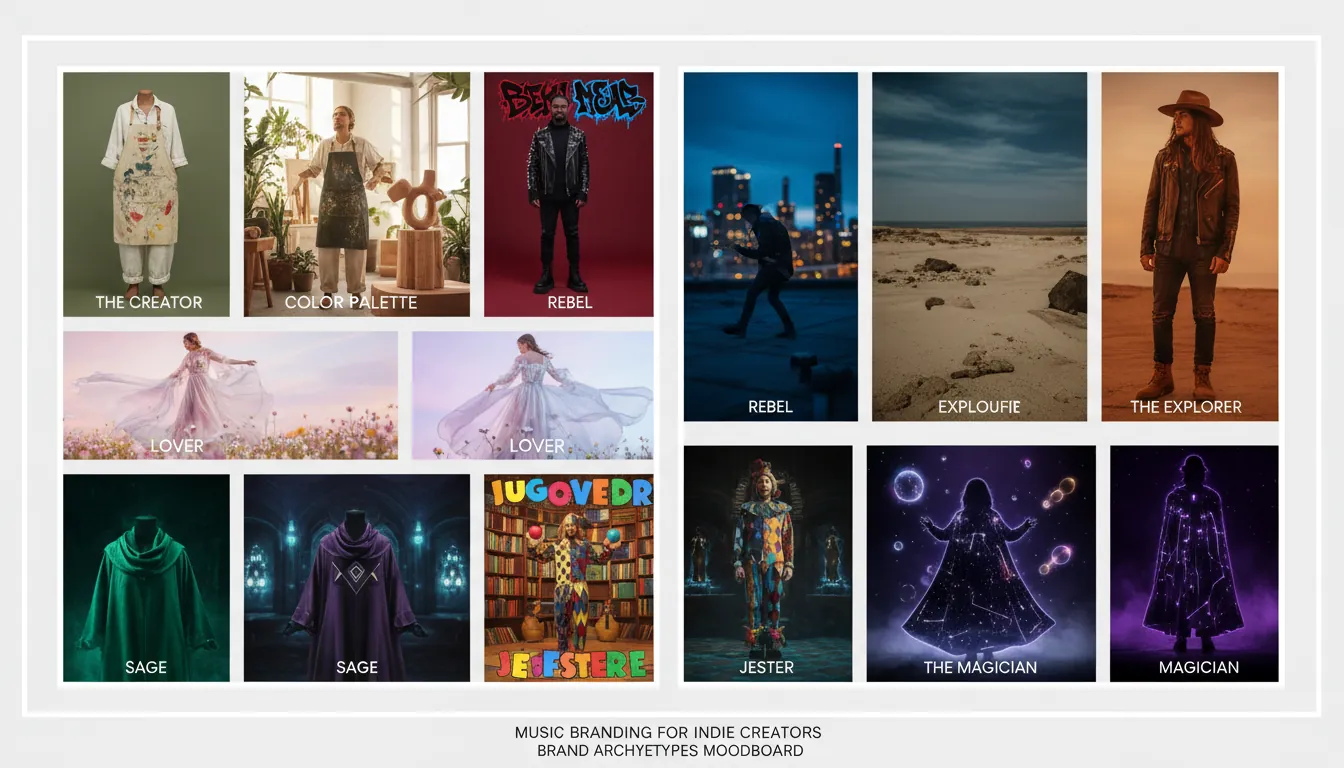
What “music branding” really means (and why indie creators feel it first)
Music branding for indie creators is the consistent set of cues that makes a listener think “this is you” before they even see your name. It’s not just logos or filters. It’s the alignment between:
- Sound identity (genre edges, BPM tendencies, energy curve, lyrical themes)
- Visual identity (cover art, color palette, framing, wardrobe, fonts)
- Narrative (why you make music, what you’re reacting to, what you promise fans)
- Behavior (how you post, how you speak, what you never do)
In Berklee’s independent artist research, a major emphasis is self-assessment—defining identity, audience, narrative, and aesthetics so you can make coherent decisions over time (Independent Artist Assessment & Guidebook). That matters more when you’re indie because you don’t have a label team smoothing out your message.
Why archetypes work: a simple decision filter (not a costume)
Archetypes are useful because humans recognize patterns fast. Jung-inspired brand archetype frameworks are widely used in modern marketing to create a distinct voice and emotional connection (Toast Studio on brand archetypes). In music, that “emotional shortcut” is everything: people decide in seconds whether to follow, save, or scroll.
I’ve watched indie campaigns stall when the artist’s posts feel like five different personalities in one month. When we anchored the creative direction to a single archetype, content got easier, visuals got consistent, and fans started repeating the same words back in comments—proof the brand finally “landed.”
The 7 brand archetypes for indie creators (with execution playbooks)
Below are 7 archetypes adapted for music branding for indie creators. You can blend two, but pick one primary so your audience learns you quickly.
1) The Creator (Visionary builder)
Core promise: “I make new worlds.”
Best for: genre-blenders, producers, concept-album artists, visual-forward releases.
- Sound cues: inventive structure changes, signature textures, unusual drops
- Visual cues: design-led covers, recurring symbols, controlled color palettes
- Content that wins: creation process, “how it’s made,” worldbuilding threads
- Avoid: random trend formats that cheapen the craft
Video move: use rhythm-accurate transitions that “feel composed,” not randomized. Audio-reactive editing reinforces the Creator archetype because it looks intentional.
2) The Rebel (Rule-breaker)
Core promise: “I say what others won’t.”
Best for: punk/alt/rap-edge, political themes, contrarian humor, taboo topics.
- Sound cues: aggressive dynamics, stark minimalism, disruptive silence
- Visual cues: high-contrast, gritty textures, handheld energy, bold type
- Content that wins: hot takes (with substance), duets/stitches, protest art
- Avoid: trying to be “for everyone”—Rebel brands need edges
Trust note: research on sound branding suggests congruence matters—misalignment can harm perception over time (Sound Branding thesis PDF). If your music is intimate, don’t force shock visuals just to perform rebellion.
3) The Explorer (Seeker of new scenes)
Core promise: “Come with me.”
Best for: travel vibes, indie electronic, folk, global influences, DIY discovery.
- Sound cues: spacious mixes, field recordings, evolving grooves
- Visual cues: wide shots, movement through environments, natural light
- Content that wins: location-based snippets, “found sound” moments, collabs
- Avoid: over-polished studio-only visuals if your brand is about freedom
4) The Lover (Connection + intimacy)
Core promise: “Feel this with me.”
Best for: R&B, indie pop, ballads, sensual or romantic storytelling.
- Sound cues: warm tones, breathy vocals, slow builds, hook clarity
- Visual cues: close-ups, soft color, tactile textures, human moments
- Content that wins: lyric meaning, fan dedications, behind-the-scenes warmth
- Avoid: irony-heavy posting that undercuts sincerity
5) The Sage (Teacher + truth-teller)
Core promise: “I help you understand.”
Best for: songwriting-first artists, producers who teach, niche-genre educators.
- Sound cues: clarity, purposeful arrangement, message-forward writing
- Visual cues: clean layouts, legible subtitles, consistent on-screen formatting
- Content that wins: breakdowns, “why this chord works,” storytelling lessons
- Avoid: overcomplicating—be accessible without diluting expertise
Musicians Institute emphasizes using platform and audience data to shape strategy—Sage brands do especially well when they turn analytics into clear, repeatable formats (Music Marketing 101 for Independent Artists).
6) The Jester (Joy + play)
Core promise: “Music should be fun.”
Best for: comedic rap, hyperpop, meme-native creators, party DJs.
- Sound cues: playful samples, unexpected switches, call-and-response hooks
- Visual cues: bright color, fast cuts, exaggerated acting, playful captions
- Content that wins: skits, challenges, remix games, audience prompts
- Avoid: disappearing for long stretches—Jester needs momentum
7) The Magician (Transformation + wonder)
Core promise: “I change your state.”
Best for: cinematic electronic, dark pop, ambient, spiritual/ethereal concepts.
- Sound cues: tension/release, atmosphere, crescendos, ritual-like motifs
- Visual cues: symbolism, surreal composites, lighting design, metamorphosis
- Content that wins: “before/after” mood shifts, visual spells, cinematic teasers
- Avoid: generic stock visuals—Magician brands live or die by craft
Quick picker: match archetype to your goals and strengths
Use this table as a practical shortcut. If two archetypes fit, choose the one you can execute consistently for 90 days
The brand stack: a 30-minute exercise I use with indie creators
When I help artists tighten music branding for indie creators, we don’t start with colors. We start with decisions.
- Three adjectives fans should say after 10 seconds (e.g., “dreamy, sharp, fearless”)
- One tension your music resolves (loneliness → belonging, chaos → focus)
- Two boundaries you will not cross (topics, tone, visuals, collabs)
- One repeatable format (same video structure weekly for 8 weeks)
Then we translate that into a simple style guide:
- Voice: caption tone, phrases you repeat, phrases you never use
- Look: 3 colors, 1 font family, 1 framing rule (close-up vs wide)
- Rhythm: average cut speed, when the drop hits visually, how hooks are revealed
This aligns with the “research → consistency → feedback loop” approach commonly recommended for independent musician branding (Medium: Essential Role of Branding for Independent Musicians).
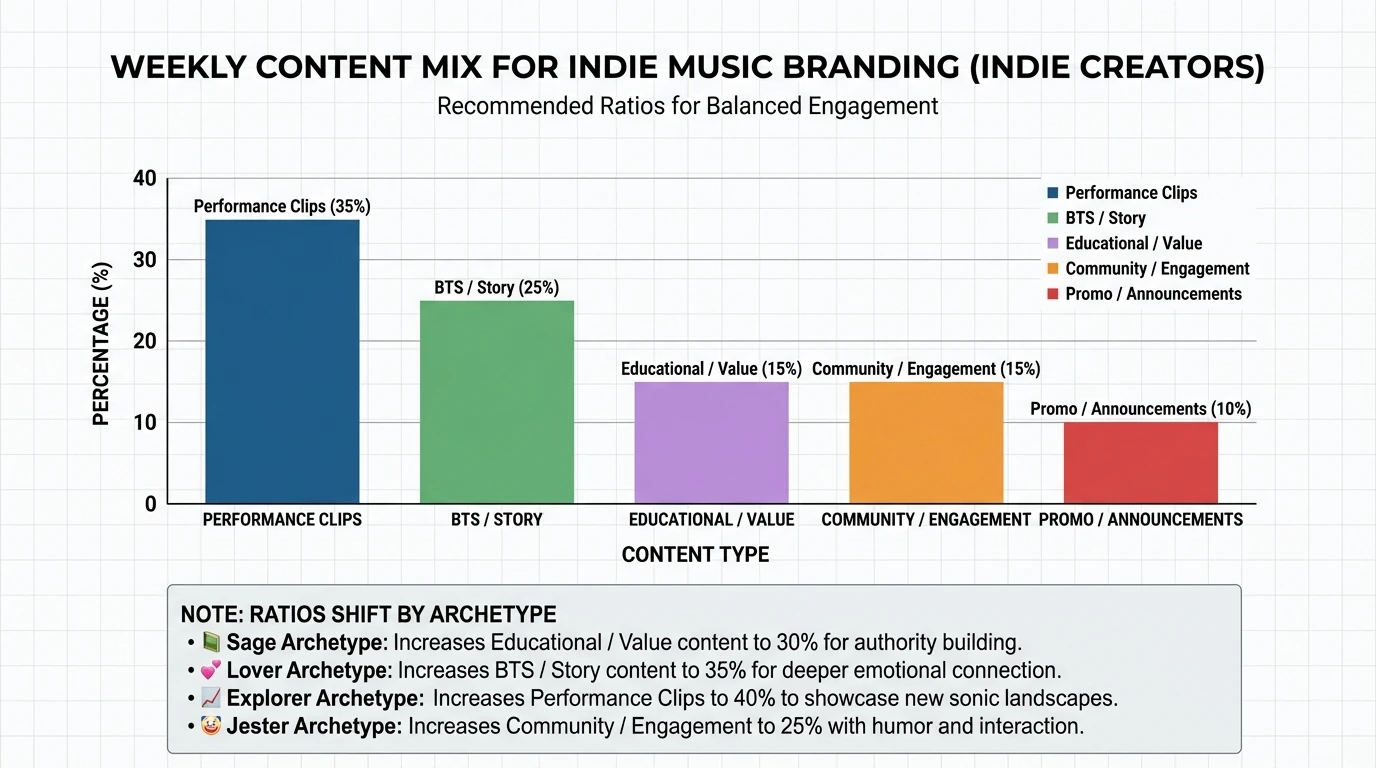
Turning archetype into video identity (where Freebeat AI fits)
Most indie creators lose consistency at the video layer. One clip is cinematic, the next is random templates, the next is a static cover. Your archetype can fix that—if your video system respects music structure.
Freebeat AI is built for audio-reactive generation: it reads BPM, beats, bars, drops, and sections to drive pacing, camera motion, and transitions across the full track. In practice, that means your archetype shows up as repeatable direction instead of one-off editing luck.
Here’s how I’d map archetypes to Freebeat-style outputs:
- Creator: director-style planning, structured scene logic, motif callbacks
- Rebel: punchy transitions on snare hits, stark lighting shifts at drops
- Explorer: scenic B-roll, movement arcs that follow build sections
- Lover: intimate performance focus, slower transitions, lyrical emphasis
- Sage: clean lyric videos with karaoke timing, consistent on-screen systems
- Jester: fast, rhythmic cuts, playful visual punchlines on beat accents
- Magician: cinematic energy ramps, surreal style shifts at the bridge/drop
Music Branding for Artists – How to Build Your Brand in 4 Simple Steps
Common branding mistakes that quietly kill momentum
A strong music branding for indie creators plan removes confusion. These are the issues I see most:
- Mistaking aesthetic for identity: a color grade isn’t a brand if your story keeps changing.
- Trend-chasing whiplash: one viral format can be fine; five different ones erases memory.
- Incongruent partnerships: misaligned collabs can damage trust (congruence matters in perception and behavior) (Sound Branding thesis PDF).
- No measurement loop: you need basic analytics to see what your audience repeats back to you (Musicians Institute).
A 7-day implementation plan (simple, repeatable, indie-realistic)
- Day 1: Pick your primary archetype + 3 adjectives.
- Day 2: Audit your last 12 posts—circle what matches, cut what doesn’t.
- Day 3: Create a mini style guide (colors, framing, caption rules).
- Day 4: Write 10 hooks (first line of captions) that sound like you.
- Day 5: Build 1 repeatable video template by structure (intro → build → drop → outro).
- Day 6: Batch-create 3 clips from one song (performance, BTS, lyric/meaning).
- Day 7: Post + ask one clear question; collect comments as brand feedback.
Conclusion: make your brand a promise you can keep
If your music were a person walking into the room, would people recognize them next week? That’s the heart of music branding for indie creators: a clear archetype, executed consistently, so fans can find you again and again. When your sound, visuals, and story lock together, marketing stops feeling like yelling—and starts feeling like introducing yourself.
📌 how freebeat ai helps you match your songs mood with ai generated cover art
FAQ: Music branding for indie creators
1) What is music branding for indie creators in simple terms?
It’s the consistent identity (sound + visuals + story + behavior) that helps fans recognize you instantly across platforms.
2) Do I need a logo to have a strong music brand?
No. A repeatable visual system (colors, framing, typography, cover style) matters more than a single logo mark.
3) Can I mix two brand archetypes?
Yes—choose one primary archetype and one secondary. Keep the primary consistent for at least 90 days to avoid “brand whiplash.”
4) How do I know if my branding is working?
Look for repeatable audience language in comments (“cinematic,” “cozy,” “chaotic in a good way”), rising saves/shares, and higher return viewers.
5) How often should indie creators post to build a brand?
Enough to be learnable. A common baseline is 3–5 posts/week with one repeatable format; quality and consistency beat volume.
6) How do music videos affect branding?
They compress your identity into seconds. If your visuals don’t match your sound structure and emotion, fans feel the mismatch and scroll.
7) What’s the fastest way to keep visuals consistent across releases?
Use a style guide + a repeatable video workflow that follows the song’s structure (beats, drops, sections) so each release feels like the same artist.


