Faceless AI Music Channel Growth: 9 Proven Strategies
Contact partnership@freebeat.ai for guest post/link insertion opportunities.
A faceless AI music channel growth plan sounds simple: upload tracks, add visuals, let the algorithm work. Then reality hits—flat retention, “reused content” risk, and a feed full of near-identical AI music loops. I’ve built and audited channels in this exact lane, and the pattern is clear: the channels that win don’t hide the human—they hide the face while showing intent, taste, and consistency.
This guide breaks down nine strategies to grow a faceless AI music channel without drifting into low-effort territory. You’ll also see how audio-reactive video systems like Freebeat AI help you ship faster while still creating videos that feel “directed,” not mass-produced.
1) Pick a “micro-genre + use-case” niche (not just “lofi”)
Most faceless AI music channels stall because the niche is too broad. “AI lofi beats” competes with thousands of uploads daily; “Rainy cyberpunk lofi for coding sprints (45–60 min)” competes with far fewer—and attracts repeat viewers.
Use this niche formula:
- Micro-genre (lofi jazzhop, synthwave, ambient DnB, cinematic trap)
- Use-case (study timer, gym warmup, anxiety relief, boss fight loop, sleep)
- Visual identity (anime noir, minimal abstract, digital oil paint, stage performance)
If you use Freebeat AI, this is where its song-structure awareness (BPM, bars, drops, sections) becomes a moat: your visuals can change with the music instead of floating randomly.
2) Build a recognizable “virtual artist” brand (the faceless advantage)
Faceless doesn’t mean identity-less. The fastest-growing channels I’ve seen treat the channel like a virtual artist project (think “band persona”), not a dump of tracks. A virtual artist also makes collaborations, series, and merch easier later.
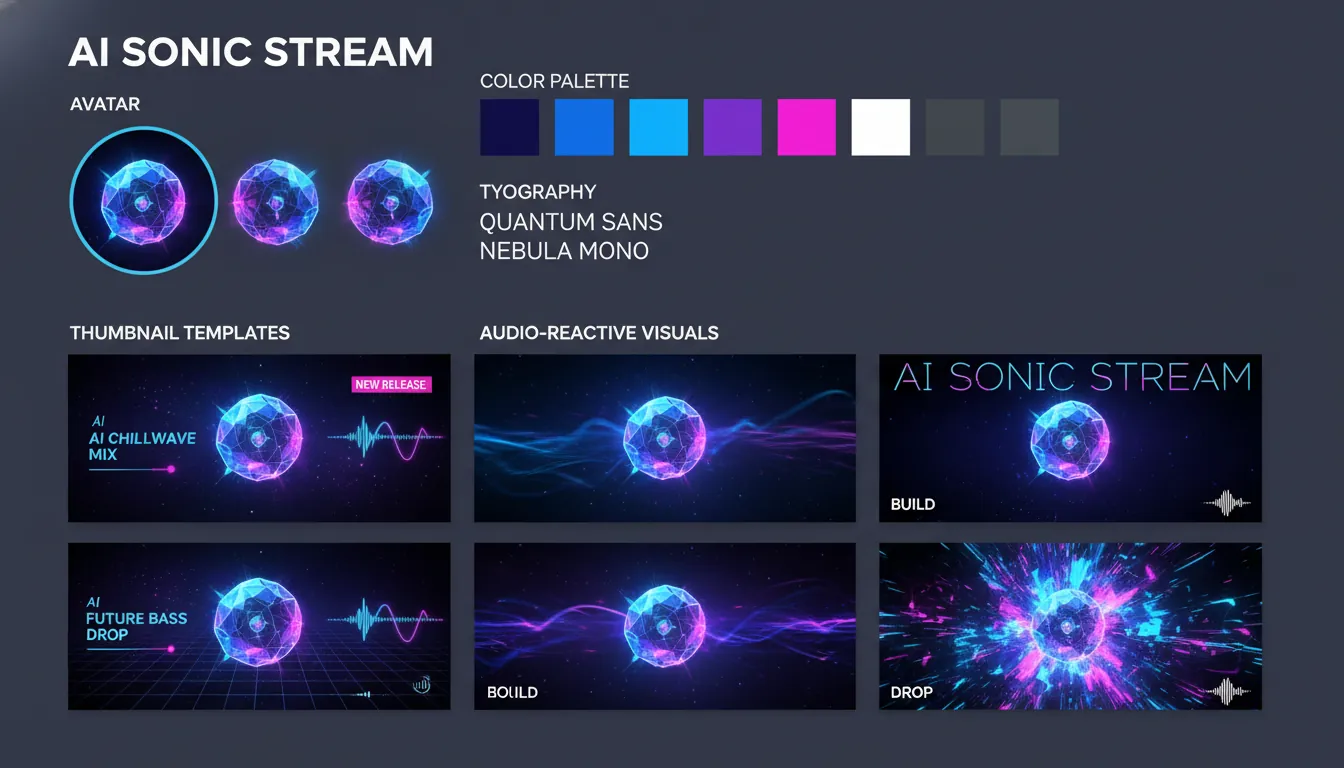
Brand system to lock in:
- Name + tagline (e.g., “NEON SLEEP — ambient for overthinkers”)
- 2–3 signature colors and 1–2 font families
- A recurring character/avatar (consistent outfit, silhouette, props)
- A repeatable video structure (cold open → hook drop → mid switch → ending payoff)
Freebeat’s emphasis on character consistency via custom AI avatars and reusable visual identities is built for this. When viewers recognize a persona in the first second, your returning viewers go up—one of the strongest long-term growth signals.
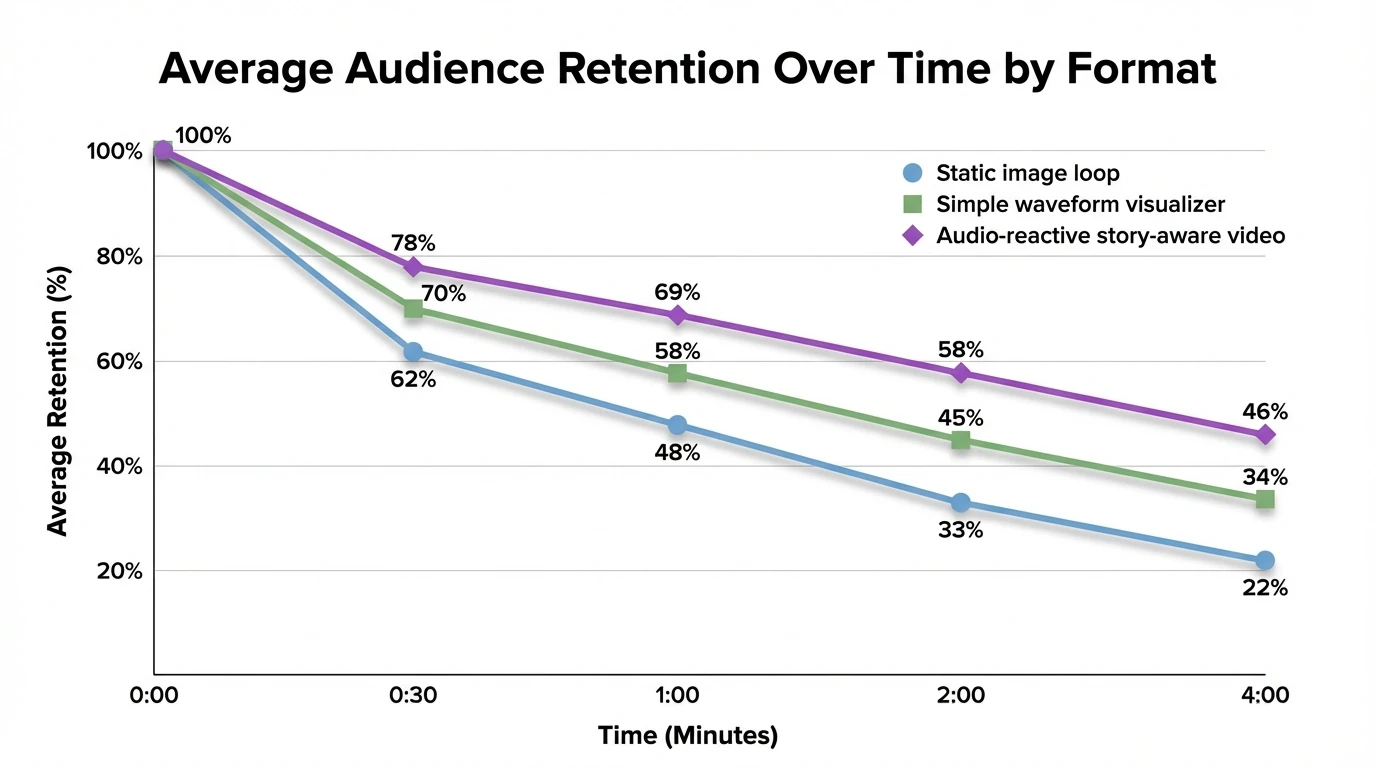
3) Make “retention-first” music videos (not static wallpaper)
YouTube can detect low-value patterns, and static visuals with AI audio are a known risk for being treated as repetitive/non-transformative content. Retention is also where most music channels leak growth.
Retention-first editing checklist:
- Hook in the first 5–10 seconds: start near a motif, not a long intro
- Visual change at musical events: section change, fill, drop, breakdown
- End with a payoff: reprise the theme or reveal a “final scene,” then push to a playlist
I tried a simple test on a faceless channel: the same track uploaded twice—once with a single looping image, once with beat-matched cuts and section-based scene changes. The second version consistently held viewers longer, and it also earned more “this feels professional” comments—social proof that feeds clicks.
To implement this at scale, use an audio-reactive workflow (Freebeat’s AI Music Video Agent approach is ideal): plan shots like a director—performance-focused moments + cinematic B-roll + rhythm transitions.
4) Publish in “series,” not singles (and make playlists do the heavy lifting)
Singles can work, but series build binge behavior. Binge behavior increases session time, which improves recommendation chances.
Series ideas that convert for faceless AI music:
- “Drop at 1:00” series: every track features a clean drop at exactly 60 seconds
- Mood arcs: “Calm → Focus → Flow → Lift” (4-track mini EP weekly)
- World-building: “Night Train Vol. 01–12” with the same avatar/location evolving
- Utility formats: Pomodoro (25/5), 45-minute study set, 10-minute pre-workout
Playlist rules:
- Pin a comment that links the next playlist, not a random video.
- Use consistent naming: “Synthwave for Coding (Season 1)”
- Make one “Start Here” playlist for new viewers.
For algorithm fundamentals and nuance (how YouTube interprets format and delivery), this overview is a practical reference: YouTube algorithm tips and ranking factors.
5) Treat Shorts as “trailers” that push to long-form
Shorts can explode reach, but many music channels fail to convert Shorts viewers into subscribers. Your job is to build a bridge.
A working Shorts bridge:
- 15–25 sec highlight (best 2 bars)
- On-screen text: “Full track + visual story in the playlist”
- End screen + pinned comment linking to the long-form or playlist
- Same avatar/colors so recognition carries over
This aligns with current best practice: Shorts that funnel into long-form extend sessions and strengthen channel performance signals (see Shorts-to-long strategy concepts in this guide: 2025 YouTube algorithm creator guide).
6) Win YouTube SEO for AI music (titles, descriptions, tags that match intent)
Music SEO is less about stuffing keywords and more about matching listener intent. Think like a searcher: they’re looking for a mood, a task, a subgenre, a reference artist, or a scenario.
Use this title structure:
- Primary mood/use-case + micro-genre + unique hook
- Example: “Dark Ambient DnB for Focus — ‘Midnight Terminal’ (Audio-Reactive Visuals)”
Description must include:
- 1–2 sentences describing what the listener gets
- Track info (BPM, key if relevant, timestamps/chapters)
- Your process (what’s AI-assisted vs your creative input)
- A “Start Here” playlist link
Tag buckets:
- Genre + mood (ambient dnb, dark ambient, focus music)
- Scenario (coding music, study music, night drive)
- Visual style (anime cyberpunk, cinematic abstract)
If you want a starting pool of related phrases, this keyword list is useful for brainstorming: AI music SEO keyword ideas. Use it for variations, not copy-paste.
7) Monetize safely: rights, disclosure, and “human-led transformation”
“Are faceless AI YouTube channels profitable?” They can be—but profit comes from trust + consistency + compliant content, not from mass uploads.
Three rules that keep you safer:
- Rights clarity: Only upload music you fully own or can license/verify.
- Disclosure: YouTube increasingly expects transparency for synthetic/altered content.
- Transformative value: Add structure, visuals, story logic, lyrics/chapters, or commentary so it’s not “AI audio + static image.”
This isn’t fear-mongering; it’s how policy and detection are trending. For deeper reading on AI music safety and monetization risks, start with: what makes AI music safe for monetization. Also note the broader industry discussion about repetitive AI content and authenticity: faceless channels—hype vs reality.
Practical “human touch” options that still stay faceless:
- Short spoken intro (even 5 seconds) explaining the theme
- On-screen “liner notes” about sections (“Drop: 1:12 / Breakdown: 2:40”)
- A consistent avatar performing, even abstractly (stage/performance mode)
8) Create faster without looking mass-produced (a Freebeat AI workflow)
Scale matters, but speed without taste becomes “AI slop.” The goal is repeatable production with creative control.
A professional, faceless-friendly workflow:
- Batch composition/selection (weekly): choose 3–5 tracks that fit one series.
- Define structure cues: intro length, where the drop hits, section count.
- Generate story-aware visuals: use an audio-reactive system so cuts follow bars and transitions follow energy.
- Lock channel identity: same avatar, wardrobe, colors, shot language.
- Export variants:
- Long-form (3–10 min)
- Shorts teasers (15–30 sec)
- Lyric video version (if applicable)
This is where Freebeat AI is differentiated: it’s not generic text-to-video. It’s designed to understand full song structure and generate visually synchronized videos with director-style pacing. That lets you publish often while still making each upload feel intentional.
Freebeat AI Review - 2026 | How to Create Music Video With AI (Full Guide)
9) Run a simple analytics loop (and improve one thing per week)
A faceless AI music channel growth curve is usually unlocked by small retention gains, not viral luck. Use YouTube Analytics like a producer uses a mix: identify the ugly part, fix it, re-test.
Weekly loop (30 minutes):
- Pick 1 video that has impressions but low CTR → update thumbnail/title.
- Pick 1 video with early drop-off → tighten first 15 seconds.
- Pick 1 playlist with low continuation → reorder videos by strongest hook first.
What to watch:
- CTR: packaging quality (title/thumbnail)
- Average view duration: content quality and pacing
- Returning viewers: brand consistency and series strength
For retention mechanics and how to interpret drop-off patterns, this is a solid primer: audience retention tips.
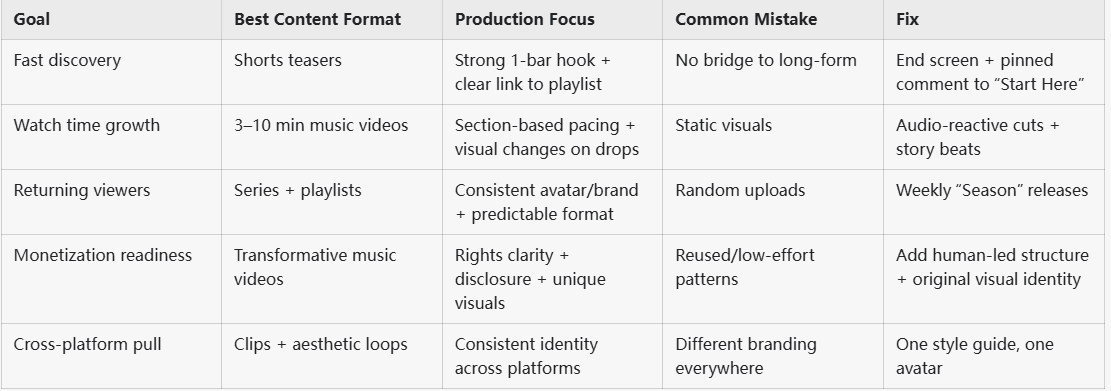
Quick strategy comparison (what to do based on your goal)
Are faceless AI YouTube channels profitable? (realistic take)
They can be profitable, but not because they’re “hands-off.” Profit usually comes from stacking:
- Ad revenue (after eligibility)
- Music streaming and distribution
- Licensing packs / beat sales
- Channel memberships or Patreon (for extended mixes)
- Brand deals (harder if content is generic; easier with a strong persona)
The uncomfortable truth: if your channel looks mass-produced, you may see short-term spikes but weak durability. If your channel looks like a real project—with a signature style and retention—you’re building an asset.
FAQ: Faceless AI Music Channel Growth
1) Is making AI music illegal?
AI music isn’t automatically illegal, but rights and originality matter. Avoid copying existing melodies, don’t imitate protected voices, and keep clear proof of your inputs, edits, and ownership where possible.
2) How do I make my faceless YouTube channel successful?
Keep early uploads simple, publish in a consistent series, and build community through comments and pinned prompts. Most importantly, optimize for retention with section-based visuals and strong hooks.
3) How do I grow a faceless new YouTube channel with AI voice?
If you use AI voice, add real value: explain the track’s theme, break down sections, or tell a story around the music. Avoid templated narration that sounds identical across videos.
4) What’s the “30% rule” in AI content?
People often use “30% rule” to mean adding meaningful transformation beyond the base AI output. It’s not a universal legal standard, but it’s a useful creative rule: add enough original direction, structure, and identity that your work is clearly distinct.
5) How many views do you need to make $2,000–$10,000/month on YouTube?
It depends heavily on RPM (niche, audience location, ad suitability, watch time). Music channels can have lower RPM than business niches, so plan for multiple revenue streams beyond ads.
6) What is the 30-second rule on YouTube?
If viewers bail early, distribution often slows. Aim to earn attention in the first 30 seconds with an immediate motif, a visible payoff, and clear pacing.
7) Can I monetize AI music videos with simple visuals?
Simple is fine; static and repetitive is the risk. Use movement, chapters, lyric timing, story-aware scene changes, and clear disclosure to show the content is intentionally produced.
Conclusion: grow faceless, not flavorless
A faceless AI music channel growth plan works when the channel feels like a real artist and a real director are behind it—even if neither shows their face. The winning formula is micro-niche + recognizable persona + retention-first visuals + compliant, original production. Once you commit to series and iterate via analytics, growth stops feeling random and starts feeling engineered.
📌 behind the magic how creators use freebeat ai to go viral


