Copyright Your Songs Guide: Myths vs Facts for Artists
Contact partnership@freebeat.ai for guest post/link insertion opportunities.
You finish a hook at 1:47 a.m., bounce the demo, and immediately wonder: Do I need to copyright this before I post it? What if someone steals it? I’ve been there—exporting “FINAL_v12” and feeling equal parts proud and paranoid. This copyright your songs guide breaks down what’s true, what’s internet lore, and what actually protects you when your music starts moving fast.
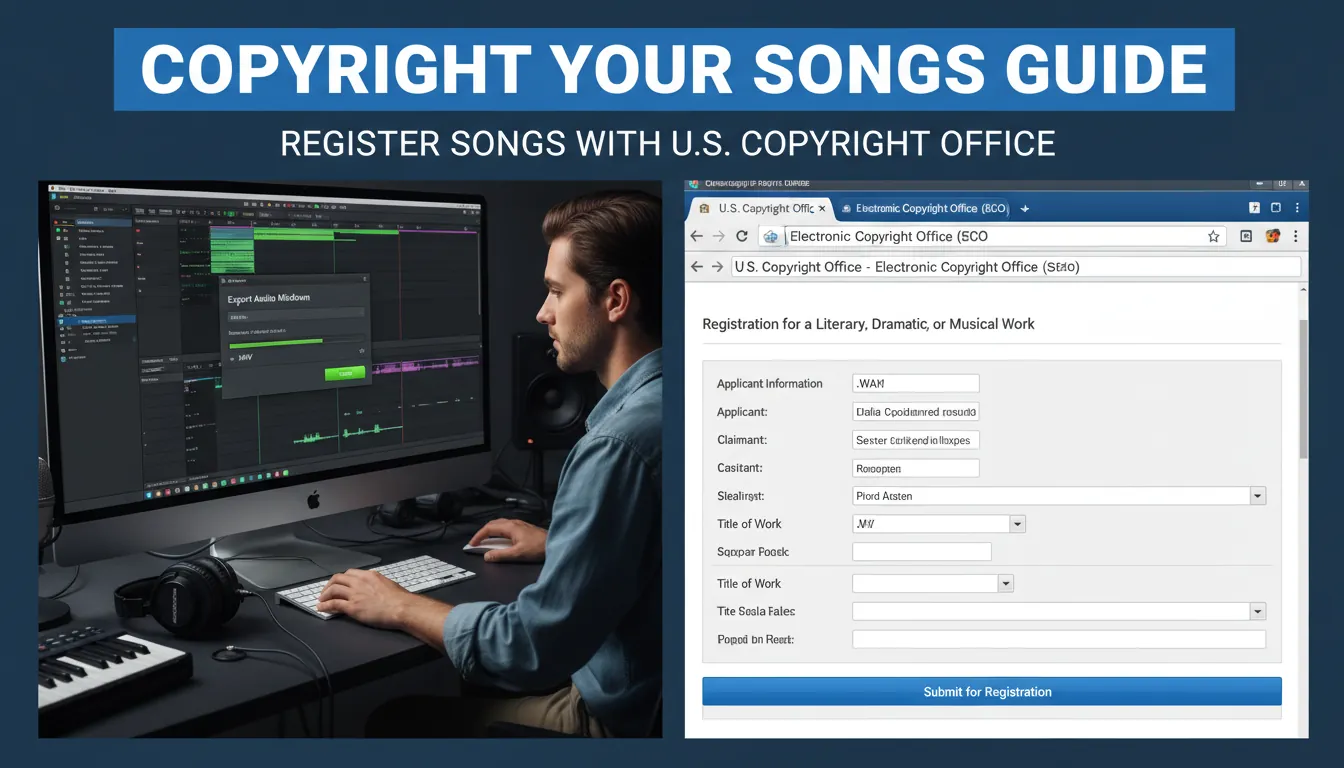
Copyright basics (in plain English)
Copyright is automatic once your song is fixed in a tangible form—recorded audio, written lyrics, a saved project file. That said, registration is what turns “I own it” into “I can enforce it efficiently,” especially in the U.S. (including access to federal court for U.S. works and stronger remedies). The biggest mistake I see is confusing automatic copyright with registered copyright—they’re not the same in practice.
Two separate copyrights usually exist in one release:
- Musical composition: melody/lyrics/harmony (the “songwriting”).
- Sound recording (master): the specific recorded performance/production.
The U.S. Copyright Office explains this separation clearly in Circular 50.
Myths vs facts: the stuff that trips artists up
A lot of creators learn copyright through TikTok tips and group chats. Some advice is helpful; some is dangerously wrong. Here are the myths I hear most often, with the “so what?” for artists.
Myth 1: “If I upload to Spotify/YouTube, I’m protected.”
Fact: Distribution is not registration. Uploading creates timestamps and visibility, but it doesn’t file your copyright with the U.S. Copyright Office. Distributors (and most platforms) distribute—they don’t register your claim.
What to do instead
- Treat release as marketing.
- Treat registration as legal infrastructure.
(See practical guidance from Soundcharts: How to Copyright Your Music: Cost, Steps & Mistakes.)
Myth 2: “Mail it to yourself (poor man’s copyright).”
Fact: Courts rarely treat that as a substitute for registration, and the U.S. Copyright Office doesn’t recognize it as an official method. I’ve met artists who swear by it—none who used it successfully when a real dispute showed up.
Better proof habits
- Keep dated exports, stems, lyric drafts, and session files.
- Save collaborator emails and split agreements.
- Register when it’s commercially meaningful.
Myth 3: “Using under 30 seconds is safe.”
Fact: There’s no magic time limit. “Fair use” is fact-specific and hard to rely on for music. Businesses get this wrong constantly, and artists can too. Epidemic Sound breaks down common licensing myths (including the “30 seconds” idea) in Music licensing myths & facts.
Myth 4: “Crediting the artist means I can use the music.”
Fact: Credit is not permission. Licensing is permission.
Myth 5: “Publishing and recording rights are the same thing.”
Fact: They’re different revenue streams and different rights. Confusing them leads to missed royalties and bad deals. Songwriting/publishing myths are discussed well here: Music Publishing Myths Debunked.
The best way to copyright your songs (U.S.-focused, artist-friendly)
If you want the cleanest “industry standard” answer in a copyright your songs guide, it’s this: register with the U.S. Copyright Office at copyright.gov. Registration creates a public record and unlocks important enforcement tools.
Step-by-step: a practical workflow I use
- Finish the work (fix it)
- Bounce an MP3/WAV, export a lyric PDF, or save a score.
- Make sure titles and writer credits match your release plan.
- Confirm what you’re registering
- Composition only?
- Master only?
- Both (common for indie artists who wrote and released the track themselves)?
- Decide: unpublished vs published
- “Published” has a specific meaning. The U.S. Copyright Office explains publication rules in Circular 50.
- Don’t guess—mislabeling publication status can create headaches.
- Register
- For many creators, registering close to release (or right after) is a workable rhythm.
- If you’re batching unreleased songs, group registration can reduce cost when you qualify (rules vary).
- Archive your evidence
- Keep your confirmation, deposit copy, split sheets, and project backups together (cloud + offline).
For a visual walkthrough of the eCO flow, Ari’s Take provides a creator-oriented guide: How To Copyright Your Music with the US Copyright Office.
What it costs to copyright a song (and why artists overpay)
Filing fees change, and application type matters. The key cost-control move is picking the correct registration path for your situation (single, group/unpublished, multiple authors, etc.). If you’re collaborating heavily, your administrative cost often comes from fixing messy splits later—not the filing fee itself.
Money-saving habits that don’t reduce protection
- Write splits the same day you write the song.
- Register batches only when you meet the requirements.
- Avoid re-filing because your metadata is inconsistent.
Quick comparison table: composition vs master vs “everything else”
How do I prove I wrote a song?
In the real world, disputes are usually won with paper trails, not vibes. Registration is the strongest single move, but you should also build a “creator log” that’s easy to understand later.
Practical proof kit (what I keep)
- Dated audio exports (rough demo → final mix → master)
- Lyric drafts with timestamps
- DAW session files + plugin/track notes
- Split sheets (signed or clearly agreed in writing)
- Version history (Google Docs, Notion, Git-style logs)
If a conflict ever escalates, your goal is to show timeline + authorship + access in a clean package.
Publishing, PROs, and royalties: don’t mix these up
A common confusion: “I registered my copyright, so I’ll get royalties automatically.” Registration protects ownership; it doesn’t route money by itself. To collect certain royalties, you often need the right “collection plumbing.”
Key point: PROs license and collect public performance royalties, distributing money to writers/publishers. The U.S. Copyright Office overview on PRO issues is worth reading: Issues Related to Performing Rights Organizations.
In practice
- Copyright registration = legal protection
- PRO + publishing admin = royalty collection system
- Distribution = getting music onto platforms
“Rules” artists ask about: 80/20, 3-song rule, and hit money
These phrases get thrown around in writing rooms, but they’re not copyright rules.
- 80/20 rule in songwriting: Usually shorthand for focusing on the few actions that drive most results (strong hook, clear concept, repeatable chorus). It’s a productivity idea, not a legal standard.
- “3 song rule”: Often a coaching guideline (write three ideas before judging yourself; or record three songs before releasing). Not a copyright concept.
- How much can you make on a hit song? It depends on splits, publishing, master ownership, sync placements, and usage volume. The legal foundation (ownership + agreements) matters as much as the stream count.
Where video marketing meets copyright (and how Freebeat AI fits)
Once your song is protected, the next risk is visibility without control: you want your music everywhere, but you also want clean ownership when opportunities arrive—ads, sync, label conversations, brand deals. This is where I’ve found a tight workflow helps: register → release → scale content.
Freebeat AI is built specifically for music-driven video, not generic text-to-video. It analyzes structure (BPM, bars, drops, sections) and generates visuals that follow the song’s energy, which is exactly what you need when promoting a new release across platforms without editing for days.
High-leverage uses after you register
- Story-aware music videos for YouTube launches
- Audio-reactive performance visuals for short-form
- Lyric videos with karaoke-style timing for fans who share snippets
If you want examples and workflows, start at Freebeat AI and explore the platform’s lyric video tools and music video generator.
How to Federally Register Your Song Copyright with the US Copyright Office
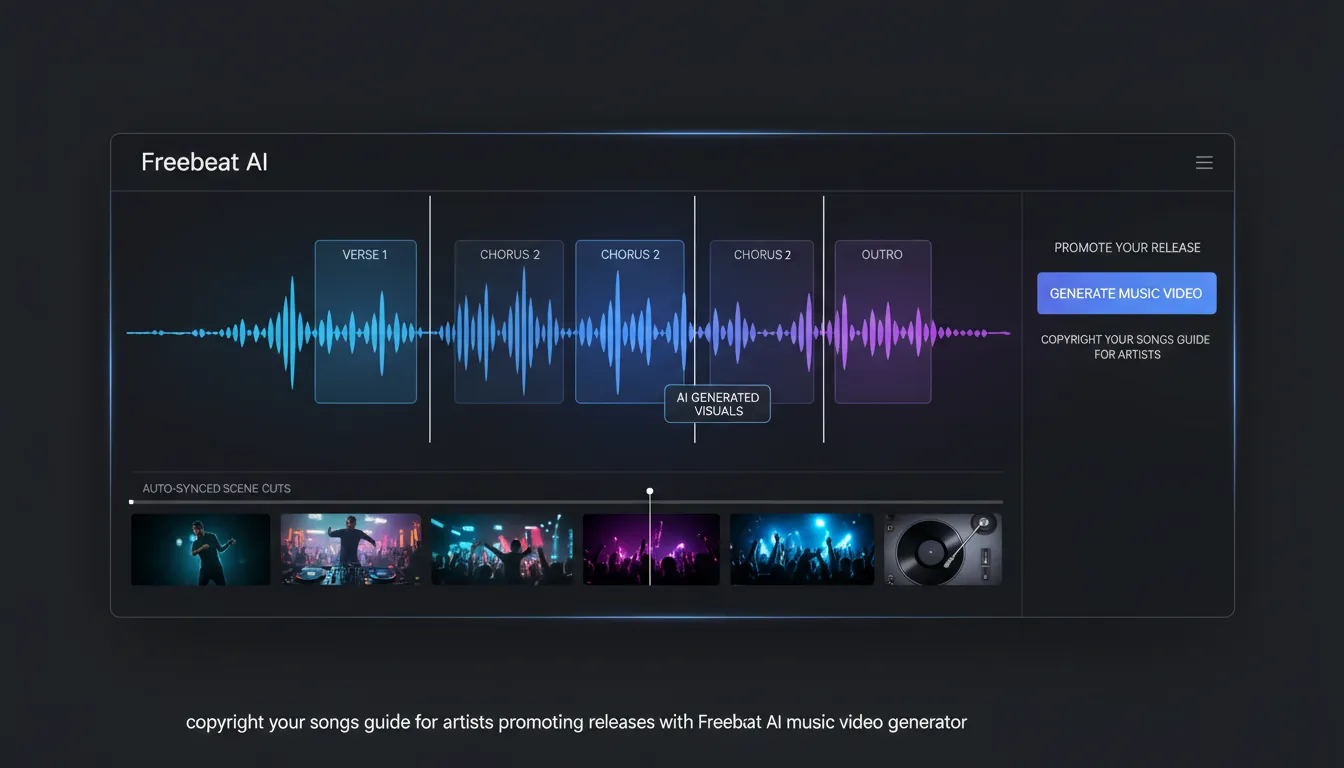
Data snapshot: what artists usually think protects them (vs what actually does)
Creators often rely on “soft protection” because it’s fast. Here’s a simple way to visualize the gap between common behavior and strongest protection.
Checklist: copyright your songs guide for release week
Use this right before you distribute and start posting clips.
- Credits
- Confirm writers, producers, and split percentages
- Files
- Final master + instrumental + clean version + lyric doc
- Rights clarity
- No uncleared samples (or properly licensed)
- Registration plan
- Decide what you’re registering (composition, master, or both)
- Marketing outputs
- Generate 5–10 short-form edits and 1 long-form video from the same track for consistent rollout
FAQ (Artists also ask)
1) What is the best way to copyright my songs?
Your work is protected once it’s fixed, but the strongest step is registering with the U.S. Copyright Office via copyright.gov to create a public record and unlock key enforcement benefits.
2) How much does it cost to copyright my song?
Costs depend on the filing type and current U.S. Copyright Office fees, which can change. Choose the correct application type to avoid costly re-filing.
3) How do I prove I wrote a song?
Keep a clean trail: dated exports, lyric drafts, session files, and split agreements. For disputes with real stakes, registration is the most reliable foundation.
4) Is Kevin MacLeod’s music copyrighted?
Many of his works are copyrighted, even if offered under Creative Commons licenses. A license is permission under specific terms; it doesn’t mean “no copyright.”
5) Is there a “30-second rule” for using someone else’s music?
No. Duration alone doesn’t make use legal. Licensing or a valid fair-use analysis is required.
6) What’s the difference between copyright and publishing?
Copyright is ownership of the composition/master; publishing is the business/administration of the composition rights and royalties. They intersect but aren’t the same.
7) Do I need to copyright a song before I release it?
You don’t need to for automatic protection, but registering near release is common when you’re investing in marketing and want enforceable rights if infringement happens.
Conclusion: protect the song, then scale the story
You don’t need to live in fear every time you share a demo—but you do need a system. My rule is simple: when a song becomes an asset (release, pitch, sync, ad spend), I treat copyright registration like locking the studio door. Then I put energy into what actually grows a career: consistent, high-quality content that matches the music.
If you’re ready to promote your next release without drowning in editing, use Freebeat AI to turn your track into platform-ready visuals that stay locked to your beat and structure. Share your questions below—especially what stage you’re at (demo, pre-save, release week), and I’ll point you to the cleanest next step.
📌 behind the magic how creators use freebeat ai to go viral


