Is Suno the Best Music Generator? Honest Review & Verdict
Contact partnership@freebeat.ai for guest post/link insertion opportunities
You’ve got a hook in your head, a vibe in your notes app, and zero time to open a DAW. So you ask the obvious question: is Suno the best music generator right now, or just the loudest one? I’ve tested Suno in real creator workflows (quick song drafts, lyric ideas, content background tracks) and compared it with the tools people actually switch to when they hit limits. Here’s the honest verdict—built for musicians, marketers, and creators who need results, not hype.
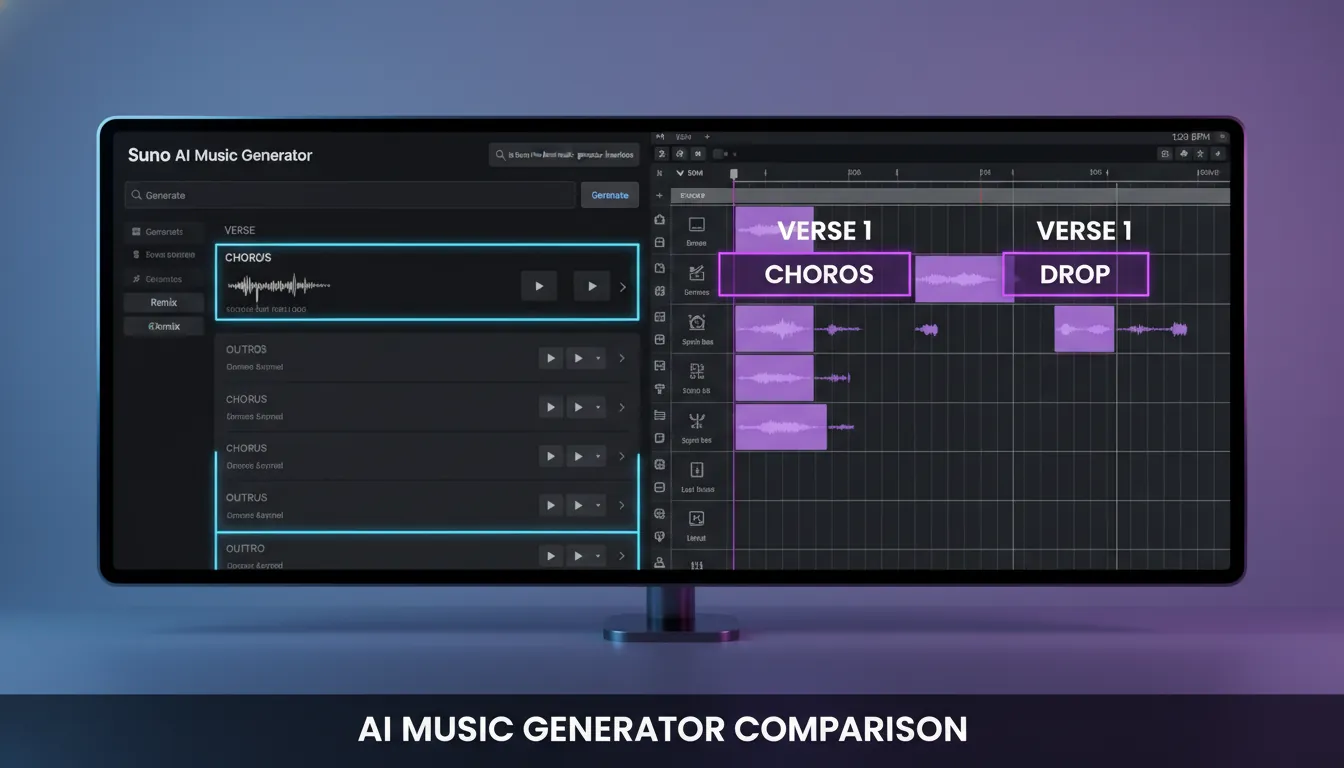
1) What people mean when they ask “best music generator”
“Best” changes depending on what you’re trying to ship. In practice, creators usually mean one (or more) of these outcomes:
- Fast full songs (not just loops) for TikTok/YouTube or demos
- Believable vocals that don’t scream “AI”
- Prompt obedience (genre, mood, voice type, structure)
- Editing control (stems, timeline, replacements)
- Clear licensing for commercial use
If your goal is release-ready masters, the bar is much higher than “this sounds cool in headphones.”
2) The short answer: Is Suno the best music generator?
For speed + accessibility + full-length songs, Suno is arguably the current leader for mainstream users. But if you define “best” as most human-sounding output or most controllable production, it’s not a clean win—especially as independent reviews flag inconsistency, “too-perfect” vocal texture, and prompt misses.
Two credible takes illustrate the split:
- An independent 2025 review calls Suno a fun, powerful sketchpad, but not consistently professional/release-ready, also noting legal uncertainty and credit frustration (eesel.ai’s Suno review).
- A hands-on tech review notes Suno can be technically impressive while still feeling soulless, with vocals that default to glossy perfection even when asked not to (The Verge review).
So: Suno can be the best music generator for ideation and quick content—but not always the best for final production or nuanced artistry.
3) Why Suno feels “best” to so many creators (the real strengths)
When I’m blocked, Suno’s biggest advantage is that it moves the session forward. You can go from prompt to a structured song in minutes, which is the exact moment most creators quit.
Key reasons Suno often wins:
- Full song generation (not just 30–60 second snippets in many cases)
- Beginner-friendly workflow that doesn’t require production knowledge
- Catchy arrangement instincts: intros, builds, drops, and choruses often land
- Vocal-forward output: coherent toplines and chorus hooks are common
In comparative testing, one academic-style review found Suno generated much longer tracks than Udio in similar time windows, making it more efficient “music per minute” for content needs (AMT Lab comparison).
4) Where Suno disappoints (and why pros don’t fully trust it yet)
Suno’s misses matter most when you’re trying to polish, iterate, or commercialize at scale.
Common pain points reported across reviews and user feedback:
- Prompt obedience gaps (wrong voice type, ignored constraints, weird lyric delivery)
- Audio artifacts (compression sheen, occasional hiss/noise, uncanny timbre)
- Stem quality issues that complicate professional mixing (bleed/crosstalk)
- Credit waste when generations fail or mispronounce lines
That “sounds like AI” signature is a real critique in side-by-side listening. AMT Lab specifically noted Udio outpacing Suno in human-like vocal realism and instrument authenticity (AMT Lab comparison).
5) The Suno controversy: what’s actually being debated
When people ask about the Suno controversy, it generally clusters into:
- Copyright & training data disputes
- Major-label lawsuits and broader legal debates have been referenced in independent coverage, raising questions about risk tolerance for commercial releases (eesel.ai’s Suno review).
- Who “owns” an AI-generated song
- Even if a platform grants commercial rights under certain plans, copyrightability and disputes can still be a gray area depending on jurisdiction and how the work was made. A legal Q&A highlights the uncertainty and the importance of reading the tool’s licensing terms carefully (Justia answer).
- Ethical impact on musicians
- Some creators see AI music as empowerment; others see it as job displacement and dilution on streaming platforms (you can see that split in public review sentiment on sites like Trustpilot reviews of Suno).
If you’re doing brand work or label-facing releases, “best” includes legal defensibility, not just sound.
6) Suno vs the top alternatives (quick comparison)
Here’s the most useful way to think about “is Suno the best music generator”: best for what job?
Tool
Best for
Where it tends to win
Watch-outs
Suno
Fast full songs + hooks
Speed, accessibility, structured tracks, vocals
Prompt misses, “AI sheen,” stem cleanliness, legal gray areas
Udio
More human-like audio
Vocal realism and fidelity in some tests
Can be shorter snippets depending on workflow; may take more iteration
Soundraw
Background tracks
Useful for creators needing safe-ish instrumentals
Less “songwriting” magic; vocal needs elsewhere
AIVA
Classical/score vibes
Orchestral sensibility
Not built for modern pop vocal hits
Beatoven.ai
Mood-based scoring
Practical for content beds
Less about chart-style songwriting
If you want a second opinion on output realism, The Verge’s listening notes are a good reality check (The Verge review).
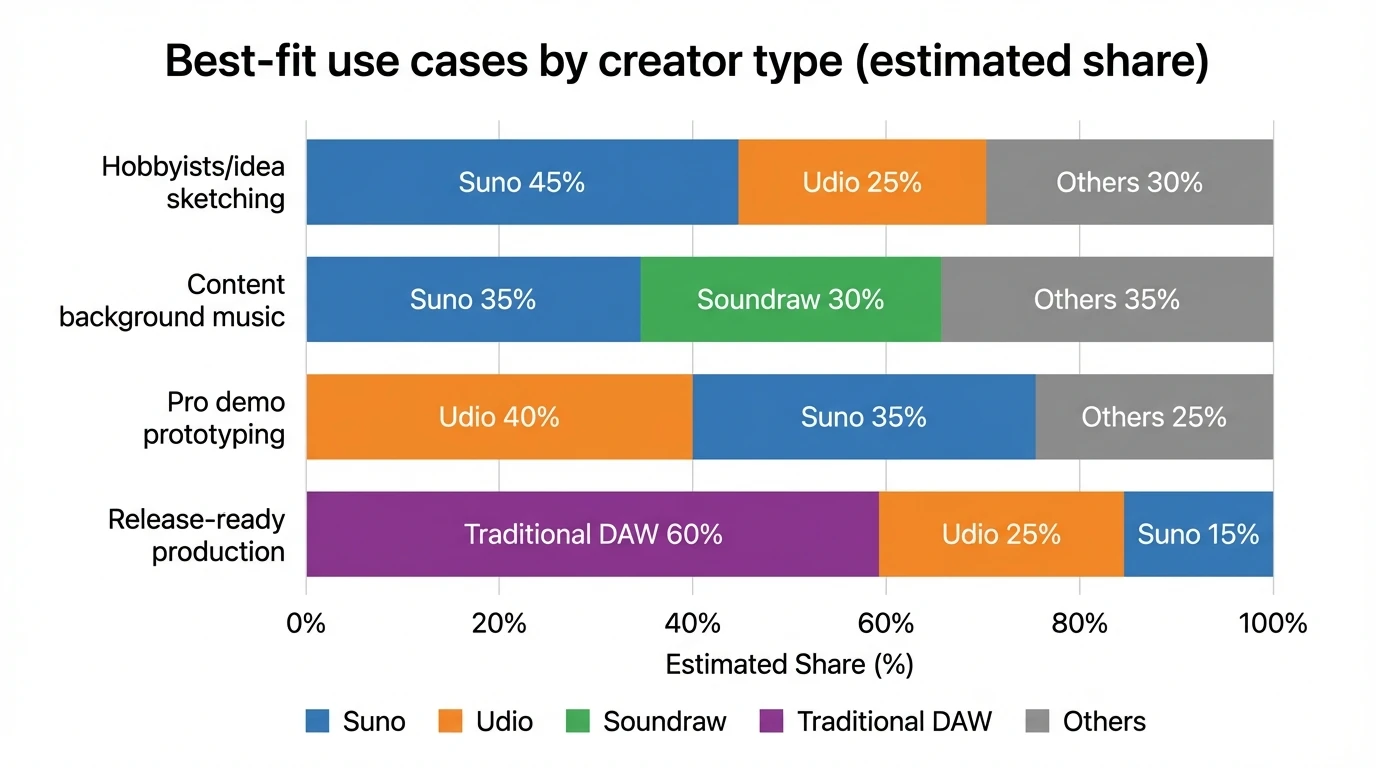
7) The real workflow: Suno + (something else) is often the best setup
In my experience, Suno works best as the front-end generator, not the entire pipeline. You generate 5–15 candidates, pick one “spine,” then finish elsewhere.
A practical creator pipeline:
- Generate 6–10 variations (change only 1–2 prompt variables each time)
- Pick the best 20 seconds (usually chorus or drop)
- Export + clean: reduce reverb, tame highs, fix harshness
- Rebuild or reinforce key parts in a DAW if you need professional polish
- Create the visuals around the track (this is where most songs win or lose online)
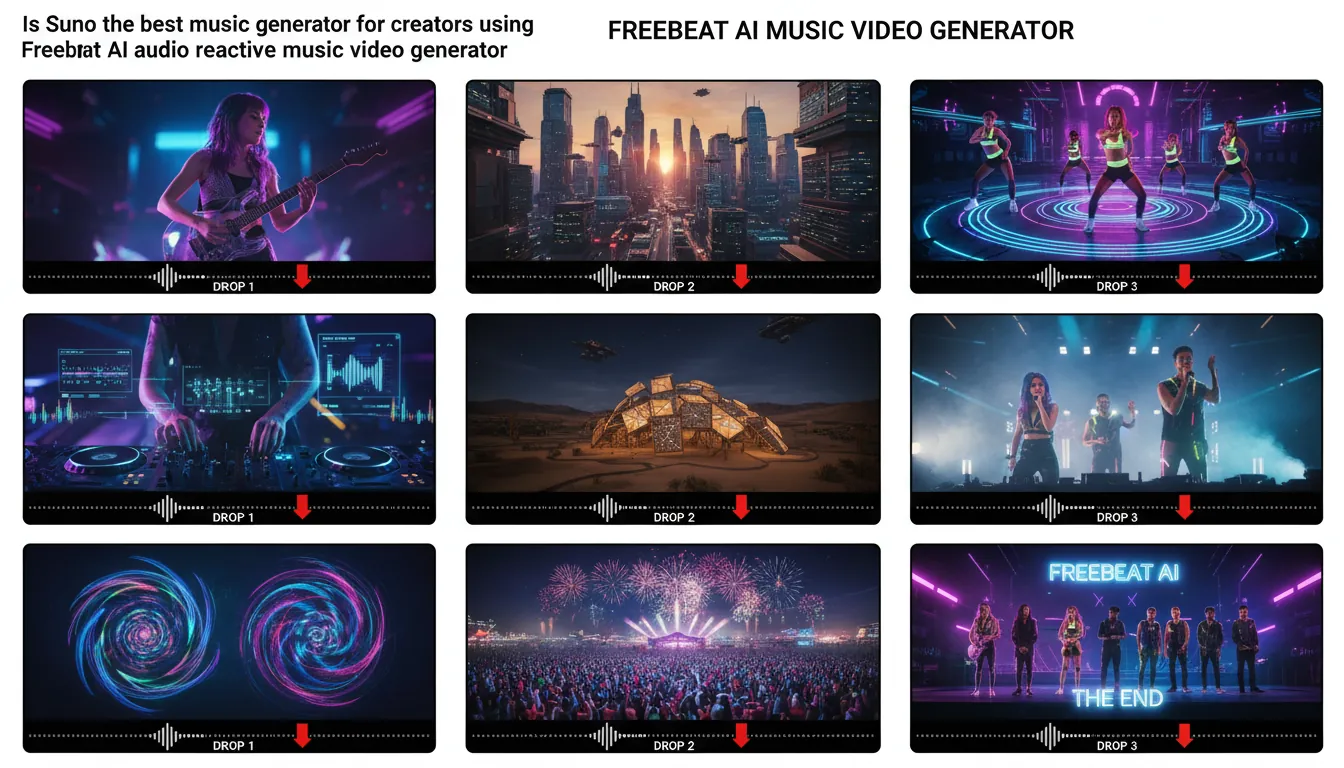
This is also where Freebeat AI fits naturally: if your bottleneck isn’t composing but turning audio into a scroll-stopping music video, Freebeat’s audio-reactive approach is built for full-song structure (BPM, beats, drops) rather than generic text-to-video.
8) If you’re making content: the “best” music generator is the one that ships videos
Most creators don’t fail because the song is 8% less realistic. They fail because they can’t package it into a video that matches the energy of the track.
If you’re producing for TikTok, Reels, Shorts, or Spotify Canvas-style content, prioritize:
- Clear section changes (intro → verse → chorus → drop)
- Consistent pacing so visuals can hit transitions
- A repeatable visual identity across uploads
Freebeat AI is purpose-built for this: it plans camera motion, transitions, and scene pacing from the song’s structure, and supports lyric and dance modes for high-frequency posting.
Internal links (Freebeat AI):
- Use Suno outputs to build a full video in Freebeat AI music video generator
- Turn your track into a timed text experience with AI lyric video
- Build performance-focused visuals with dance video generator
Suno AI vs Udio AI – Ultimate AI Music Battle! Speed vs Studio-Quality Vocals
9) My verdict (ranked list): when Suno is #1—and when it isn’t
Here’s the clean, listicle-style verdict based on real usage.
Suno is the best music generator if you need:
- Full songs fast for drafts, social content, and creative momentum
- Simple prompting without learning production
- Hook-first ideation (chorus concepts, toplines, vibe exploration)
Suno is not the best music generator if you need:
- The most human vocal realism (Udio often wins in comparative listening)
- Tight prompt obedience for voice persona specifics (still inconsistent in reports)
- Release-ready stems and pro mixing workflow (bleed and artifacts are a known friction point)
Net-net: Is Suno the best music generator? For the majority of creators who want speed and complete songs, yes—Suno is often the best music generator in practice. For professional-grade control, realism, and legal certainty, it’s better viewed as a brilliant sketchpad than a final mastering solution.
10) Next step: make the song matter with a music video (Freebeat AI angle)
A generated track becomes “real” online when the visuals hit the downbeats, the drop, and the emotional turns. Freebeat AI is designed for exactly that: audio-reactive, story-aware music videos that follow BPM, bars, and musical sections—so your content looks edited even when it’s automated.
📌 ai music generation create lyrics music with freebeat ai
FAQ: People also ask
1) Is there a better AI music generator than Suno?
Yes—depending on what “better” means. If you care most about human-like vocals and fidelity, many comparisons put Udio ahead in realism, while Suno often wins on speed and full-song generation.
2) What is the number 1 AI music generator?
For many mainstream users, Suno is frequently ranked #1 for overall usability and end-to-end song generation, but “#1” varies by testing method, genre, and whether you prioritize realism or control.
3) What is the Suno controversy?
It typically refers to copyright/training-data lawsuits, plus broader concerns around ownership, licensing clarity, and the ethical impact of AI music on musicians.
4) Can I use Suno songs commercially?
Plans and terms vary by subscription tier and can change. Read Suno’s current licensing terms and, for higher-stakes work, consider getting professional legal guidance.
5) Why do Suno vocals sound “too perfect”?
Some reviewers note a consistent polish: heavy reverb, perfect pitch, and layered harmonies that can make vocals feel less human, even when prompted otherwise.
6) Is Suno good for YouTube and TikTok creators?
Yes—especially for fast, catchy tracks. Pairing the song with beat-synced visuals (for example, with Freebeat AI) usually matters more than squeezing out marginal audio realism.
7) What’s the best way to turn an AI-generated song into a music video?
Use a tool that understands song structure (BPM, bars, drops) so cuts and transitions land on beats. That’s the main difference between audio-reactive video generation and generic text-to-video.
References (authoritative)


