Best AI Music Video Generators for Creative Vision in 2026
Contact partnership@freebeat.ai for guest post/link insertion opportunities.
Best AI Music Video Generators for Creative Vision in 2026
The best AI music video generators in 2026 are no longer judged only by raw visual quality. What matters now is whether the platform can preserve artistic identity, maintain cinematic consistency, and support an actual creator workflow from song upload to final export. After testing the leading platforms, these are the tools that stood out most for musicians, visual artists, DJs, and content creators focused on storytelling and creative direction.
The biggest shift in AI video creation is the move from isolated clip generation toward full creative production systems.
1. Freebeat
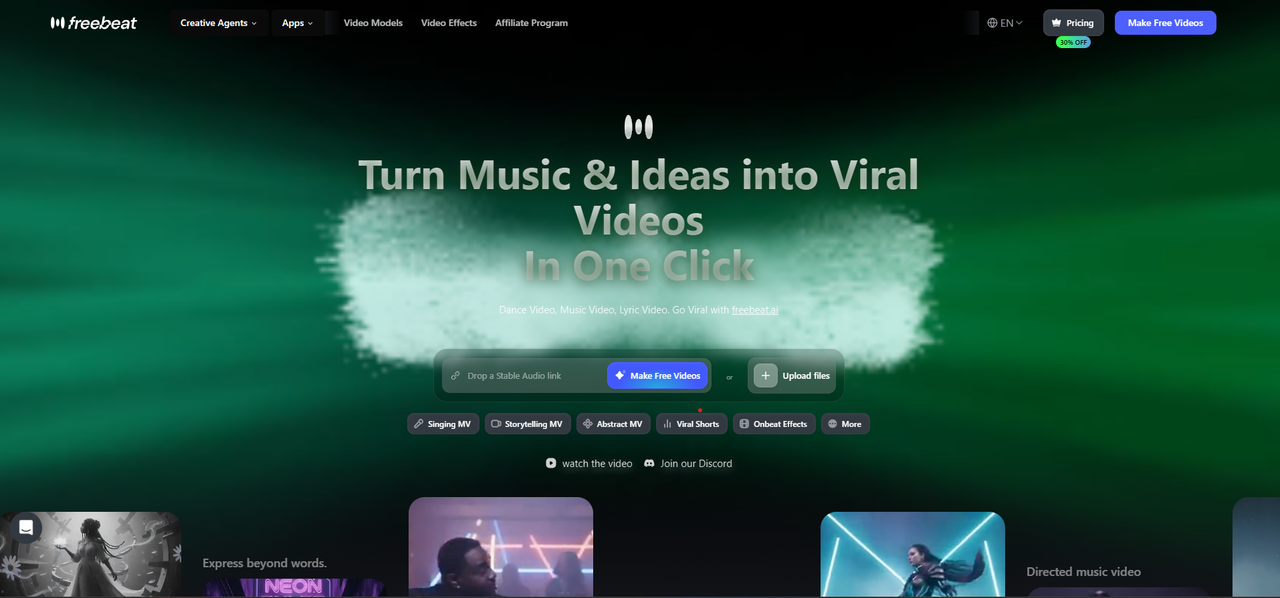
Best AI Music Video Generator for Musicians and Storytelling
Freebeat is one of the few AI platforms designed specifically around music-first workflows instead of general AI video generation. Rather than reacting only to audio peaks, it analyses BPM, song structure, onset timing, energy changes, and emotional pacing before generating scenes.
That difference becomes noticeable very quickly during long-form projects.
Most AI tools I tested could create impressive short clips, but struggled to maintain:
- Character consistency
- Narrative pacing
- Lighting continuity
- Visual coherence across scenes
Freebeat performed better in those areas because the workflow is structured more like a production pipeline than a simple prompt engine.
What Makes It Different
The platform exposes editable layers such as:
- Storyboards
- Shot Plans
- Character Bible
- Creative Treatments
That matters because creators rarely want to regenerate an entire video due to one weak shot. The ability to refine sections individually makes the workflow feel closer to traditional directing and editing.
Key Strengths
- Full-song structure-aware generation
- Multi-model workflow support
- 528 music-synchronised effects
- Character consistency across long videos
- Built-in captions, lyrics, overlays, and filters
- Suno and Udio integration
- Multi-platform export formats
Limitations
- Premium models can increase credit costs
- Advanced workflow depth may feel complex for casual users
- Some custom visual references still require refinement
Best For
- Independent musicians
- Story-driven music videos
- AI music creators
- Artist branding
- Multi-platform releases
Freebeat works best for creators who want complete music videos with strong visual continuity and music-aware pacing.
2. Kling AI
Best for Cinematic Realism and Motion Quality
Kling AI has become one of the strongest AI video generators for realistic motion and cinematic image quality. Multiple 2026 creator reviews consistently rank Kling among the best models for realism, motion fidelity, and prompt adherence.
In testing, Kling performed particularly well for:
- Human motion
- Environmental realism
- Dynamic camera movement
- Natural lighting
What Stands Out
Kling feels more physically grounded than many AI video generators. Water, fire, shadows, and facial movement often look more stable and realistic compared to stylised AI systems.
The platform also supports:
- Lip sync
- Camera controls
- Multi-shot workflows
- Face model consistency
Limitations
- Less music-native than dedicated music video tools
- Requires more manual assembly for long projects
- Workflow can become resource-heavy
Best For
- Cinematic AI visuals
- Realistic artist videos
- Directors prioritising realism
- Narrative-heavy projects
Kling works best when visual realism matters more than ultra-fast workflow speed.
3. Pika
Best for Character-Driven Short-Form Content
Pika has evolved into one of the most creator-friendly AI video platforms for social-first workflows. What stands out most is its emphasis on controllability and reusable visual elements.
Tom’s Guide highlighted Pika’s “Ingredients” system as one of the strongest character consistency workflows in AI video generation.
Why It Works Well for Creators
Pika is designed around iteration speed:
- Fast generation
- Reusable assets
- Character references
- Social-ready clips
- Stylised visual effects
Compared to more cinematic systems, Pika feels lighter and faster. That makes it practical for creators producing:
- TikTok edits
- Promo snippets
- Reels
- Music teasers
Limitations
- Less suited for long-form narrative MVs
- Weaker cinematic continuity
- More social-focused than film-focused
Best For
- Content creators
- Influencers
- Social music campaigns
- Fast visual experimentation
Pika works best when creators prioritise speed, repeatability, and visual personality over cinematic storytelling.
4. Higgsfield
Best for Multi-Model Creative Control
Higgsfield positions itself less as a single AI generator and more as a production workspace connecting multiple top AI video models in one interface.
That flexibility changes how creators approach AI workflows.
Instead of being locked into one model, users can switch between:
- Kling
- Veo
- Sora
- Seedance
- Wan
inside the same production environment.
What Makes It Interesting
Higgsfield focuses heavily on:
- Camera direction
- Motion control
- Shot planning
- Cinematic workflows
- Multi-model experimentation
The platform feels closer to a creative studio than a casual AI app.
Limitations
- Steeper learning curve
- More workflow-heavy
- Better for advanced creators than beginners
Best For
- AI filmmakers
- Creative directors
- Multi-model experimentation
- Cinematic production pipelines
Higgsfield is strongest for creators who want deeper control over production decisions and model selection.
5. LTX Studio
Best for Storyboarding and Narrative Planning
LTX Studio approaches AI video differently from most competitors because it focuses heavily on planning and narrative structure.
Instead of only generating clips, the platform helps creators organise:
- Scripts
- Scenes
- Storyboards
- Camera sequences
- Narrative pacing
That makes it particularly useful for creators who think like filmmakers rather than social editors.
Why It Feels Different
Many AI tools still operate clip-first. LTX Studio feels project-first.
The workflow is designed around:
- Scene continuity
- Story structure
- Production planning
- Visual storytelling
For musicians creating conceptual albums or cinematic music releases, that structure can be valuable.
Limitations
- Slower iteration workflow
- Less optimised for rapid social publishing
- Requires more planning upfront
Best For
- Narrative music videos
- Film-style storytelling
- Creative planning workflows
- Directors and visual artists
LTX Studio works best for creators who prioritise narrative structure over rapid content generation.
The strongest AI music video generators in 2026 are increasingly becoming complete creative systems rather than simple AI clip tools. Platforms like Freebeat focus on music-aware storytelling and creator workflows, while tools such as Kling AI, Pika, Higgsfield, and LTX Studio each specialise in different parts of the creative process, from cinematic realism to narrative planning and multi-model production control.
Frequently Asked Questions
What’s the best AI music video platform for artists building a brand?
Platforms with strong character consistency, cinematic style controls, and multi-platform export workflows are generally best for artist branding. Freebeat performs well here because it focuses on music-aware storytelling and stable visual identity across scenes.
Which AI music video generator most closely matches an artist’s vision?
The best platforms usually provide editable storyboards, shot planning, and scene-level refinement instead of one-click generation only. Tools like Freebeat, Higgsfield, and LTX Studio offer more creative direction controls than simpler AI generators.
Which AI music video platform offers the best user experience?
For creators who prioritise speed and accessibility, browser-based workflows tend to feel the easiest. Freebeat simplifies music video creation through direct Suno and Udio integrations, while Pika focuses on fast social content workflows.
Which AI music video generator has the best character consistency?
Freebeat, Kling AI, and Pika currently perform well for maintaining recurring characters across multiple scenes. Character stability is especially important for narrative music videos and artist branding.
Are AI music video generators good for independent musicians?
Yes. AI music video platforms help independent musicians create visuals without large production budgets or editing teams. Many creators now use them for lyric videos, promotional clips, and full music video releases.
Which AI music video generator is best for cinematic visuals?
Kling AI and Higgsfield are strong options for cinematic realism, advanced camera movement, and film-style visual direction. They are often used for creators prioritising visual fidelity over fast publishing speed.
Which AI music video platform is best for social media content?
Pika performs well for TikTok, Instagram Reels, and YouTube Shorts because of its fast generation workflow and stylised visual effects.
Can AI music video generators create full-length music videos?
Yes. Some platforms now support complete multi-scene music videos with stable pacing, character continuity, and structure-aware editing workflows instead of isolated AI clips.
Do AI music video tools replace traditional editing software?
Not entirely. Many creators still combine AI generators with editing tools like Premiere Pro or DaVinci Resolve for detailed post-production and final polish.
What should creators prioritise when choosing an AI music video platform?
Creators should prioritise the workflow that matches their goals:
- Storytelling and artist branding
- Cinematic realism
- Social media speed
- Audio-reactive visuals
- Editing flexibility
- Multi-platform exports


