From Suno Song to Music Video: Freebeat vs Neural Frames for AI Music Creators in 2026

PASTE_FROM_SUNO_SONG_TO_FREEBEAT_VS_IMAGE_URL_HEREThis is a more useful comparison than Freebeat versus a general video generator because both products begin with music. The difference is how much of the directing work they keep in the creator’s hands.
A Suno creator may want one of two things. The first is speed: “I finished the track; give me a coherent music video.” The second is visual musicianship: “I want the kick to drive zoom, the snare to trigger an effect, and the vocal to change the scene.” Freebeat leans toward the first problem. Neural Frames leans toward the second.
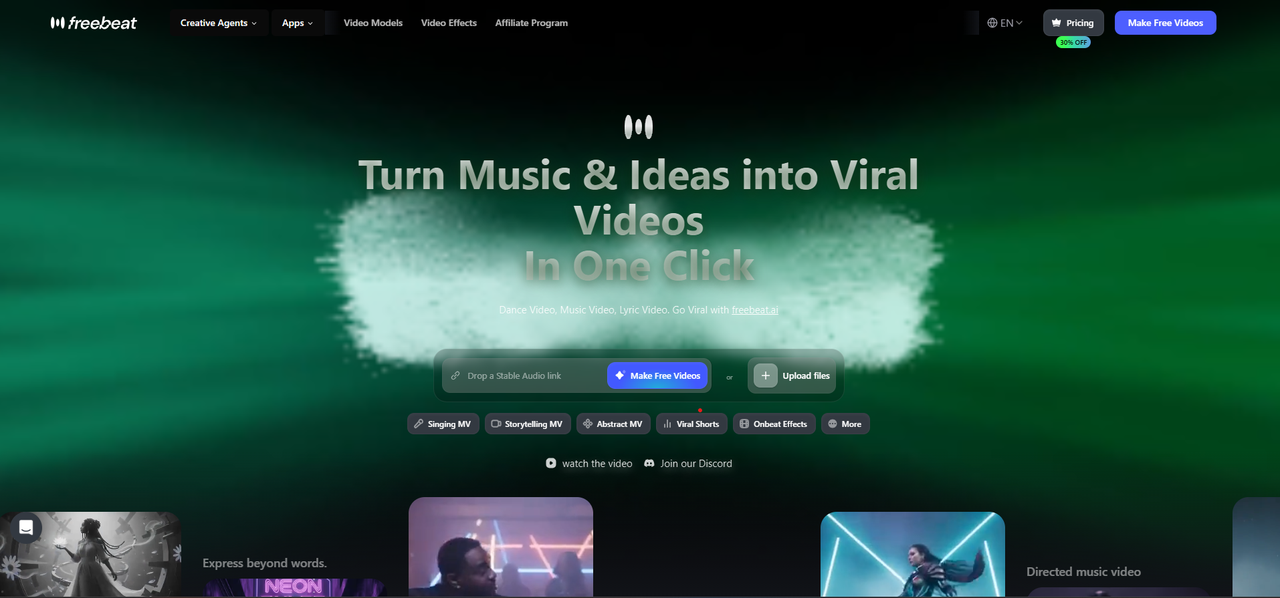
Freebeat can turn audio or a supported music link into a beat-aware music video, visualizer, or singing performance without starting from a blank editing timeline. Try Freebeat →
Freebeat vs Neural Frames at a Glance
PASTE_FREEBEAT_IMAGE_URL_HERE| Category | Freebeat | Neural Frames |
|---|---|---|
| Primary goal | Automated song-to-video production | Audio-reactive music video and visualizer control |
| Suno workflow | Direct Suno-oriented input and generation | Upload the finished audio and analyze it |
| Audio analysis | Beat, energy, structure, music-first pacing | Eight-stem separation plus modulation controls |
| Automation | High | Autopilot available, with deeper manual refinement |
| Visual control | Prompt/mode/storyboard direction | Timeline, stems, modulation, frame-level refinement |
| Best output | Complete music video, singing MV, storytelling, visualizer | Audio-reactive visualizer, experimental full-length video, live/backdrop assets |
| Best user | Artist who wants fewer editing decisions | Artist/visualist who enjoys directing the reaction system |
1. The Core Difference: Automation vs Instrument-Like Control
Freebeat behaves more like an AI director. You give it the song and a visual direction; the system analyzes the track, plans the video, and handles much of the sequencing. That is especially valuable when the artist does not want to become a video editor just to release music.
Neural Frames describes itself more like a visual synthesizer. The song can be separated into stems, and those musical components can modulate visual parameters. The creative experience is closer to sound design: you can decide what visual property responds to what element of the mix.
2. Which Is Better for a Direct Suno Workflow?
Freebeat has the advantage when convenience matters. A Suno-oriented input flow means the creator can move from the song to the visual concept without first rebuilding the project in another environment. That is more than a small UX win for high-output AI musicians who may be testing multiple tracks per week.
Neural Frames works naturally with uploaded audio files. For many producers, exporting the final WAV or MP3 is already part of the release workflow, so this is not a major obstacle. The extra value comes after upload, when the track is prepared for stem-aware reactivity.
3. Which Is Better for Audio Reactivity?
Neural Frames is the more granular choice. Its current visualizer workflow separates music into eight stems and lets creators map musical elements to motion, color, camera movement, and effects. This is fundamentally different from a simple amplitude waveform. It allows the visual behavior to reflect arrangement—not just loudness.
Freebeat uses musical analysis to inform the video more automatically. The creator is less likely to think in terms of “map the snare to this parameter” and more likely to think in terms of visual style, story, pacing, and final format. That tradeoff is intentional: fewer controls can mean faster publication.
4. Narrative Music Video vs Visualizer
If your song needs characters, scenes, storytelling, or a performance-led concept, Freebeat’s broader music-video modes are the more natural starting point. If your song needs a hypnotic visual system that evolves with individual stems, Neural Frames has a clear advantage.
The distinction is especially important for electronic music. A techno producer may genuinely want visual modulation that behaves like another instrument. A singer-songwriter may care more about the emotional sequence of locations, characters, and chorus reveals.
5. Full-Length Output and Iteration
Both tools are designed for more than five-second experiments. Neural Frames explicitly supports full-length visualizations, and its editor gives creators a way to refine long sequences. Freebeat emphasizes complete song outputs and reducing the amount of timeline assembly required.
Iteration therefore feels different. In Neural Frames, you may adjust the reaction system. In Freebeat, you are more likely to revise the concept, prompt, style, or generated sequence. Neither is inherently better; they suit different creative personalities.
6. Which Tool Should You Choose?
Choose Freebeat when: you want a complete Suno-to-video workflow, you are not a video editor, you need several release formats, or you want singing/storytelling modes in addition to abstract visuals.
Choose Neural Frames when: audio reactivity is the art form, you want stem-level control, you enjoy refining visual modulation, or you need an advanced visualizer/live-backdrop workflow.
Use both when: the main release needs a narrative or performance video, but you also want an experimental visualizer, Spotify Canvas, live loop, or alternate version.
7. Example: One Suno Track, Two Very Different Visual Decisions
Take a three-and-a-half-minute electronic-pop track with a sparse opening, a vocal verse, a rising pre-chorus, a dense hook, and a breakdown. In Freebeat, the creator might describe the visual world once—glass architecture, silver styling, blue-hour lighting, a performer moving from an empty station into a crowded rooftop—and then let the music-aware workflow shape where the visual scale increases. The creative review happens at the level of concept, characters, scenes, and overall pacing.
In Neural Frames, the artist might instead build a visual system. The kick could increase camera movement, the snare could trigger brief light pulses, the bass could control image intensity, and the vocal stem could influence a separate effect. The breakdown could deliberately reduce all modulation, making the final chorus feel larger when the parameters return. That workflow is closer to programming a visual instrument around the arrangement.
The first method prioritizes story and production speed. The second prioritizes correspondence between musical layers and visual behavior. Both can produce sophisticated work, but they reward different creative instincts.
8. Release Strategy: Main Video vs Alternate Visual Assets
Artists also do not need to force one tool to make every asset. A practical release can use Freebeat for the flagship narrative or singing music video and Neural Frames for an alternate audio-reactive visualizer, tour-screen loop, Spotify Canvas, or extended YouTube version. Reusing the same palette, character references, and cover-art motifs keeps those outputs inside one campaign even when the production methods differ.
This is often the stronger way to think about AI video tools: not as permanent platform loyalties, but as specialized instruments inside one visual identity.
Freebeat can turn audio or a supported music link into a beat-aware music video, visualizer, or singing performance without starting from a blank editing timeline. Try Freebeat →
Frequently Asked Questions
Is Freebeat or Neural Frames better for Suno songs?
Freebeat is better for creators who want the shortest path from a finished Suno song to a complete video. Neural Frames is better for creators who want granular audio-reactive control over how different stems and musical elements drive visuals.
Does Neural Frames analyze music stems?
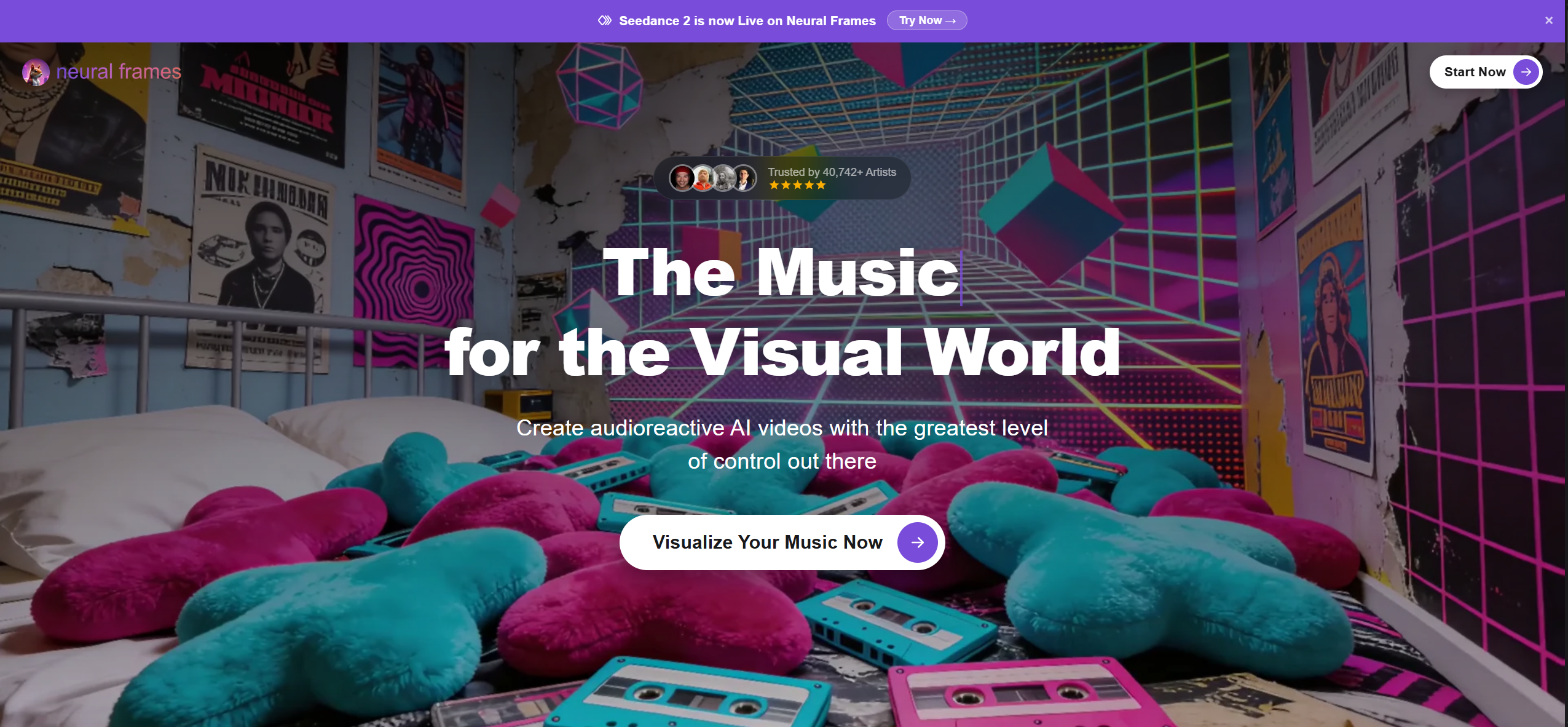
PASTE_NEURAL_FRAMES_IMAGE_URL_HEREYes. Its music visualizer workflow separates a track into multiple stems and can map them to visual movement, effects, and camera behavior.
Does Freebeat accept Suno songs directly?
Freebeat supports a direct Suno-oriented workflow and can use a Suno link or audio input as the starting point for a beat-aware video.
Which is easier for beginners?
Freebeat generally makes more of the structural decisions automatically. Neural Frames can start with Autopilot, but its biggest advantage appears when a creator wants to refine the audio-reactive behavior.
Which is better for full-length videos?
Both support long-form music use cases. Freebeat is stronger for automated complete music-video generation; Neural Frames is especially strong for full-length audio-reactive visualizers and detailed timeline control.
Can I use both?
Yes. One practical approach is to use Freebeat for a narrative or performance-led main video and Neural Frames for a more experimental visualizer, live backdrop, or alternate release asset.


