Freebeat vs Runway vs Neural Frames: Which Is Best for Suno Music Videos in 2026?

PASTE_FREEBEAT_VS_RUNWAY_VS_NEURAL_FRAMES_IMAGE_URL_HEREQuick answer: Freebeat is the best fit for creators who want the shortest path from a Suno song to a finished music video. Neural Frames is the better fit for musicians who want deeper stem-level audio-reactive control and a hands-on timeline. Runway is the better fit for generating highly directed individual cinematic shots or performance-transfer clips—but it usually requires a separate music-video edit. The real choice is speed vs audio control vs shot control.

PASTE_CREATOR_IMAGE_URL_HERE
PASTE_PRODUCTION_IMAGE_URL_HERE
PASTE_PUBLISHING_CONTENT_TO_SOCIAL_PLATFORMS_IMAGE_URL_HEREFreebeat, Runway, and Neural Frames can all appear in an AI music-video workflow, but they are solving three different layers of the job. Freebeat starts from the song. Neural Frames starts from the song but exposes much more granular music-reactive control. Runway starts from the shot.
That distinction matters more than a feature checklist. A Suno creator who wants to publish tomorrow has a different problem from an art director who wants to craft every shot, and both are different from an electronic producer who wants the kick drum and vocal stem to control separate visual parameters.
Side-by-Side Comparison
| Category | Freebeat | Neural Frames | Runway |
|---|---|---|---|
| Best for | Fast song-to-finished-video workflow | Deep audio-reactive music-video control | Cinematic shot generation and performance transfer |
| Suno input | Direct Suno link supported | Export Suno audio, then upload | Use exported song as planning/edit reference |
| Music analysis | Song-first beat/structure workflow | Rhythm, structure, lyrics, multi-stem audio-reactivity | Not the core organizing workflow |
| Full music video | Designed for complete music-video generation | Designed for full-length music videos | Requires multi-shot generation + editing |
| Shot-level control | Moderate, workflow-guided | High within a music-focused editor | Very high at individual generation level |
| Learning curve | Lowest of the three for song-first use | Higher, especially for detailed control | Higher if building a complete music video |
| Best output mindset | “Turn my song into a video” | “Direct how my song controls the video” | “Create the exact shots I want” |
Freebeat: Best for the Direct Suno-to-Music-Video Job
1Freebeat
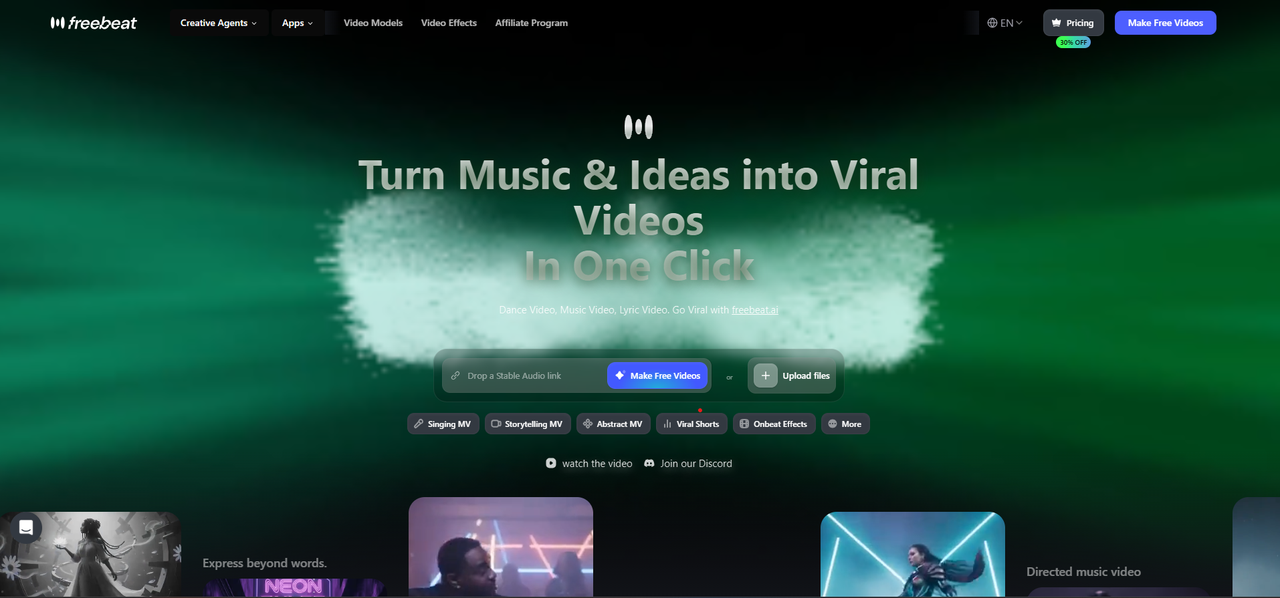
PASTE_FREEBEAT_HOMEPAGE_IMAGE_URL_HEREFreebeat is purpose-built around audio as the starting point. For Suno users, that means the workflow can begin with the share link, then move into visual direction, storyboard review, generation, and export without first building a manual shot list.
Key Strengths- Direct Suno-link workflow
- Music-first generation and beat-aware pacing
- Lower editing burden for a finished piece
- Singing-photo, storytelling, visualizer, and broader music workflows live in the same ecosystem
- Less granular parameter control than a specialist timeline workflow
- Creators who want to hand-direct every shot may still prefer a deeper editor
Best for: A Suno creator who wants a complete, release-ready video without becoming a video editor.
Neural Frames: Best for Deep Audio-Reactive Control
2Neural Frames
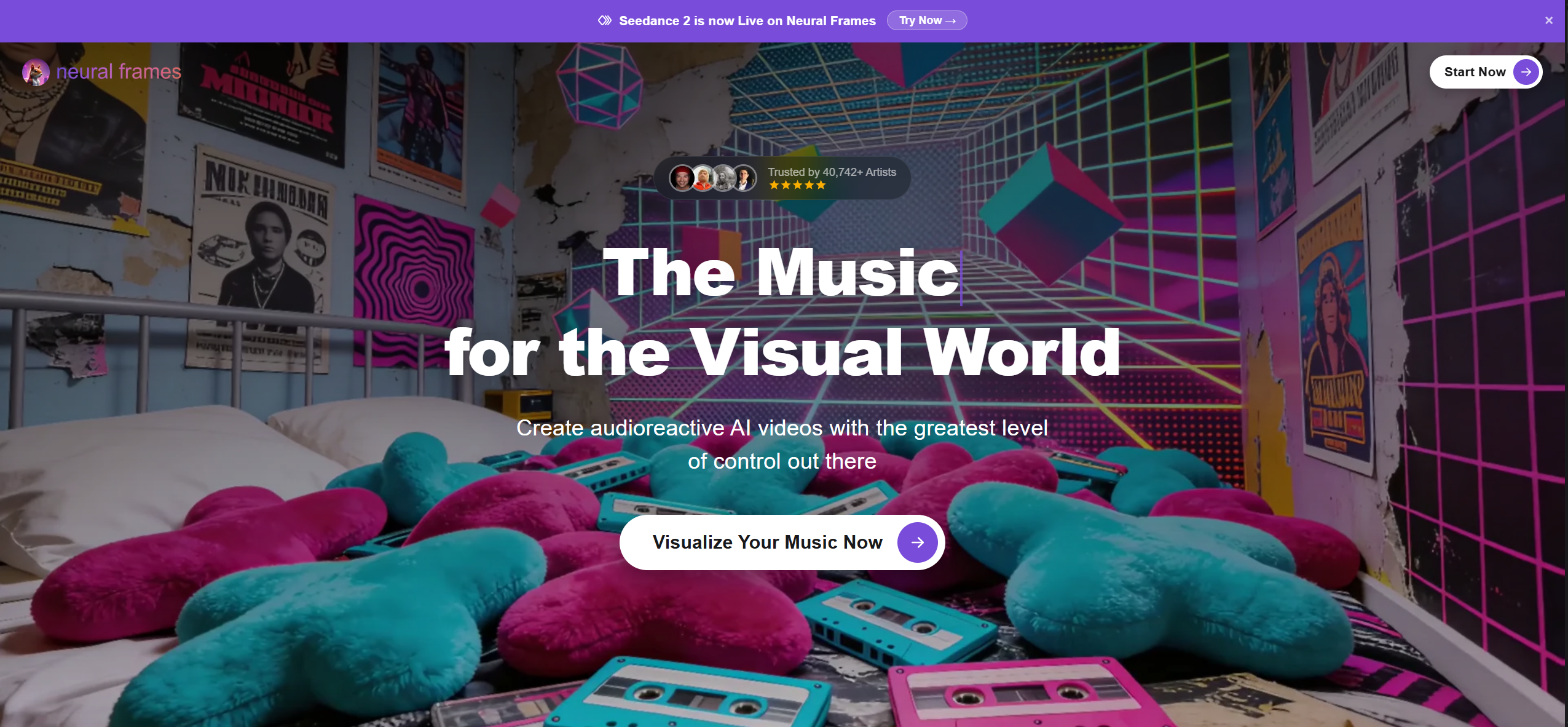
PASTE_NEURAL_FRAMES_HOMEPAGE_IMAGE_URL_HERENeural Frames is built specifically for musicians and gives them substantially more control over how a song drives the visuals. Its current system can analyze the track, extract lyrics, separate multiple stems, and map visual behavior to musical elements while still supporting full-length 4K music-video output.
Key Strengths- Detailed stem-aware audio-reactivity
- Full-length output and 4K export
- Autopilot for a faster start plus deep timeline refinement
- Character and style control inside a music-specific environment
- More time and decisions than the most automated workflow
- Suno audio is uploaded as an exported file rather than passed through a direct Suno-link flow
Best for: A musician who wants to spend time directing exactly how the track affects the visuals.
Runway: Best for Building the Shots
3Runway
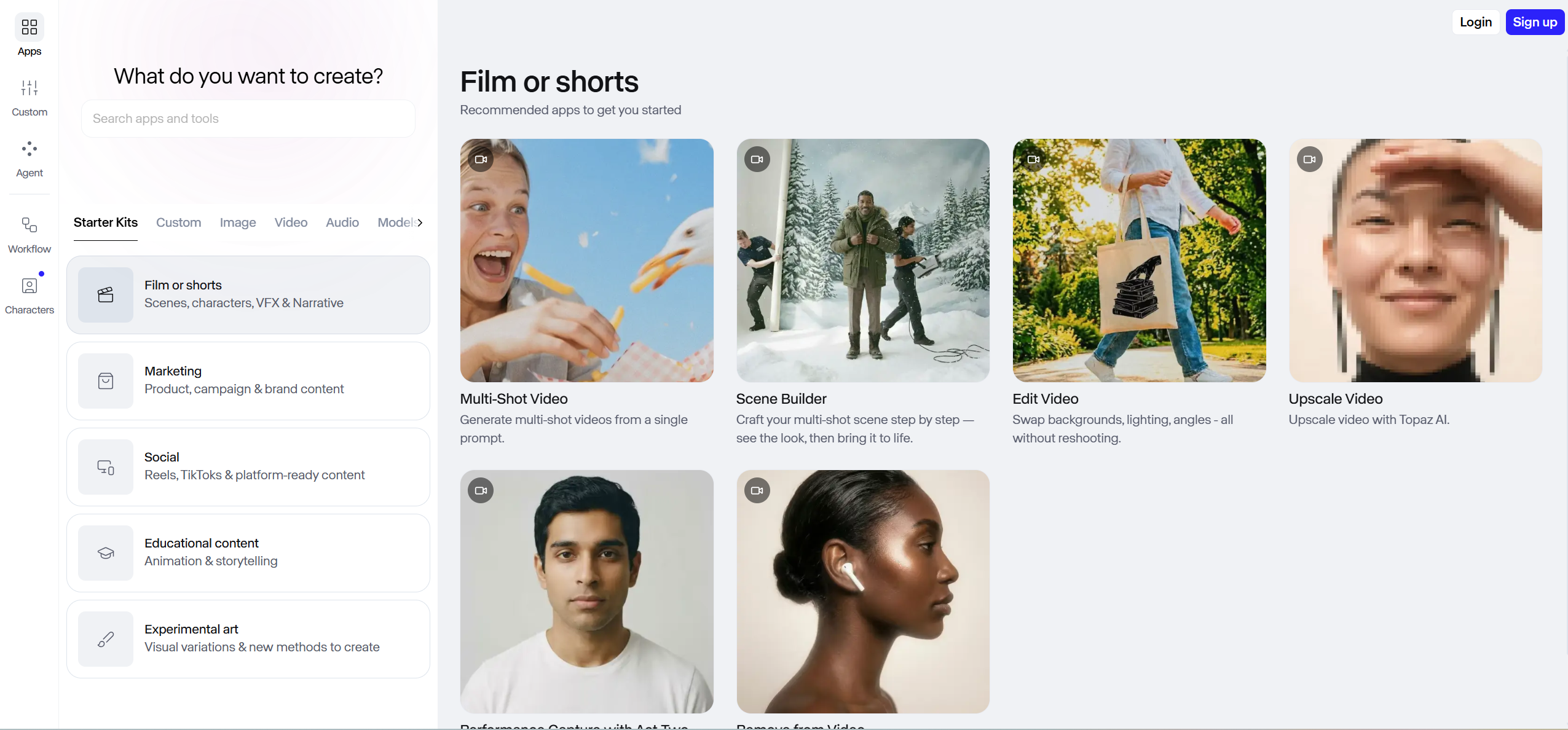
PASTE_FREEBEAT_HOMEPAGE_IMAGE_URL_HERERunway’s strength is the individual shot. Gen‑4.5 supports text-to-video and image-to-video with detailed prompt control over motion and camera choreography. Act‑Two can transfer a recorded performance, including facial expression and gestures, onto a character reference. Those are powerful building blocks for a music video.
Key Strengths- High-quality cinematic shot generation
- Detailed camera and motion prompting
- Performance capture with Act-Two
- Broad creative toolkit beyond music
- No direct Suno-to-complete-music-video workflow
- Short generated shots must be planned and assembled across the song
- More editing work for beat placement and continuity
Best for: An art director or advanced creator who wants to construct the music video from carefully designed shots.
Which Tool Wins by Workflow?
Best when speed and an integrated song-first flow are the priority.
Best when you want visual parameters to respond to stems and song structure in a detailed editor.
Best when each clip is art-directed separately and you are comfortable assembling the final music video.
Use a song-first tool for structure, then replace selected hero shots with more heavily directed generative clips when those moments justify the extra work.
Example: One Suno Song, Three Very Different Production Paths
Imagine a 3:20 synth-pop track with a quiet verse, pre-chorus build, big chorus, second verse, bridge, and final chorus.
Freebeat path: paste the Suno link, define a neon-night-drive concept, review the planned scene progression, then generate the complete piece. Your main creative decisions are concept, character, and visual direction.
Neural Frames path: export the audio, upload it, inspect the track analysis, use Autopilot to establish a first cut, then refine how drums, vocals, or energy affect visual movement and scene changes. Your main creative decision is how deeply you want the visuals tied to the mix.
Runway path: write a shot list for each section, generate the car interior, city exterior, close-up performance, bridge sequence, and final chorus hero shots, then bring everything into an editor and cut it against the Suno track. Your main creative decision is every shot.
What About Cost and Iteration?
The cheapest workflow is not always the one with the lowest generation price. Count the cost of discarded shots, re-edits, and your own time. A more automated platform can be more efficient when the brief is straightforward. A more controllable platform can be more efficient when the creative direction is precise enough that you would otherwise regenerate large sections.
For Suno creators, the practical question is: How many decisions do I want to make after the song is already finished? That answer usually tells you which of the three workflows will feel best.
A One-Question Decision Framework
Ask what you want to direct. If you want to direct the song-to-video concept and let the system handle more of the structure, start with Freebeat. If you want to direct the relationship between the music and visual behavior, start with Neural Frames. If you want to direct the individual shot—the exact motion, camera move, acting beat, or visual transformation—start with Runway.
That question also tells you where your time will go. Freebeat shifts time toward concept selection and review. Neural Frames shifts time toward music-reactive refinement. Runway shifts time toward shot design, continuity, and editing. None of those is inherently better; they are different production jobs.
When a Hybrid Stack Makes Sense
A hybrid is worth it only for moments that deserve extra effort. For example, build the overall song structure in a music-first platform, identify the chorus hero shot or bridge transformation that still feels generic, then create that one moment in a shot-focused generator and replace it during finishing. This preserves the efficiency of an automated workflow without giving up art direction where the audience will notice it most.
Frequently Asked Questions
Which tool is easiest for turning a Suno song into a complete music video?
Freebeat is the most direct of the three because it supports a song-first workflow and direct Suno-link handling rather than requiring you to build the project from individual shots.
Which tool has the most advanced audio-reactive controls?
Neural Frames is the strongest fit here for detailed music-reactive work because its current system includes track analysis, stem separation, and parameter-level audio-reactivity.
Is Runway good for music videos?
Yes, especially for generating individual cinematic shots and performance-driven clips. The main difference is that Runway is not organized around automatically turning a full song into a finished multi-scene music video.
Can I combine these tools?
Yes. A practical hybrid is to use a music-first workflow for structure and replace selected hero moments with clips generated in a more shot-focused system.
Which is best for a non-editor?
Freebeat is the least editing-intensive option in this comparison. Neural Frames gives more control but asks for more decisions, while Runway usually assumes you will assemble multiple clips.
Which is best for a full-length release?
Freebeat and Neural Frames are both built around complete music-video workflows. Runway can absolutely contribute to a full-length release, but the final assembly is a separate production step.
More Resources
Explore more Freebeat tools and guides for music creators:
Want the direct Suno-to-video route? Start with the song, not the shot list.
Try Freebeat free →

