Freebeat vs Kaiber in 2026: Which AI Music Video Generator Is Better for Artists?

PASTE_FREEBEAT_VS_KAIBER_IN_WHICH_GENERATOR_IMAGE_URL_HEREQuick answer: Freebeat is the better fit when you want the song itself to drive a finished music-video workflow with minimal setup. Kaiber is the better fit when you already have—or want to generate—a library of images and clips, then remix those assets into multiple beat-synced versions through Canvas, Beat Sync, and Editor. Freebeat is more song-first; Kaiber is more asset-and-remix-first.

PASTE_CREATION_IMAGE_URL_HERE
PASTE_PRODUCTION_IMAGE_URL_HERE
PASTE_DISTRIBUTION_ACROSS_SOCIAL_PLATFORMS_IMAGE_URL_HEREFreebeat and Kaiber are both built with musicians in mind, which makes this a more useful comparison than putting a music-video tool against a generic text-to-video model. The overlap is real: both can help turn music into visual content, both support social formats, and both reduce the need for traditional frame-by-frame editing.
The difference is where each workflow begins. Freebeat treats the finished song as the main creative input and tries to build the visual around it. Kaiber’s current product is split into Canvas for generating media, Beat Sync for rhythm-matched video batches, and Editor for final sequencing. In practice, that means Kaiber becomes especially powerful when you have visual assets you want to reuse, remix, or scale.
Freebeat vs Kaiber at a Glance
| Category | Freebeat | Kaiber |
|---|---|---|
| Best starting point | Finished song or Suno track | Song + images/clips, or generated media |
| Core workflow | Song → visual direction → music video | Canvas → Beat Sync → Editor |
| Direct Suno workflow | Yes | Export/add audio to your Kaiber project |
| Beat sync | Built into music-first generation | Dedicated Beat Sync workspace |
| Batch social variants | Possible through multiple generations/workflows | Major strength; Beat Sync is designed for batches |
| Full music-video direction | More automated song-first path | More modular asset-and-edit path |
| Best for | Artists who want fewer production handoffs | Artists who want reusable visual systems and many versions |
Freebeat: Better When You Want the Song to Build the Video
1Freebeat
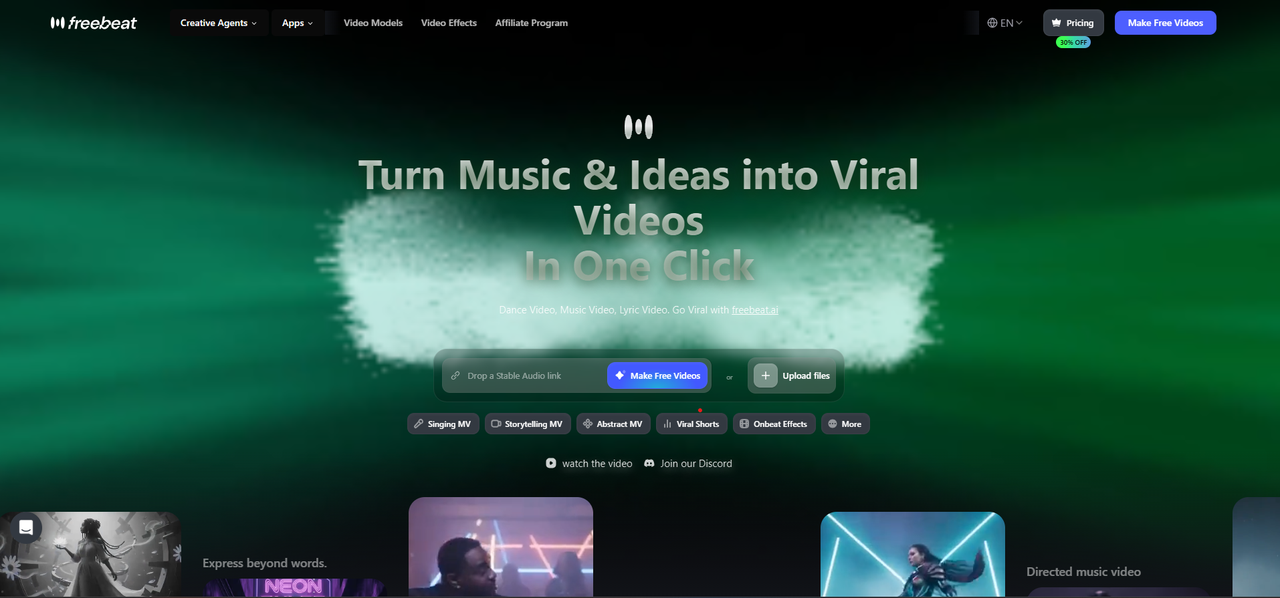
PASTE_FREEBEAT_HOMEPAGE_IMAGE_URL_HEREFreebeat is strongest when the artist already has the music and does not want to become a video editor just to release it. The workflow starts from audio or a supported song link, then moves into a music-video concept, character or scene direction, storyboard, generation, and export.
Key Strengths- Direct music-first workflow
- Suno-to-video path
- Singing-photo, story, visualizer, and other music-focused formats in one ecosystem
- Lower setup burden for a complete visual
- Less modular if your primary goal is to remix a large existing visual library
- Artists who want precise manual sequence control may prefer a more editor-forward system
Best for: An independent artist who has a finished song and needs the fastest route to a coherent music video.
Kaiber: Better When You Want a Visual Content System
2Kaiber
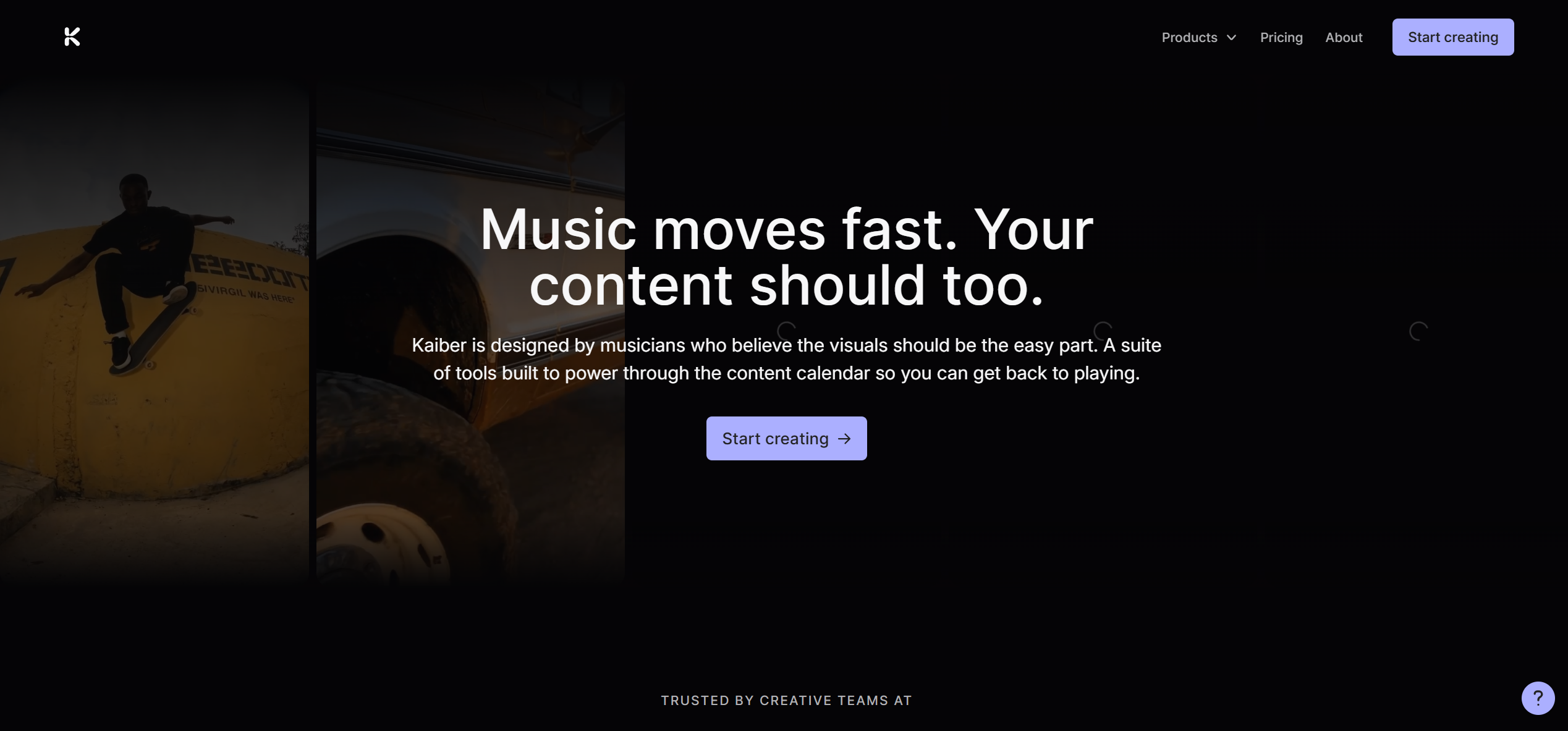
PASTE_KAIBER_HOMEPAGE_IMAGE_URL_HEREKaiber’s current suite separates generation, synchronization, and editing into distinct but connected tools. Canvas creates and remixes images/video/audio, Beat Sync turns media into beat-matched video variations, and Editor handles sequencing, transitions, text, and final export.
Key Strengths- Dedicated Beat Sync workflow
- Batch creation of multiple versions from one media set
- Connected Media Library across Canvas, Beat Sync, and Editor
- Useful for artists with cover art, photos, concert footage, or recurring visual assets
- Requires more asset planning than a direct song-to-video workflow
- If you start with only a song and no visual idea, you may spend more time creating the visual library first
Best for: An artist or team that wants to generate, reuse, and remix a set of branded visual assets across a release campaign.
1. Which Is Easier for a First Music Video?
If you have a finished song, no footage, and limited editing experience, Freebeat is the simpler mental model. You describe the video you want and let the music-first workflow do more of the planning.
Kaiber becomes easier once you have a visual system: album art, artist photos, generated scenes, short clips, or a mood board. Then Beat Sync can do the repetitive work of matching those assets to the song and creating multiple cuts.
2. Which Is Better for Social Volume?
Kaiber has a clear advantage when the brief is “make several versions from the same assets.” Its Beat Sync workflow can generate batches and its current editor lets you change cut speed, transitions, captions, and sequence. This is useful for a release campaign where one song needs multiple posts.
Freebeat is stronger when each social asset should feel like a newly generated music concept—different character, world, visualizer, or performance—rather than a remix of the same asset library.
3. Which Is Better for a Full Music Video?
For a creator who wants the platform to take more responsibility for the full-song structure, Freebeat is the more direct choice. The song is the organizing input, which reduces the amount of manual visual sequencing required.
Kaiber can absolutely build a full-length result, but the workflow is more modular. Generate the visual material in Canvas, synchronize sequences in Beat Sync, then assemble and refine in Editor. That can be a strength if you enjoy shaping the project—but it is more production work.
4. Which Gives More Control Over Existing Assets?
Kaiber wins when the assets already exist. Its Media Library is designed to move content between the three workspaces without repeated uploading, and Beat Sync can work directly with your images, clips, or auto-clipped footage.
Freebeat is more useful when the song is the primary asset and the visuals still need to be invented.
5. Which Is Better for Suno Artists?
Freebeat has the more direct Suno route because the workflow can start from a Suno share link. With Kaiber, export or otherwise provide the audio, then pair it with visuals inside the Kaiber environment.
That does not make Kaiber a bad choice for Suno. It means Kaiber is better for the Suno creator who is already thinking like a content producer: “I have this song, this cover art, these character images, and these clips—how many versions can I turn them into?”
Decision Guide
| Choose Freebeat If… | Choose Kaiber If… |
|---|---|
| You have a song but little or no visual material | You already have a visual library or want to build one |
| You want a more automated full music-video workflow | You want to control assets, cut style, sequence, and multiple versions |
| Direct Suno handling matters | Batch social content matters |
| You want singing-photo or song-first generated scenes | You want connected generation + beat sync + editing workspaces |
| You want fewer production handoffs | You want a reusable content engine around the release |
A Strong Hybrid Workflow
You do not have to choose one platform for every asset. One practical approach is to create a hero music video in a song-first workflow, then use a beat-sync/editor workflow to turn that hero asset, cover art, behind-the-scenes material, and stills into multiple campaign variations.
The important thing is to avoid duplicating effort. Use each tool for the layer it handles best: concept and song structure in one place, campaign-scale remixing in another only when the extra variants are worth it.
Example Release Campaign: One Song, Seven Assets
Suppose an artist needs one YouTube music video, three vertical chorus clips, one Spotify Canvas loop, one lyric teaser, and one release-day post. A Freebeat-led workflow makes sense when the first priority is inventing the hero visual from the song; the strongest generated scenes can then become the source material for shorter edits. A Kaiber-led workflow makes sense when the artist already has cover art, portraits, concert footage, and generated images and wants to systematically turn that library into multiple beat-synced outputs.
The campaign goal matters more than the tool name. “Create the visual identity” and “scale the visual identity into many assets” are different production stages, and the two platforms are strongest at different points in that sequence.
Frequently Asked Questions
Is Kaiber still called Superstudio?
Kaiber has moved away from the Superstudio name. Its current suite is organized around Canvas, Beat Sync, and Editor, with a shared Media Library connecting the workflow.
Which tool is better for a beginner?
Freebeat is generally simpler when the beginner starts with only a finished song. Kaiber becomes very intuitive when the user already has visual assets to synchronize and remix.
Which tool is better for TikTok and Reels?
Kaiber is especially useful for producing multiple beat-synced variants from one asset library. Freebeat is strong when you want each short to be generated as a more complete music-first concept.
Which tool is better for a Suno song?
Freebeat has the more direct Suno-to-video workflow. Kaiber is strong after you have the song audio plus visual media you want to turn into batches and edits.
Can Kaiber make a full music video?
Yes. Canvas, Beat Sync, and Editor can be combined into a full-song workflow. The main difference is that you are more actively managing the visual assets and assembly.
Can I use Freebeat and Kaiber together?
Yes. For example, create the main music-video concept in Freebeat, then use campaign assets or exported clips in a separate beat-sync/edit workflow when you need additional social versions.
More Resources
Explore more Freebeat tools and guides for music creators:
Start from the finished song and let Freebeat build the first music-video direction.
Try Freebeat free →

