8 Best Runway Alternatives for AI Music Videos in 2026
PASTE_8_BEST_RUNWAY_ALTERNATIVES_FOR_VIDEOS_IMAGE_URL_HEREThe best Runway alternatives for AI music videos in 2026, compared for full-song automation, audio reactivity, beat sync, cinematic generation, stock footage, and social content.
Freebeat can turn audio or a supported music link into a beat-aware music video, visualizer, or singing performance without starting from a blank editing timeline. Try Freebeat →
8 Runway Alternatives at a Glance
| # | Tool | Best for |
|---|---|---|
| 1 | Freebeat | Music-first generation from a finished song |
| 2 | Neural Frames | Deep audio-reactive control and stem-level music visualization |
| 3 | Kaiber | Beat-synced batches, stylized montages, and creator-led iteration |
| 4 | Luma Dream Machine | Cinematic source shots and visual experimentation |
| 5 | Pika | Fast, playful social-video generation and transformations |
| 6 | Rotor Videos | Stock-led music videos and release assets with almost no editing |
| 7 | CapCut | Mobile/social editing, singing photos, captions, and finishing |
| 8 | VEED | Browser editing, waveforms, captions, and social exports |
How We Evaluated These Tools
We compared the tools on five music-specific questions: Can they start from a finished song? Do they react to rhythm or musical structure? Can they create a full release rather than one short clip? How much manual editing is required? And are the exports practical for YouTube, TikTok, Reels, or Spotify Canvas? We also separate generative shot tools from true music-first workflows, because they solve different jobs.
The 8 Best Runway Alternatives for Music Videos
1Freebeat
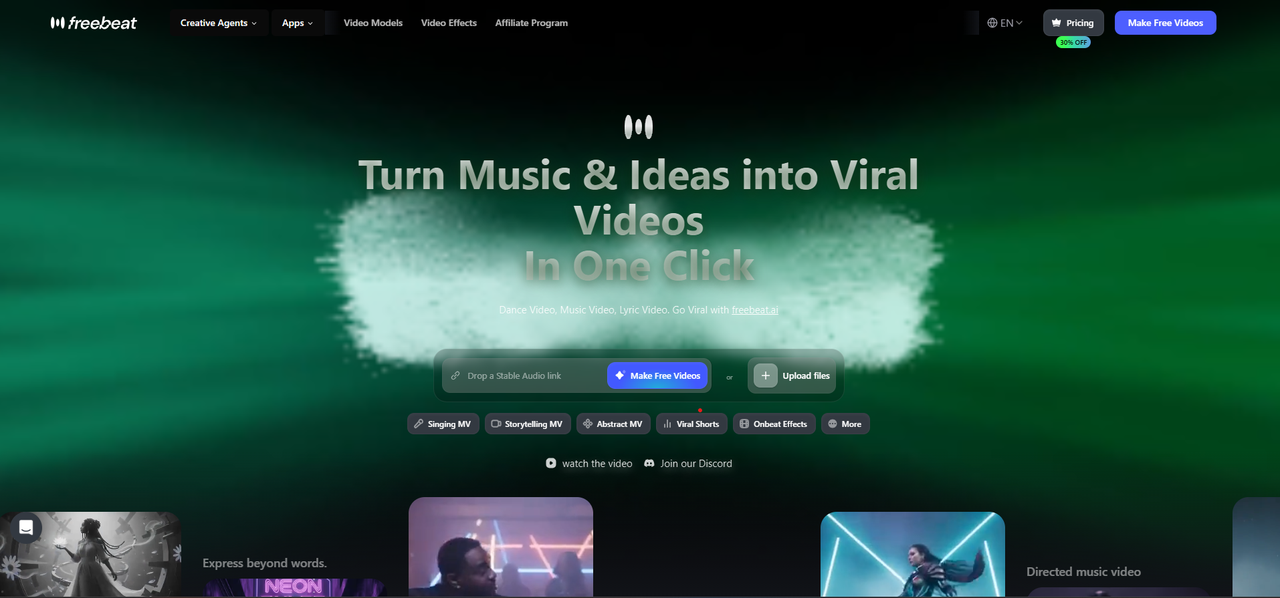
PASTE_FREEBEAT_IMAGE_URL_HEREBest for: Music-first generation from a finished song
Freebeat starts from the music rather than from an empty video canvas. Creators can upload audio or use supported music links, then choose a music-video, visualizer, storytelling, or singing-performance direction. Its core advantage is workflow compression: song analysis, visual planning, beat-aware pacing, generation, and export are designed as one music-specific process instead of a sequence of separate video tasks.
Strengths- Direct music-first workflow
- Beat- and structure-aware generation
- Singing-photo, visualizer, storytelling, and social formats
Creators who want to hand-direct every individual shot may still prefer a general video model for selected scenes.
2Neural Frames
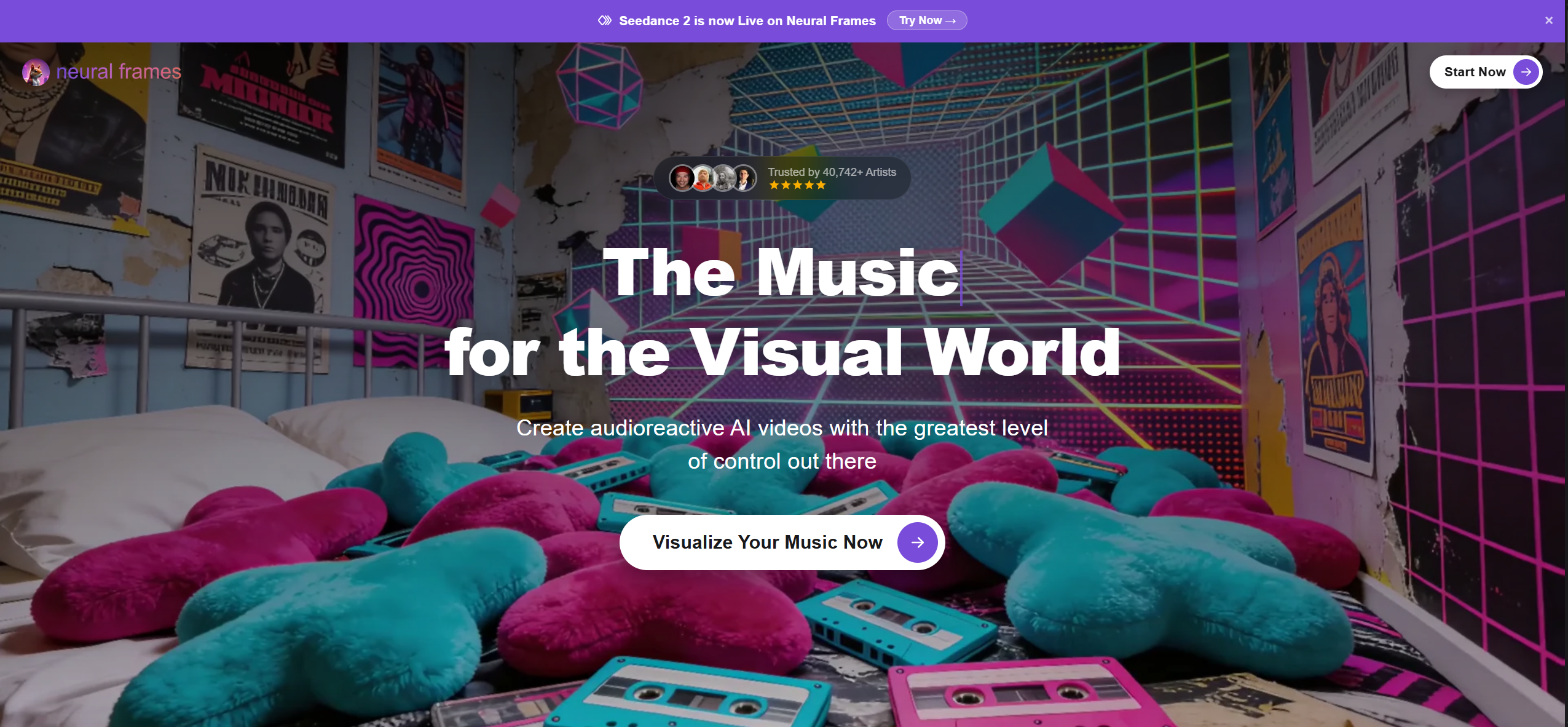
PASTE_NEURAL_FRAMES_IMAGE_URL_HEREBest for: Deep audio-reactive control and stem-level music visualization
Neural Frames is built specifically around musicians and audio-reactive video. Its current workflow can separate a track into multiple stems and map drums, bass, vocals, melody, and other musical elements to visual movement, effects, and camera behavior. Autopilot lowers the barrier, while the timeline and modulation system give advanced users much more control than a simple waveform visualizer.
Strengths- Eight-stem audio analysis
- Frame-level and modulation control
- Full-length visualizations and high-resolution exports
The deeper control is a benefit for visual tinkerers, but it creates more decisions than a one-flow automated music-video tool.
3Kaiber
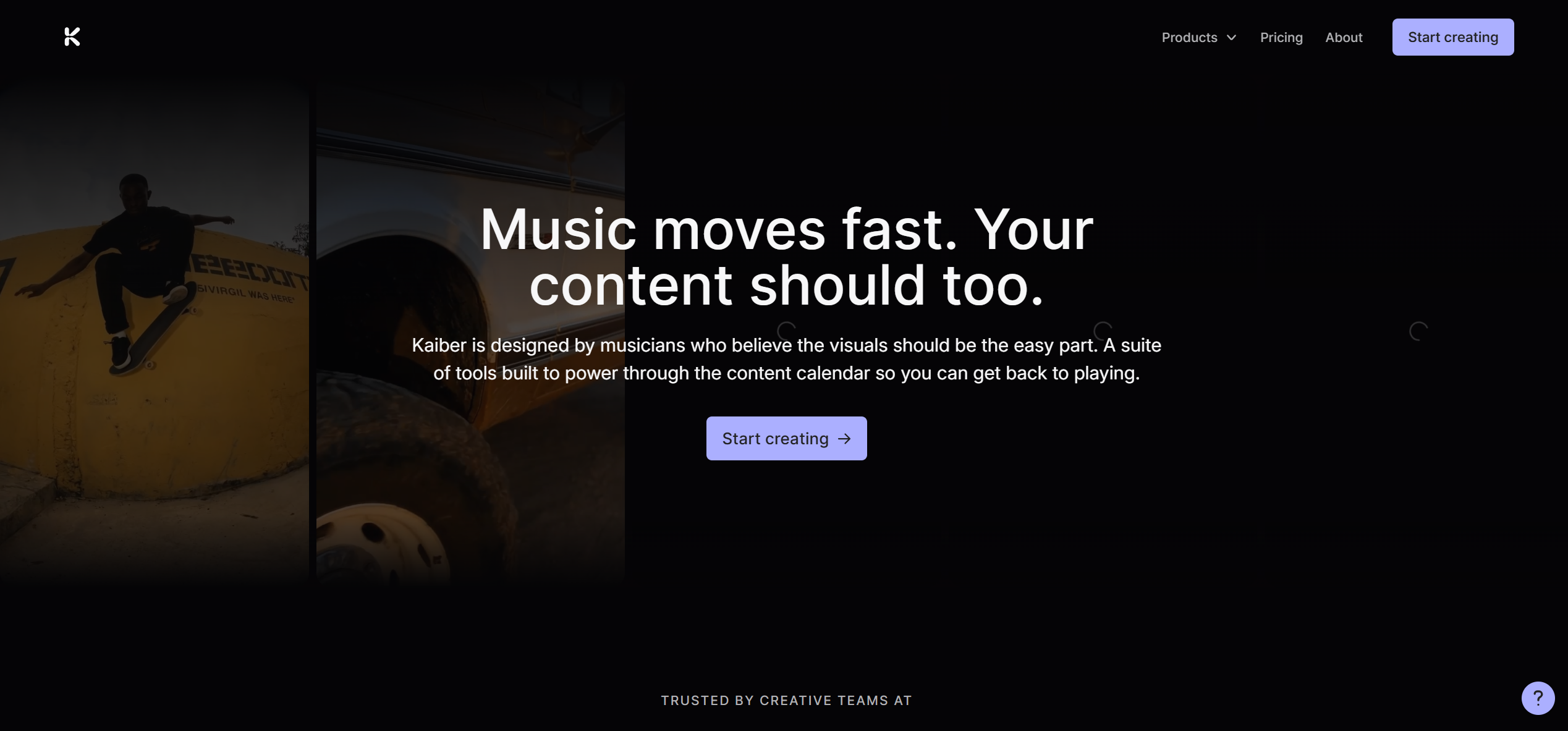
PASTE_KAIBER_IMAGE_URL_HEREBest for: Beat-synced batches, stylized montages, and creator-led iteration
Kaiber now organizes its workflow around Canvas, Beat Sync, and Editor. Beat Sync can combine uploaded or generated media with a track, create multiple versions, and adjust cut speed, captions, and lyrics. Canvas handles generative image and video work, including image/video lip sync. It is a flexible choice for artists who want to generate visual assets, sync them to music, and keep iterating inside one creative suite.
Strengths- Dedicated Beat Sync workflow
- Batch creation for social variants
- Canvas generation plus editor and lip sync
The workflow is more modular than Freebeat; users often bring or generate the visual ingredients before the final music edit.
4Luma Dream Machine
PASTE_FREEBEAT_IMAGE_URL_HEREBest for: Cinematic source shots and visual experimentation
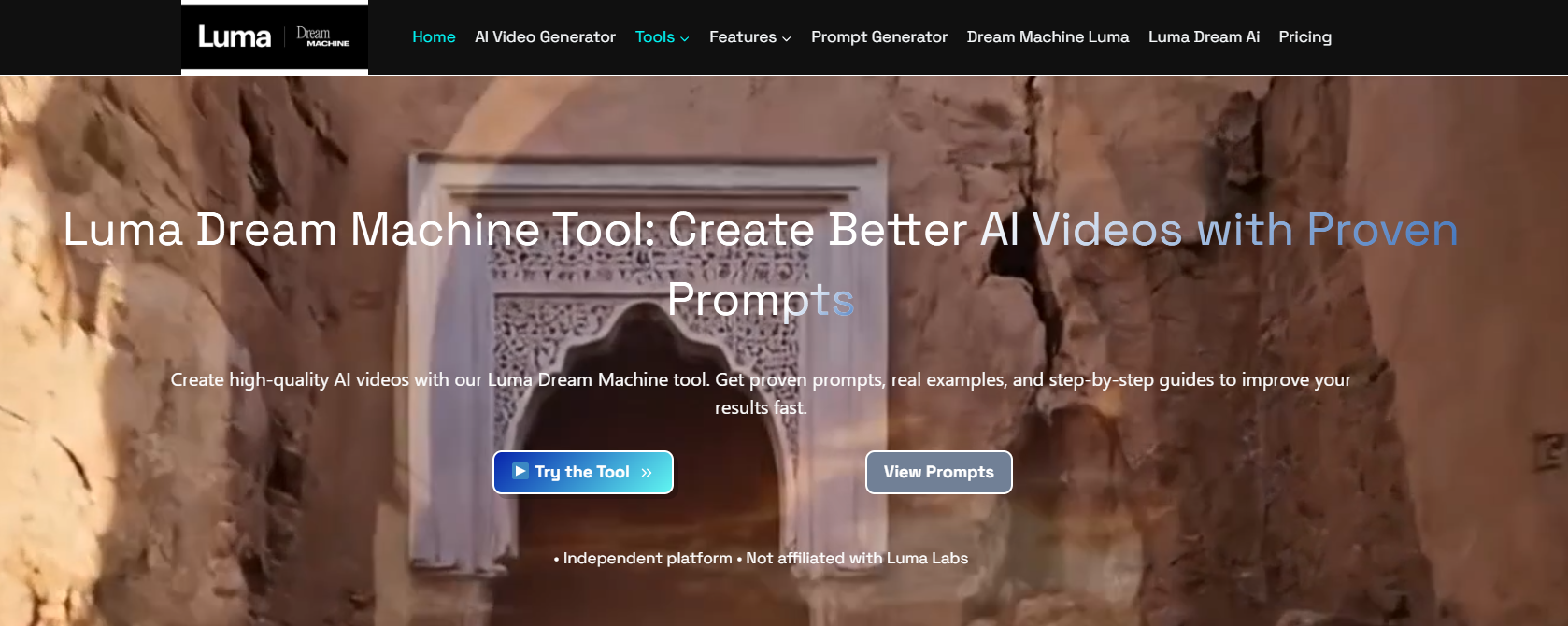
Luma Dream Machine is a general AI image-and-video environment suited to cinematic shot creation, visual ideation, and transformation. Its newer Ray line emphasizes motion consistency, prompt adherence, and high-resolution output. For music videos, Luma works best as a source-shot generator: create memorable scenes, then edit and sync those scenes to the track elsewhere.
Strengths- Strong cinematic motion
- Fast ideation and image/video generation
- Useful Modify workflows for existing footage
No dedicated song-analysis or full-track music-video assembly workflow.
5Pika
PASTE_FREEBEAT_IMAGE_URL_HEREBest for: Fast, playful social-video generation and transformations
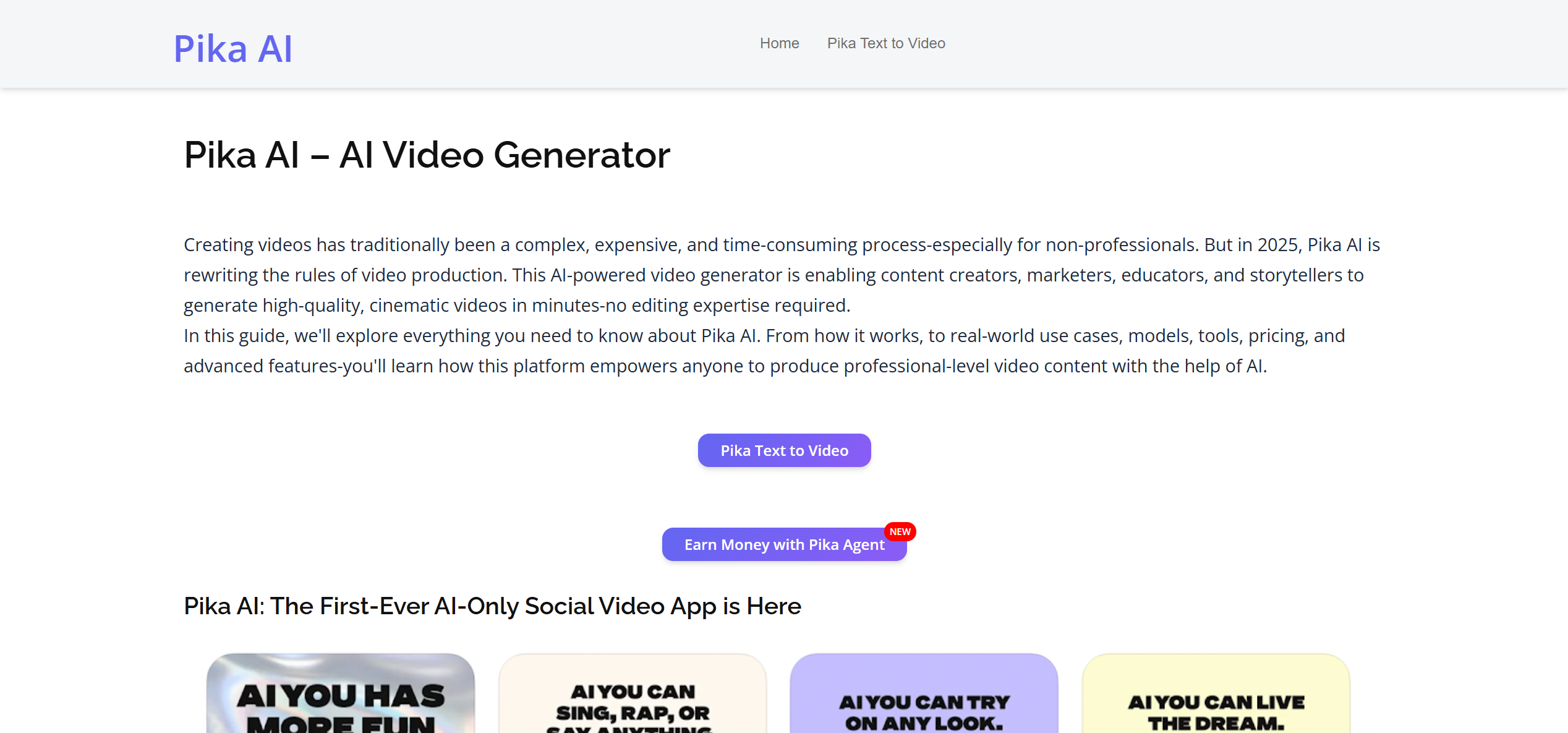
Pika is useful when the creative brief depends on quick visual hooks, transformations, reskins, or short AI-generated sequences. Its ecosystem has expanded beyond silent video into audio and soundtrack tools, but for music-video work it is still most naturally used to create attention-grabbing source clips rather than to automatically structure a complete song.
Strengths- Fast social-friendly ideation
- Transformation and reskin workflows
- Useful for short, high-concept clips
A full song generally requires external sequencing, beat sync, and finishing.
6Rotor Videos
PASTE_FREEBEAT_IMAGE_URL_HEREBest for: Stock-led music videos and release assets with almost no editing
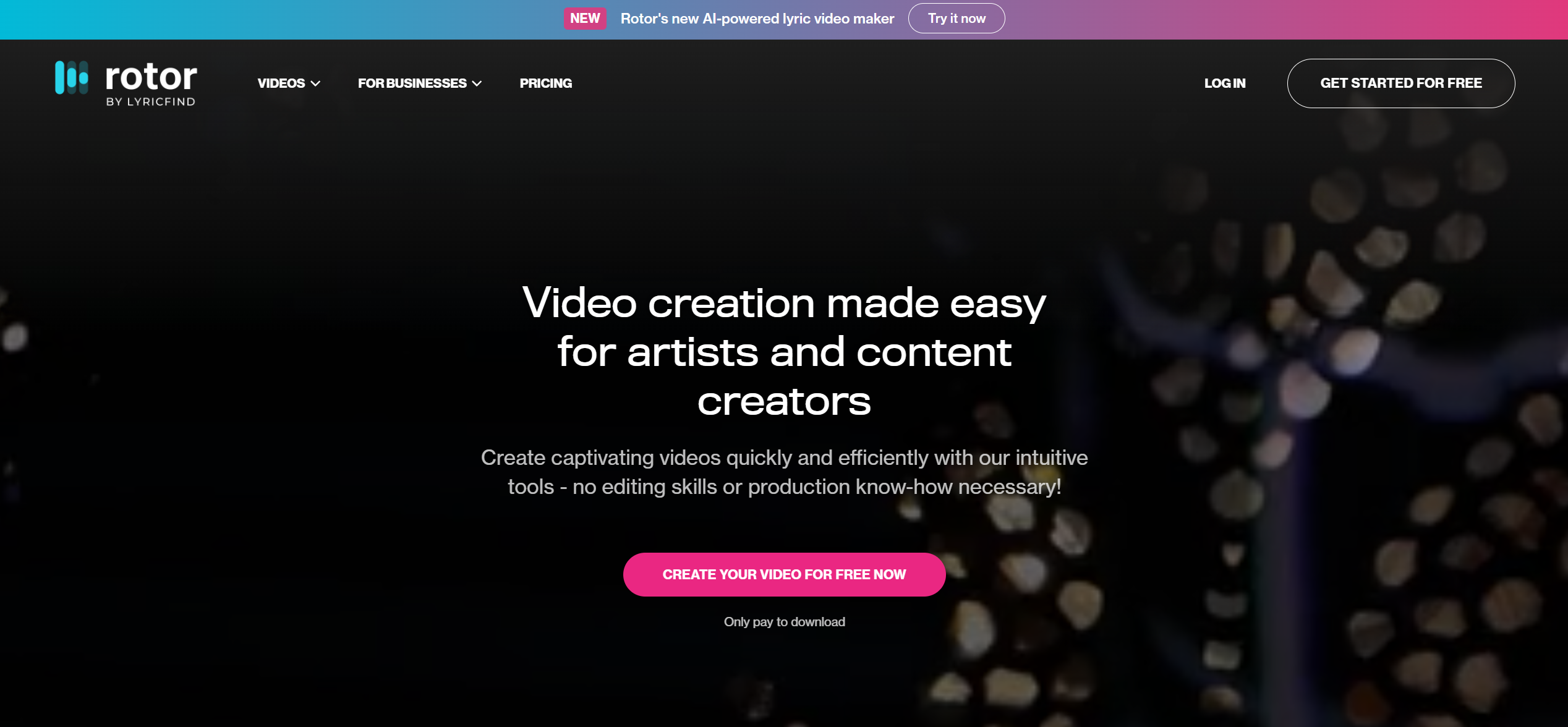
Rotor Videos is built for musicians who need usable release content without learning a traditional editor. Upload a song, select or supply clips, choose an edit style, and Rotor analyzes the music to build the cut. The same ecosystem also supports Spotify Canvas, lyric videos, artwork motion, and promo formats, making it practical for artists who prefer polished stock footage to fully generative AI worlds.
Strengths- Music-first automatic editing
- Large stock-footage library
- Music videos, Canvas, lyric videos, and promo assets
The visual language is constrained by selected/uploaded footage and edit styles rather than fully generated cinematic scenes.
7CapCut
PASTE_FREEBEAT_IMAGE_URL_HEREBest for: Mobile/social editing, singing photos, captions, and finishing
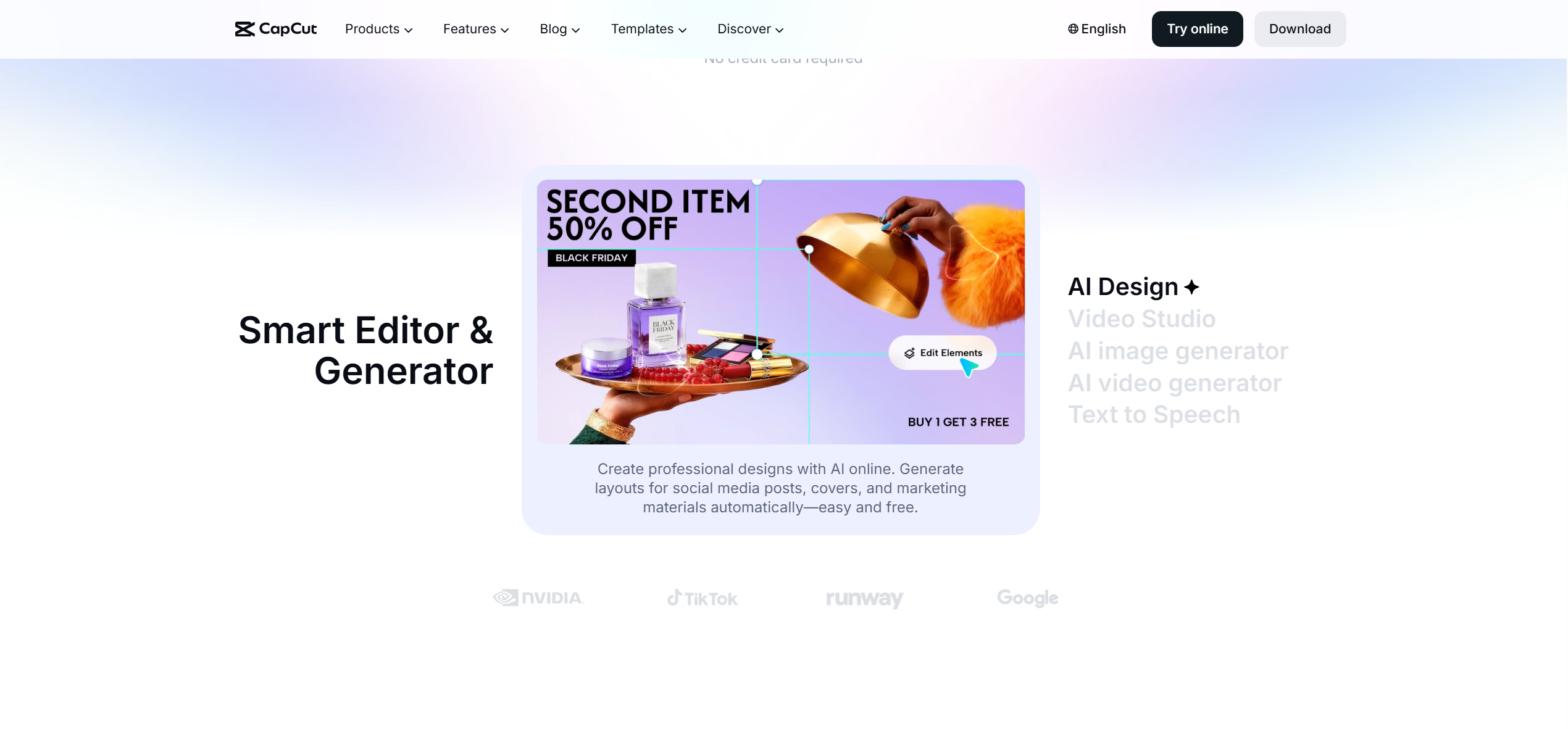
CapCut remains one of the most accessible ways to finish short-form music content. Its singing-photo feature can animate people, pets, babies, or cartoons with lip-sync, while the wider editor handles captions, transitions, effects, templates, reframing, and platform-ready delivery. It is especially useful after AI generation when a creator needs to turn source clips into a polished TikTok or Reel.
Strengths- Strong mobile and social workflow
- Singing-photo and lip-sync tools
- Fast captions, templates, transitions, and formatting
It is primarily an editor and social creation suite, not a song-level generative music-video director.
8VEED
PASTE_VEED_IMAGE_URL_HEREBest for: Browser editing, waveforms, captions, and social exports
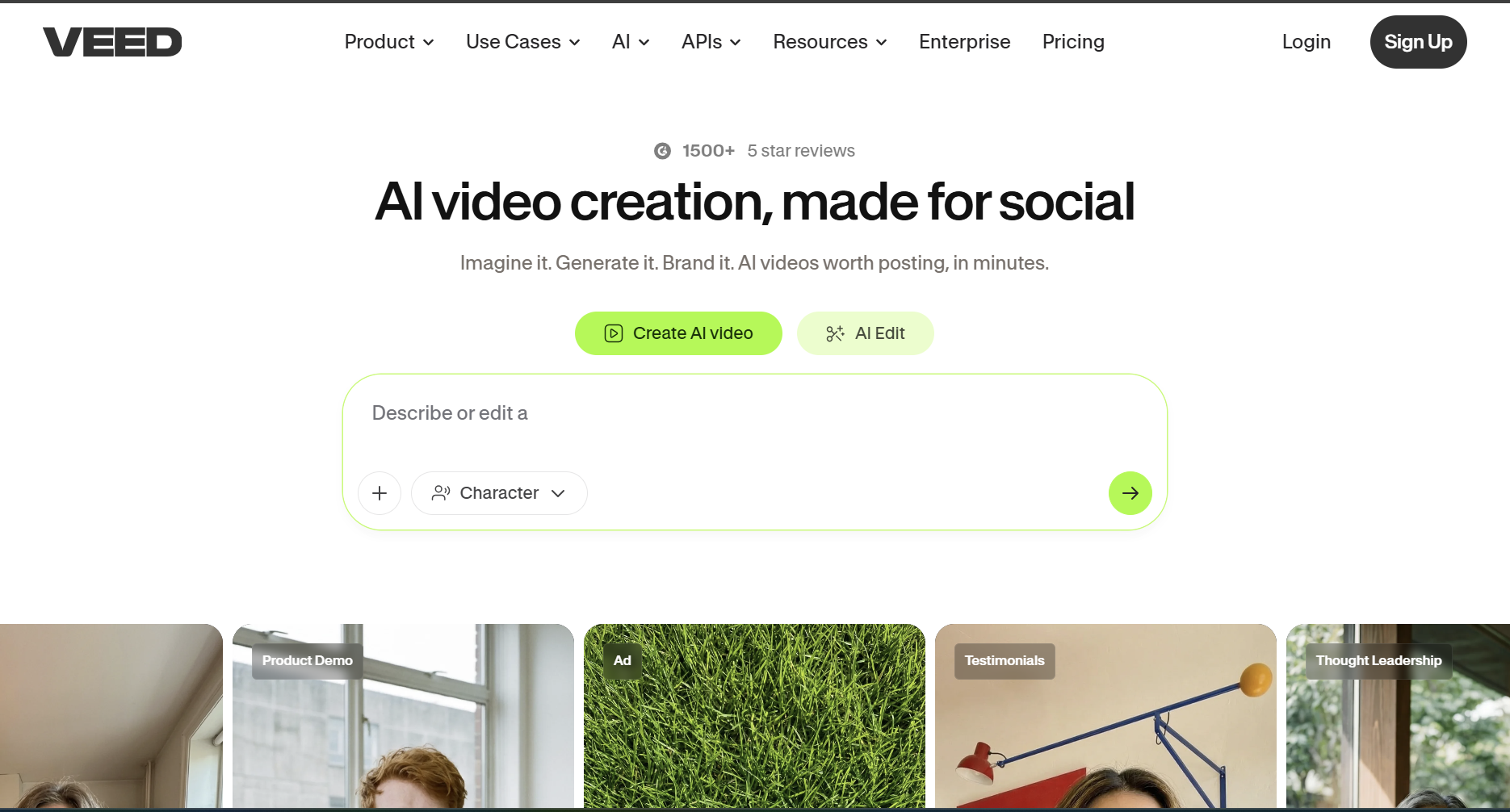
VEED combines a browser-based editor with music visualizers, captions, stock assets, and AI creation features. Its visualizer tools are strongest when creators want branded waveforms or spectrum-style content with text and backgrounds, while the editor makes it easy to resize and package the same asset for social channels.
Strengths- Easy browser workflow
- Waveforms and visualizer elements
- Captions, text, editing, and platform resizing
Music visualization is largely template/waveform oriented rather than a deeply generative full-song visual world.
Where Runway Still Has an Advantage
Runway remains one of the strongest options when the brief begins with a shot rather than a song. Gen-4.5 supports detailed motion and camera instructions, and Act-Two gives creators a practical way to transfer a human performance to a generated character. None of the alternatives above is a perfect one-to-one replacement for every Runway workflow.
The better question is therefore not “Which product is Runway, but cheaper?” It is “Which part of my music-video workflow am I trying to simplify?” If the answer is song analysis and assembly, choose a music-first platform. If it is visual experimentation, choose a generative model. If it is social versioning, choose a fast editor.
How to Choose the Right Tool
Choose Freebeat if you want to upload a song and minimize editing. Choose Neural Frames if you want to map stems and musical events to visual parameters. Choose Kaiber if you already have images/clips and want fast beat-synced variants. Choose Luma or Pika if you mainly need striking source shots. Choose Rotor for stock-led automatic music videos, and CapCut or VEED when finishing and social formatting matter more than generation.
Final Take
Runway is a broad creative suite, so no single alternative replaces every feature. For music creators, however, a specialized product can be a better fit because it removes steps Runway leaves to the artist: analyzing the song, deciding the edit rhythm, assembling a complete track, or creating release-ready social versions.
Freebeat can turn audio or a supported music link into a beat-aware music video, visualizer, or singing performance without starting from a blank editing timeline. Try Freebeat →
Frequently Asked Questions
What is the best Runway alternative for music videos?
Freebeat is the strongest alternative when you want a music-first workflow that starts from a finished song. Neural Frames is better for deep audio-reactive control, while Kaiber is strong for beat-synced batches and stylized editing.
Which Runway alternative is easiest for non-editors?
Freebeat and Rotor Videos require relatively few editing decisions. Freebeat is stronger for generative, song-aware visuals; Rotor is strong for automatic edits using stock footage and uploaded clips.
Which alternative is best for audio-reactive visuals?
Neural Frames offers the deepest stem-level audio reactivity in this group. Freebeat is a better fit when you want the platform to automate more of the complete music-video workflow.
Is Kaiber still a good Runway alternative?
Yes. Kaiber now combines Canvas, Beat Sync, and Editor, making it useful for generating media, creating multiple beat-synced versions, adding lyrics, and finishing short-form music content.
Can I replace Runway completely with one tool?
Sometimes, but the answer depends on why you use Runway. Music-first creators can often move to Freebeat or Neural Frames, while creators who use Runway mainly for cinematic shot generation may prefer Luma or Pika.
Should musicians use a general AI video generator or a music-specific tool?
If your main challenge is matching visuals to a finished track, a music-specific tool reduces manual work. General generators are more useful when you need highly specific individual shots.


