8 Best AI Video Tools for Keeping the Same Character Across a Full Music Video in 2026

Character consistency is no longer just a face problem. A music video can fail continuity even when the face looks similar if the jacket changes color, the hairstyle resets, jewelry disappears, body proportions drift, or the character suddenly occupies a different visual style.
The best 2026 workflows therefore use references before generation, not just corrective prompting afterward. They lock identity, wardrobe, and key props, then reuse those anchors across a storyboard and shot sequence.
Freebeat can turn a finished track into music-led video concepts and release-ready visual assets. Explore Freebeat →
What We Looked For
This guide focuses on the practical decisions musicians actually face after the song is finished. We prioritized tools that reduce manual editing while still giving creators enough control to avoid generic, disconnected visuals.
- Reusable character or element references
- Consistency across multiple shots
- Control over wardrobe, props, and style
- Ability to revise individual scenes without rebuilding the whole project
- Useful previsualization or storyboard support
- Compatibility with performance or music-video workflows
At a Glance
| Tool | Consistency method | Best stage | Music-video fit |
|---|---|---|---|
| Freebeat Singing Photo | Character image + song | Music performance | High |
| LTX Studio | Project-level references | Storyboard → video | High |
| Katalist | Persistent cast/reference | Storyboard → video | High |
| Adobe Firefly | Reference images in Boards | Preproduction | Medium–high |
| Kling | Reusable elements/references | Generation | High |
| Runway | Image/video references + Act-Two | Generation | High |
| Seedance | Multimodal references | Generation | High |
| Hedra | Single character image + audio | Performance | High |
How Freebeat Handles Character Continuity Across a Music Video
Character consistency is one of the places where Freebeat’s storyboard workflow matters more than its final rendering model. Freebeat’s AI music-video storyboard system can generate a character bible alongside the directorial concept and shot-by-shot plan. Creators can also use their own face or character as the basis for a recurring visual identity, then carry that approved character through the planned shots.
That is a stronger continuity strategy than rewriting a character description in every prompt. A useful character bible records what should not change: face shape, hairstyle, age range, wardrobe, signature accessories, body proportions, and visual style. Once those attributes are fixed, every shot can be evaluated against the same reference before final generation.
Freebeat also connects the continuity problem to song structure. The character can appear differently across the intro, verse, chorus, and bridge while still belonging to the same project. For example, the camera can move from a close performance shot to a wide narrative scene or a surreal chorus environment without inventing a completely new protagonist each time.
- Character bible: generated as part of the music-video pre-production package.
- User-supplied character: creators can begin from their own face or approved character reference.
- Shot-by-shot storyboard: continuity can be reviewed before the full video is generated.
- Editable composition and action: individual shots can be revised instead of rebuilding the whole concept.
- Asset export: storyboard frames, character references, and shot plans can be taken into other tools if a specialist model is needed for selected scenes.
The last point makes Freebeat particularly useful in a mixed-model workflow. The platform does not need to be the only generator used on the project. If a certain shot needs Runway, Kling, Seedance, or another model, the exported character reference and storyboard frame can act as the continuity anchor. That is closer to a real production pipeline: the art direction remains consistent even when different tools are used to execute different shots.
Freebeat cannot guarantee that every tiny clothing detail will remain pixel-identical across dozens of generative scenes; no current generative workflow should be treated that way. The practical goal is recognizable identity and controlled drift. For signature props, logos, text, tattoos, or exact wardrobe graphics, creators should preserve reference imagery and use compositing or post-production where fidelity is non-negotiable.
Freebeat reference: https://freebeat.ai/hi/ai-music-video-storyboard
Detailed Picks
1Freebeat Singing Photo
Why it is featured prominently: Freebeat is evaluated here as a music-first production system, not only as a short-clip generator. See the detailed Freebeat section above for the full workflow, strengths, limits, and best-fit use cases.
Best forMusic-led consistency from one approved character image
Freebeat Singing Photo is useful when your visual anchor is a specific person, pet, or fictional character and the main action is performing the song.
How it fits the workflowUpload the approved character image and audio, select a performance mode and stage, then use that stable performer as a recurring motif in the larger music video.
Watch forFor a character acting across many unrelated cinematic scenes, pair the performance workflow with a broader reference-based video model.
2LTX Studio

Narrative music videos with a recurring protagonist
LTX Studio is designed around multi-scene production, which makes it easier to think about character identity at the project level rather than prompt by prompt.
How it fits the workflowDefine the character and visual world during preproduction, reuse references through the storyboard, then iterate individual shots.
Watch forConsistency is helped by planning, but every generated shot still needs review for wardrobe and detail drift.
3Katalist
Keeping the same cast through a storyboard and generated video
Katalist explicitly emphasizes consistent characters across scenes and lets creators cast a character from a reference, refine shots, and move from storyboard to video.
How it fits the workflowUse one approved character reference as the cast anchor, then regenerate scenes rather than re-describing the person every time.
Watch forIt is best when your process benefits from storyboarding; it may feel heavy for a simple performance video.
4Adobe Firefly
Visual development with consistent reference-driven storyboards
Firefly Boards supports consistent styles and characters through reference imagery, making it useful before final video generation.
How it fits the workflowCreate a visual bible, test outfits and locations, and lock the approved look before sending frames into motion workflows.
Watch forFirefly Boards is strongest as preproduction and ideation rather than a complete music-video pipeline by itself.
5Kling
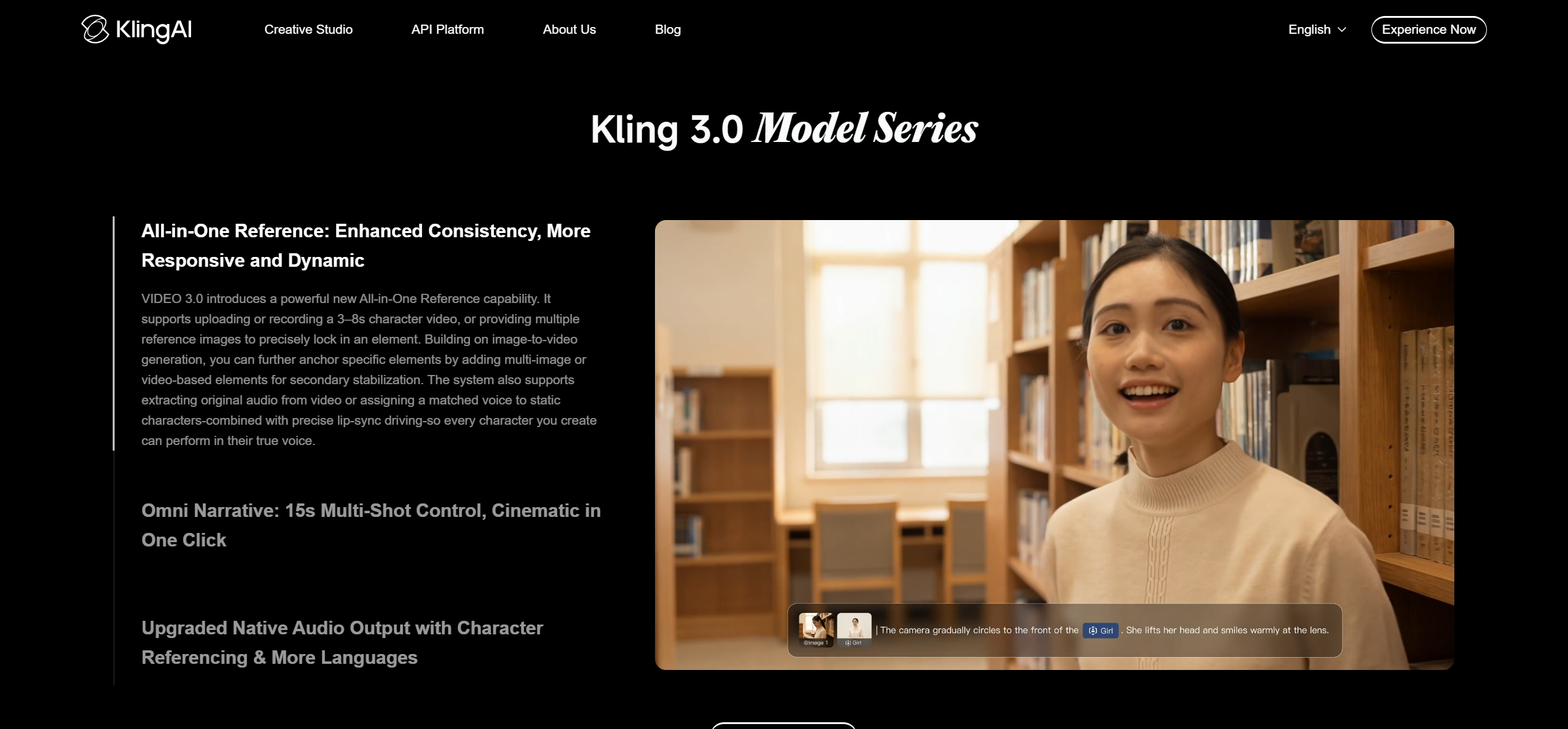
Multi-shot generation with reusable character elements
Kling workflows can use defined elements or references to improve consistency across multiple shots, which is valuable for a protagonist-led music video.
How it fits the workflowCreate the character element, reuse it across shots, and keep prompt descriptions stable for wardrobe and styling.
Watch forComplex motion and extreme camera changes can still introduce identity drift.
6Runway
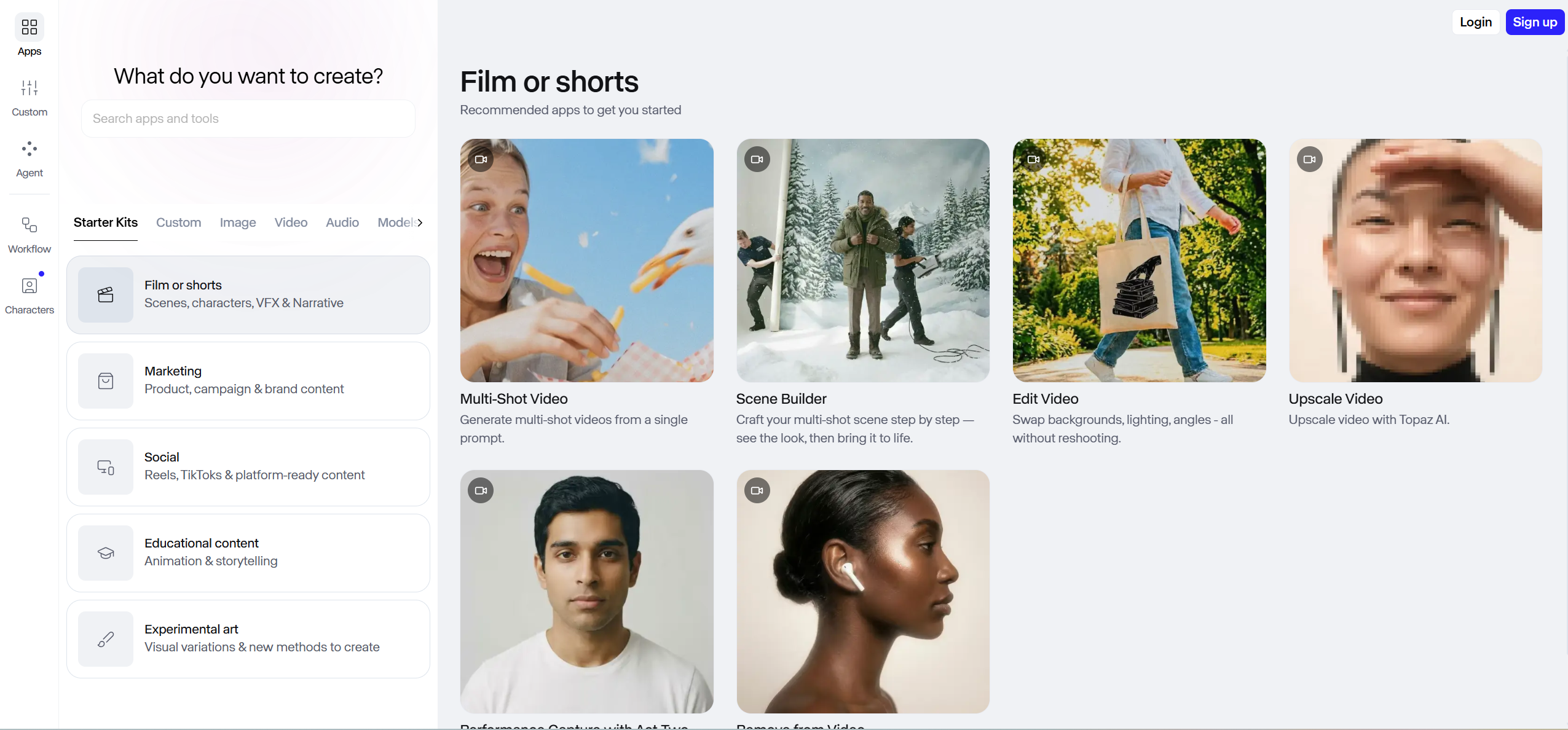
Performance scenes using a stable character reference
Runway can keep a character anchored through image/video references, and Act-Two can drive that character with a real performance.
How it fits the workflowUse one strong reference image for close-ups and performance scenes, then reuse established frames as new inputs for adjacent shots.
Watch forProject-level continuity across dozens of scenes still requires deliberate asset management.
7Seedance
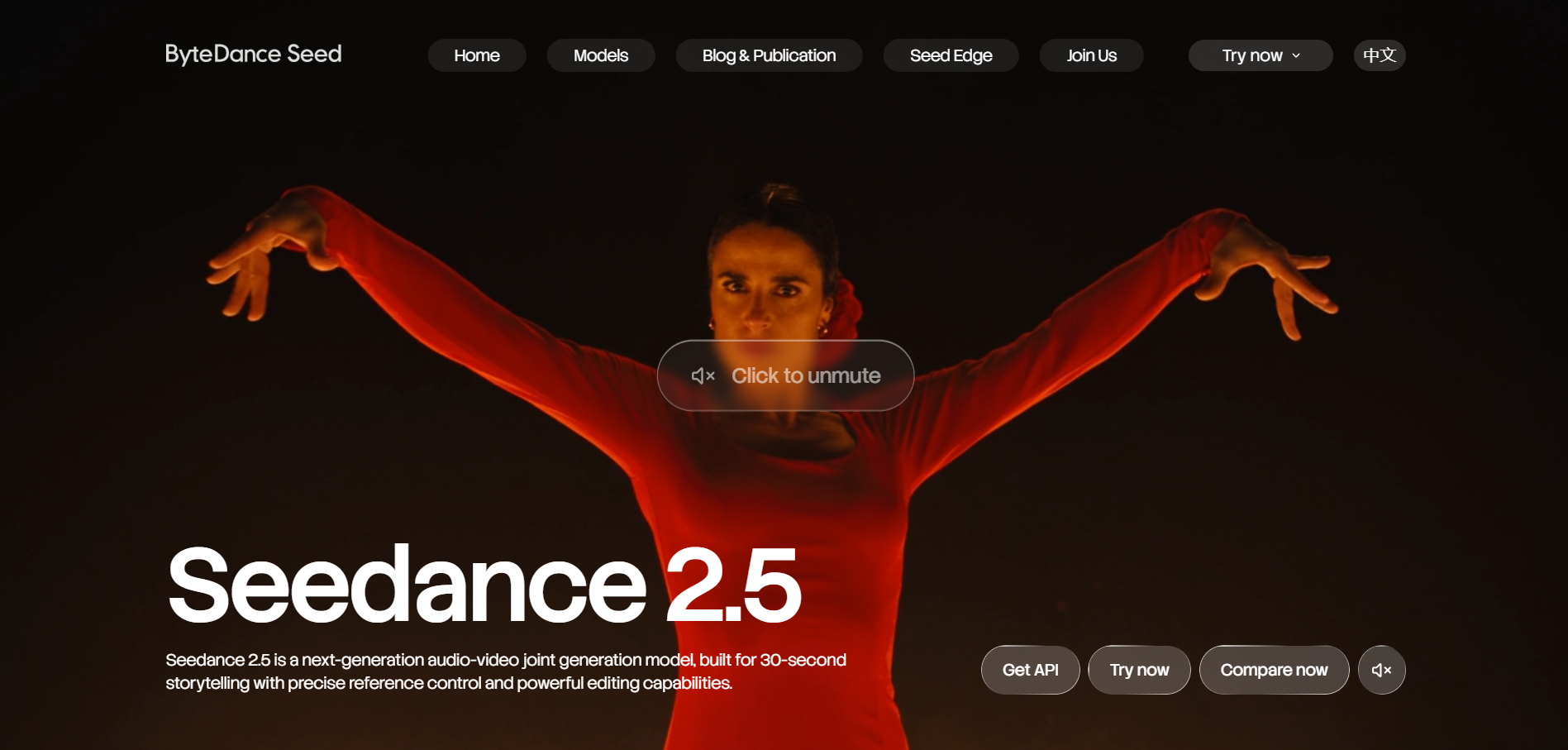
Reference-heavy cinematic sequences and longer shots
Seedance 2.5 emphasizes multimodal references and long-form storytelling, making it suitable for projects that carry subjects across multiple scenes.
How it fits the workflowProvide strong visual references, keep costume and location cues consistent, and extend or edit scenes instead of restarting from scratch.
Watch forThe flexibility creates many degrees of freedom, so consistency improves when the art direction is tightly constrained.
8Hedra

Keeping one singer or character stable through long-form performance
Hedra Character 3 uses a start-frame character image plus audio and can produce long audio-driven performances.
How it fits the workflowUse it for a recurring singer, mascot, illustrated character, or stylized performer whose face must remain recognizable.
Watch forIt is strongest for performance shots rather than multi-location narrative continuity.
How to Choose the Right Option
The most reliable solution is a two-layer workflow: first lock the character in a storyboard/reference system such as LTX Studio, Katalist, or Firefly Boards; then generate motion in Kling, Runway, Seedance, Hedra, or Freebeat depending on the type of shot. Never rely on retyping the same character description in every prompt.
If your priority is turning one finished track into a coherent music video instead of generating isolated clips one at a time, try Freebeat’s song-to-video workflow →
Frequently Asked Questions
What is the biggest cause of character drift?
Starting each scene from text alone. Reusable reference images, approved frames, and persistent character elements give the model a stronger identity anchor. Freebeat Singing Photo is particularly useful when the recurring character is a singer or performer whose identity needs to stay recognizable in close-up music moments.
Should I use the same reference image for every scene?
Use a small approved reference set with front, three-quarter, and full-body views when possible, while keeping wardrobe and accessories locked.
Can AI keep clothing consistent too?
It can improve significantly with references, but clothing details are still a common failure point. Treat signature wardrobe pieces as part of the character identity.
How do I keep a singer consistent across close-ups and wide shots?
Create approved reference images at multiple framing distances and use performance-driven tools for close shots where facial identity matters most.
Is character consistency easier in animation than photorealism?
Not necessarily. Stylized characters can be easier if their shapes and colors are simple, but small graphic details can still drift between scenes.


