
1,000,000+
Creators worldwide
As of May 2026, freebeat has served over 1 million creators across the world.
An AI audio visualizer transforms your songs, podcasts, or DJ mixes into captivating videos with sound waves and animated visuals. Our AI software analyzes your track's structure, energy, and beat to generate professional, audio-reactive animation in minutes, ready for YouTube, TikTok, and Spotify.
As of May 2026, over one million creators from 150+ countries trust our AI tool to convert audio into dynamic visuals. They choose our platform for its deep music analysis and one-click workflow that generates professional videos without requiring any editing skills.
Generate a professional audio visualizer in three simple steps. Our AI platform handles the complex analysis and animation, delivering a finished MP4 video in minutes. No software to install, no editing skills needed.
Start by uploading an MP3 or WAV file. Or, save time by pasting a link directly from Suno, YouTube, or SoundCloud. Our tool instantly extracts the audio and metadata to begin analysis.
Select from various abstract visual styles and effects. Choose one of 5 pacing modes to match your music's energy, from tight 4-beat cuts for EDM to cinematic 64-beat flows for ambient tracks.
Click to generate your full-length audio visualizer. Preview the result, add your logo or text using our simple editor, and export a high-resolution MP4 video perfectly formatted for YouTube, TikTok, or Spotify Canvas.
Our platform goes beyond basic waveforms by using an AI Director to analyze your song's structure, offering true creative control over rhythm, and composing natively for every social media platform.

Our AI audio visualizer goes beyond simple loudness. It performs a deep analysis of your track across 8 musical dimensions, identifying the intro, verse, and chorus sections, mapping every beat and percussive hit, and tracking the energy curve to create visuals that truly move with your music.

Turn your audio into a complete visual experience without touching a timeline. Our Abstract Video mode uses 6 AI agents, including an AI Director, to conceptualize and generate a full video synced to your music. Get a professional-looking result in about 5 minutes, no editing needed.

Stop cropping and resizing. freebeat creates your video natively in the correct aspect ratio from the start. Whether you need a 9:16 vertical video for Spotify Canvas and TikTok, or a 16:9 widescreen format for YouTube, your audio visualizer is composed perfectly for its destination.

Match the video's pacing to your music's feel. Our AI offers 5 beat-quantization modes, allowing you to create fast, energetic cuts on a 4-beat cycle for dance tracks, or slow, atmospheric scenes on a 64-beat cycle for cinematic pieces. Change the entire edit rhythm with a single click.

Make the visualizer your own. Our integrated online editor lets you add your artist logo, song title, and other text directly onto the video. Customize fonts, colors, and positions to match your brand identity. All editing happens in your browser, no external software required.

Your freebeat account unlocks a full suite of creative tools. When you're ready to move beyond an audio visualizer, generate a full narrative music video, create a lyrics video, design an animated album cover, or use our AI music generator. One platform for your entire creative workflow.
While most online visualizers are manual template editors that only react to volume, freebeat uses deep music analysis and AI generation to create more dynamic, intelligent, and platform-ready videos.
Generate professional, beat-synced videos that engage audiences on every platform, save dozens of hours, and establish your brand—all without any video editing experience.
Every freebeat tool you need to take music from idea to publishable visual content — in one platform.
Indie musicians, DJs, and podcasters trust freebeat for its deep music analysis and ability to generate professional, beat-synced visuals in minutes, not weeks. They love the AI-driven workflow and platform-ready exports.
From electronic music producers needing beat-synced visuals to podcasters creating audiograms, our tool serves any creator who wants to give their audio a compelling visual life on any platform.
Find answers to common questions about creating visuals from audio, commercial rights, supported formats, and how to get the most out of the freebeat AI platform. This is the best music visualizer online.
Stay sharp on what's working in AI music video right now.
 ARTICLE
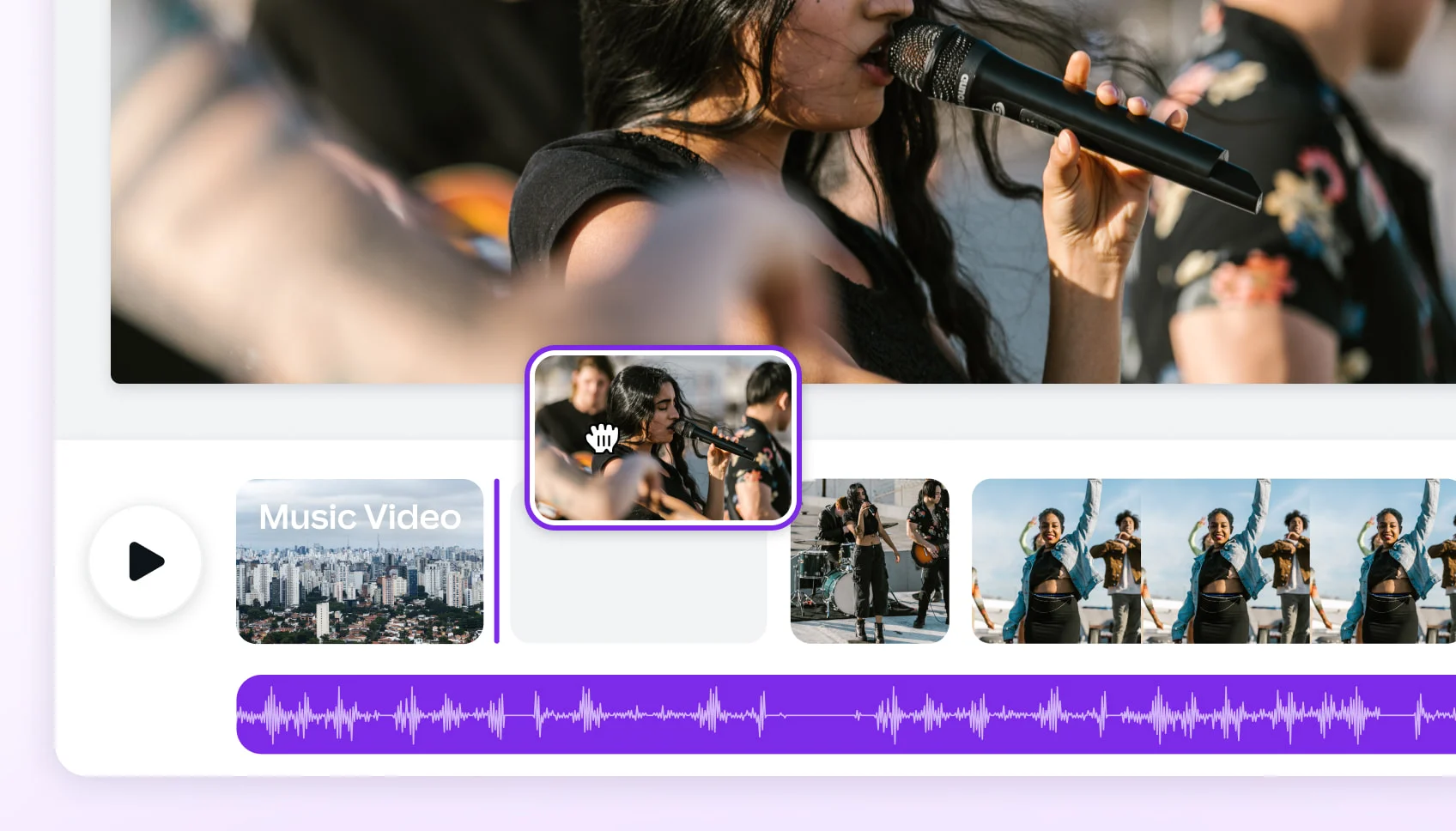
Compare leading AI music video generators by realism, audio sync, customization, narrative tools, and mobile or social media…
.jpeg) ARTICLE
ARTICLECompare the best AI music video generators in 2025 — Neural Frames, Kaiber, Runway ML, PIKA, and Freebeat — to find which…
 COMPARISON
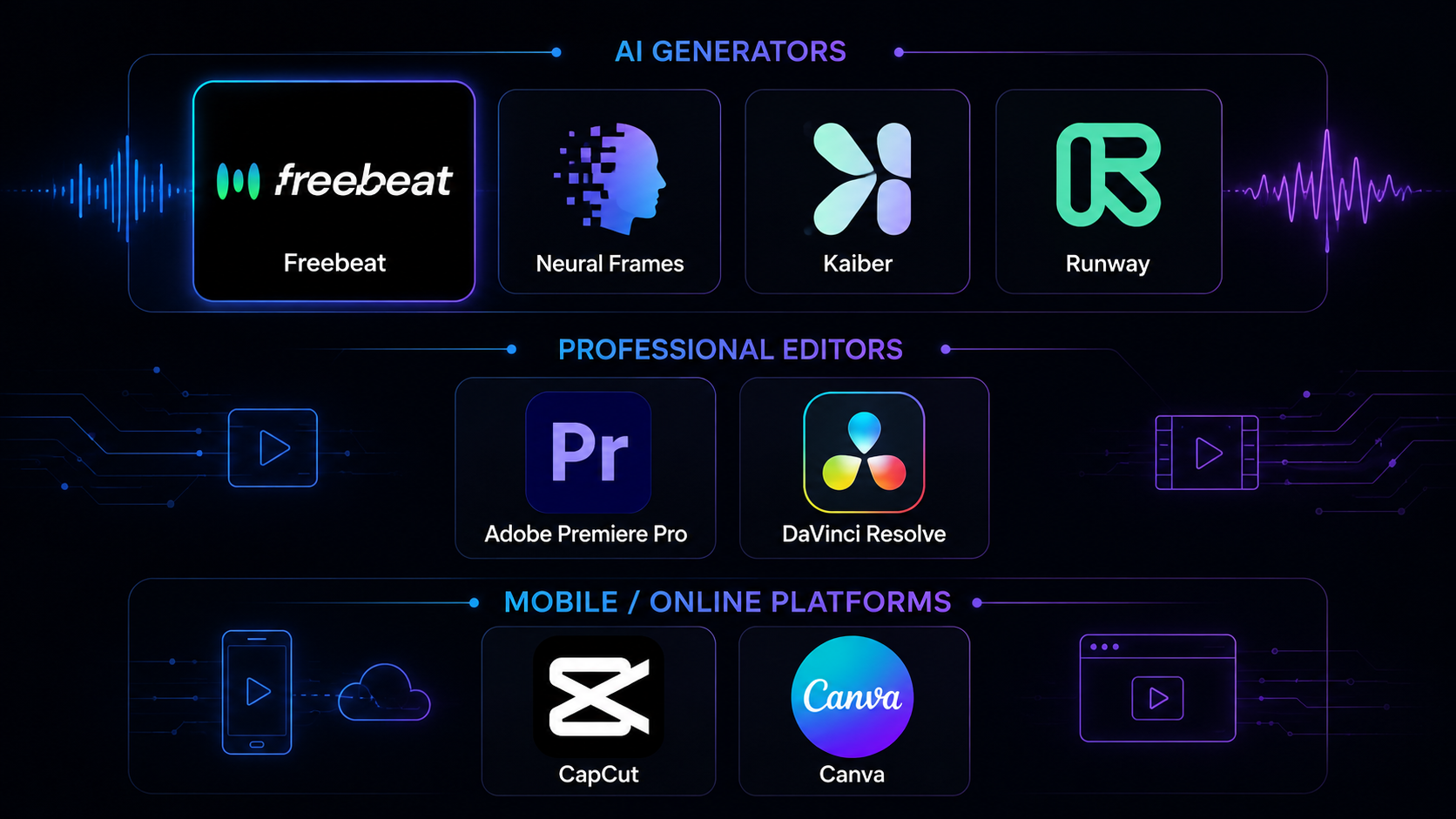
We tested 8 music video tools — AI generators, desktop editors, and mobile apps — on audio sync, output quality, speed, and…
 ARTICLE
Compare Freebeat vs Neural Frames in 2026 for AI music videos, character consistency, beat sync, lip sync, audio-reactive…




No tracks available
Paste a supported music URL here

Olivia Dean

Olivia Rodrigo

Drake

Taylor Swift

Ella Langley

Bad Bunny
