Best AI Music Video Apps for Mobile in 2026
Contact partnership@freebeat.ai for guest post/link insertion opportunities.
The best AI music video apps for mobile in 2026 will be defined by seamless on-device processing, deeper social platform integration, and advanced personalization, with frontrunners like CapCut, Canva, and web-accessible platforms such as Freebeat AI leading the evolution. These tools will transform smartphones into fully capable video production studios, making professional MP3 to MP4 conversion and beat-synced visual creation the standard for musicians and content creators.
The trajectory of mobile AI video tools is one of the most exciting shifts I've witnessed. We're moving beyond the era of simple cloud rendering into a phase where your phone's neural engine becomes a collaborative creative partner. For the independent artist or social media manager, this means the gap between a musical idea and a published, polished video is narrowing to mere minutes, all from a single device.
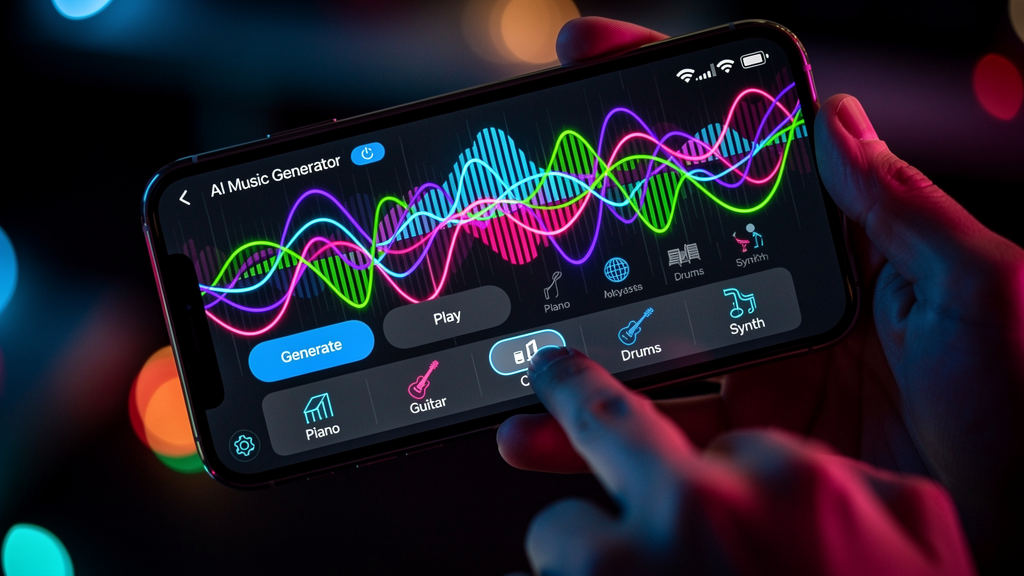
The 2026 Mobile AI Video Landscape: Trends Defining the Tools
By 2026, the defining trends will shift from cloud-dependent rendering to sophisticated on-device AI processing, enabling faster and more private creation. Deeper, native integrations with iOS and Android ecosystems will allow apps to leverage device-specific hardware for superior performance, while personalization will evolve from template selection to AI that learns a creator's unique visual style. Industry analyst roadmaps for generative AI on edge devices (source: 2024) strongly support this move toward localized processing to reduce latency and cost.
This evolution signifies a major leap in accessibility and capability. An artist on a train could draft a full video using on-device models without an internet connection, then fine-tune it later with cloud-powered enhancements. The core function of converting an MP3 audio file into a dynamic MP4 video will become a near-instantaneous, intelligent process that considers genre, listener demographics, and platform trends, not just basic beat matching.
Cloud-native platforms like Freebeat AI represent the robust foundation upon which this future is being built. Its current model, where powerful AI in the cloud analyzes uploaded audio to generate synchronized videos directly from a mobile browser, establishes the baseline expectation for quality and automation. It demonstrates the essential workflow: audio in, AI-powered visual narrative out, which newer apps are now refining for on-device execution.
The next generation of mobile AI video tools will be characterized by intelligence that is both powerful and personal, moving from generic automation to curated co-creation.
Top AI Music Video Apps for iOS and Android
The leading apps in 2026 will be distinguished by their flawless integration with their respective operating systems, leveraging proprietary hardware (like Apple's Neural Engine or Google's Tensor chips) for unparalleled on-device performance. Exclusive AI features, such as real-time style transfer during recording or ambient sound analysis for automatic mood matching, will become key differentiators. Evaluating current flagship devices shows the processing headroom exists for these advancements.
The divide between iOS and Android ecosystems will inspire unique strengths. iOS apps may lead in polished, user-friendly AI effects that "just work," while Android's open nature could foster a wider variety of specialized, niche video generation tools. The best apps on both platforms will share a common goal: making complex video generation feel simple, intuitive, and incredibly fast.
Best AI Music Video Apps for iPhone (2026)
On iPhone, the tight integration between hardware and software will allow apps to offer reliably excellent performance. Expect leaders to utilize the Neural Engine for features like:
- Pro-level, on-device rendering: Generating 4K beat-synced videos directly on the phone without uploading to the cloud.
- Deep Photos/Music library integration: Using AI to automatically suggest songs from your library that match the mood of your clips, or vice versa.
- Augmented Reality (AR) composition tools: Overlaying AI-generated visual effects in real-time through the camera viewfinder for interactive music video shoots.
These apps will succeed by making the most of the iPhone's consistent, high-performance environment to deliver professional results with consumer-friendly simplicity.
Best AI Music Video Apps for Android (2026)
The diversity of the Android ecosystem will drive innovation in customization and flexibility. Top apps will cater to power users with features like:
- Custom AI model import: Allowing users to fine-tune or select specialized AI models for particular visual styles (e.g., anime, hyper-realistic, claymation).
- Advanced workflow automation: Scripting or chaining multiple AI video actions (convert MP3, add lyrics, apply style, export for platforms) into a single one-tap process.
- Deep collaboration features: Real-time co-editing on AI-generated video timelines or shared style presets across creator teams.
The Android landscape will reward apps that offer granular control and adaptability, turning the smartphone into a truly customizable portable studio.
Built for Social: Apps That Master TikTok & Instagram Formats
In 2026, social media supremacy will require more than a 9:16 export button. The leading apps will have AI natively trained on platform-specific virality signals, understanding the precise visual language, pacing, and hook structures that drive engagement on TikTok and Instagram Reels. Success will be measured by an app's ability to not just format a video, but to optimize it for algorithmic discovery and shareability, a necessity underscored by social media marketing efficacy reports.
This means the AI will analyze your audio and automatically suggest the most engaging 3-second clip to use as a thumbnail hook. It will intelligently place dynamic captions that align with on-screen action without obscuring key visual elements. For Instagram, it might generate carousel content or complementary Still Clips from the same audio track. The tools will move from being video creators to being social engagement partners, anticipating what will perform best on each unique platform.
Freebeat AI already aligns with this directional need through its automatic formatting for social platforms. Its ability to output videos pre-optimized for 9:16 stories and reels from the moment of generation demonstrates the essential first step: removing the technical barrier of correct sizing. The next step for all apps is to embed the cultural and algorithmic intelligence of each platform into the creative AI itself.
The best social-focused apps will function like an expert editor in your pocket, making strategic creative decisions to maximize your content's reach and impact.
Specialized Mobile Tools: From Podcasts to Professional Clips
A significant and growing segment of mobile AI video tools will cater to specialized audio formats, particularly podcasts and interview clips. These niche apps address a different core need: visualizing speech, not music. Their AI will be optimized for accurate, fast speaker diarization (identifying who is speaking), generating highly readable captions with proper emphasis, and creating relevant, low-distraction B-roll that illustrates conversational topics without overpowering the dialogue.
The ideal podcast-to-video mobile app in 2026 will likely offer:
- Context-aware visual generation: Analyzing transcript keywords to pull from a library of relevant b-roll or generate simple, appropriate AI visuals (e.g., showing a graph when discussing statistics).
- Multi-speaker video avatars: Creating consistent, animated avatars for each podcast host or guest that show basic lip-sync to the audio.
- Highlight auto-detection: Using AI to identify the most engaging or quote-worthy moments in a long podcast and automatically packaging them into short-form video clips ready for social sharing.
For podcasters and marketers, these specialized tools transform audio content into a versatile video asset, dramatically increasing its potential for discovery and engagement on visual-first platforms.
Choosing Your 2026 App: A 5-Point Evaluation Framework
Selecting the right app from a crowded field will require a disciplined evaluation based on five concrete criteria that directly affect creative output and practical workflow.
- Output Quality and Fidelity: Assess the resolution, frame rate, and visual coherence of the final MP4. Does the AI-generated video look professional, or are there obvious glitches? Can it output in 4K for future-proofing?
- Processing Paradigm and Speed: Determine if the app uses on-device or cloud processing. On-device offers privacy and instant previews, while cloud may enable more complex generations. How long does a 1-minute video take to render?
- Format and Platform Flexibility: Does it offer true one-click exports for all major platforms (TikTok, Instagram Reels/Stories, YouTube Shorts) with correct dimensions, bitrates, and aspect ratios (9:16, 1:1, 16:9)?
- Ownership and Licensing Terms: This is non-negotiable. Scrutinize the terms of service. Do you own the final video? Can you use it commercially? Are the AI-generated visuals and any included assets royalty-free?
- Post-Generation Control: After the AI creates the initial video, what can you tweak? Look for capabilities to trim, re-order scenes, adjust colors, replace specific clips with new AI prompts, and add custom logos or text.
Applying this framework will quickly separate professional-grade tools from consumer novelties, ensuring your chosen app can scale with your creative ambitions.
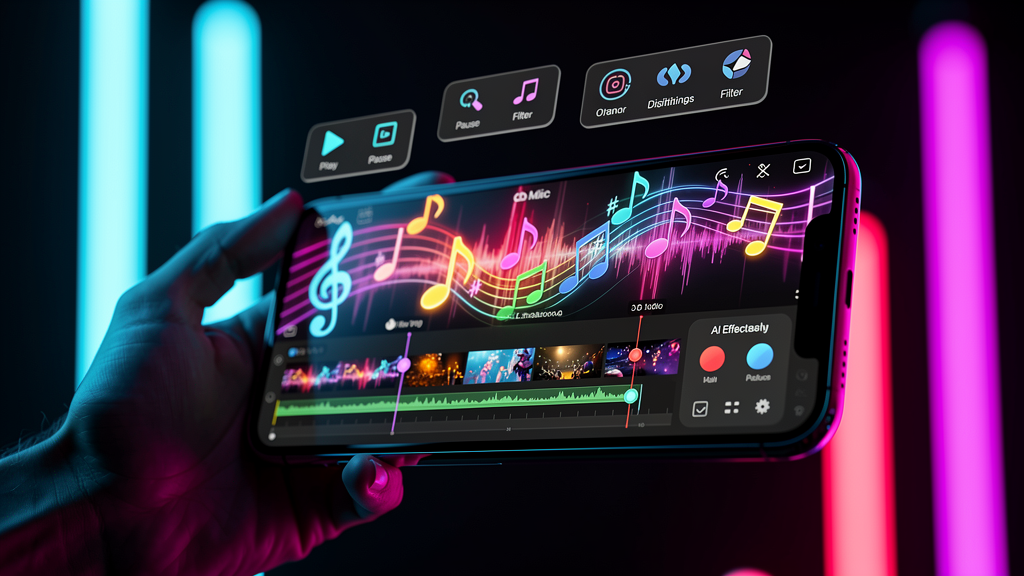
The future of mobile AI video creation is one of empowered simplicity. These tools are evolving from fun novelties into essential professional instruments, placing studio-grade production capability into the hands of every creator. As this technology matures, with both native apps and versatile web platforms like Freebeat AI pushing the boundaries, the only limit will be the creator's imagination, not their technical resources or location.
FAQ
What AI video app is optimized for TikTok creation?
The most optimized apps will have a dedicated "TikTok Mode" that does more than set aspect ratio. It should analyze your audio to suggest viral hooks, use trending visual effects, and optimize clip length and pacing specifically for TikTok's algorithm.
Do these apps automatically create videos in 9:16 or 16:9?
Leading apps in 2026 will automatically detect your target platform from the start and format the entire generation process for that aspect ratio. Expect one-tap presets that configure everything for TikTok (9:16), Instagram Reels (9:16), or YouTube (16:9).
Can I use an AI mobile app to make video clips from my podcast?
Yes, a growing niche of mobile apps specializes in this. They focus on accurate auto-captioning, speaker identification, and generating subtle background visuals or topic-specific stock footage to turn podcast audio into engaging social video clips.
Is on-device AI processing faster than cloud processing?
For short clips, on-device processing is typically faster as it eliminates upload/download time. For longer, complex videos requiring immense computational power, cloud processing may still be necessary. The ideal 2026 app will smartly switch between the two based on the task.
What should I check in the terms about video ownership?
Look for clear language stating you own the final output video. Crucially, check for any restrictions on commercial use, any requirements for attribution, and confirm that the platform's license covers all AI-generated visual and audio elements within your video.
Are these apps suitable for professional music marketing?
Absolutely. The output quality from top-tier apps is already suitable for social media campaigns, lyric videos, and artist promotion. By 2026, with enhancements in resolution and customization, they will be integral tools for professional digital marketing teams.
What new AI video features are expected by 2026?
Expect real-time collaborative AI editing, emotion-based visual scoring that matches the listener's mood, 3D environment generation for immersive videos, and AI that can generate entire multi-scene video narratives from a single text prompt alongside your audio.


