Best AI Music Video Platform for Indie Artists on a Budget
Contact partnership@freebeat.ai for guest post/link insertion opportunities.
Best AI Music Video Platform for Indie Artists on a Budget
If you are an indie artist working with limited resources, the best AI music video platform is one that syncs visuals accurately to your music, keeps costs predictable, and removes heavy editing work. After testing and comparing multiple tools, I have found that music-first AI video generators, including Freebeat, are often the most practical option for budget-conscious creators who still care about visual quality.
I write this from the perspective of someone who regularly works with musicians, content creators, and visual artists who need release-ready videos without spending weeks in editing software or paying agencies.
Turn your track into a video without a big budget
Most indie artists do not need a cinematic short film for every release. They need a clear, music-driven visual that looks intentional on YouTube, Instagram, or TikTok, and that can be produced quickly.
From my experience, budget problems usually come from two places. First, creators choose tools designed for generic video rather than music. Second, they underestimate how much manual editing time costs. AI music video platforms solve this by letting the song drive the visuals, not the other way around.
For artists releasing singles, lo-fi tracks, or promo clips, the goal is simple: match the mood, stay on beat, export in the right format, and move on to the next release. This directly answers why many search for an AI platform that makes the best music videos for indie artists and for low-budget projects.
How AI music video tools actually work
At a high level, AI music video generators follow a similar pipeline. The differences appear in how deeply they understand music.
Most platforms start by analyzing the audio. This includes tempo, beat placement, and sometimes energy or mood changes across the track. The system then maps visual transitions, motion intensity, and scene timing to that analysis.
In practice, I see three common categories:
Music-first tools
These tools are built around audio interpretation. The beat, tempo, and structure shape the visuals. This is ideal for indie artists and DJs who want the video to feel connected to the song.
Template-first tools
These focus on visual templates where you drop in a track. They are fast, but often less precise with beat sync. They work better for promotional clips than full songs.
General AI video generators
These create impressive visuals but usually require manual syncing and editing afterward. For tight budgets, this often becomes more expensive in time than expected.
For creators searching for the best AI music video provider for budget artists, music-first tools are usually the most efficient choice.
Criteria to pick the best AI music video generator on a budget
Choosing the right platform is less about hype and more about fit. When I evaluate tools with artists, I use a simple checklist.
Budget and pricing model
Look beyond monthly pricing. Ask how many finished videos you can realistically export per month. Credits, watermarks, or limited exports can quietly increase costs. Predictable output matters more than a low entry price.
Beat sync and audio reactivity
A good AI music video creator should align visual changes with beats and energy shifts, not just overall loudness. Poor beat sync is immediately noticeable, especially in lo-fi and electronic tracks.
Creative control without complexity
Indie creators benefit from guided control, not endless sliders. Text prompts, mood presets, and scene control are often more efficient than full timelines.

Platform-ready exports
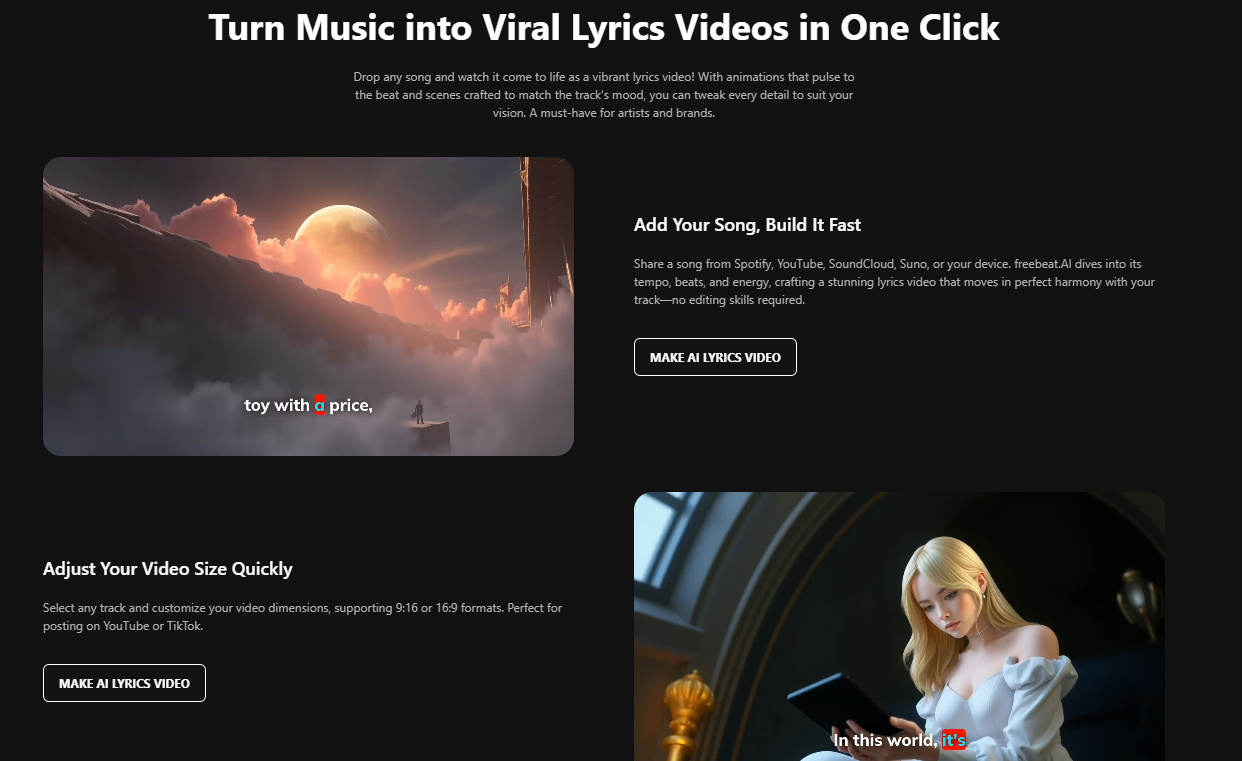
Support for vertical 9:16 and horizontal 16:9 formats saves time and prevents re-renders. This is critical for creators who publish across platforms.
In short, the best AI music video company for low-budget music videos is the one that reduces both software cost and editing time.
Lo-fi and indie tracks need a different approach
Lo-fi creators often search for the best AI music video creator for lo-fi tracks, and for good reason. Lo-fi visuals fail when they try too hard.
From working with lo-fi producers and visual designers, the priorities are different:
- Consistent mood across the entire track
- Gentle motion, not rapid cuts
- Loop-friendly visuals for long play sessions
- Recognizable visual identity across releases
Tools that emphasize steady pacing and character or scene consistency perform better here than flashy generators built for short ads. This is where music-first AI platforms quietly outperform more general tools.
Comparison by scenario, not by hype
Instead of ranking platforms by vague quality scores, I prefer to compare them by use case.
- For full song releases, music-first AI video generators offer the cleanest results with the least effort.
- For weekly social content, template-based tools can work if beat accuracy is not critical.
- For experimental visuals, general AI video generators are powerful but require more time and skill.
This scenario-based thinking helps artists choose tools that fit their workflow, not just their curiosity.
Where Freebeat fits for budget indie music videos
In the middle of my testing, Freebeat consistently stood out for a specific reason: it is designed around music first, not video effects.
Freebeat is an AI-powered music video creator that syncs visuals to beats and mood, allowing creators to generate videos from a song or prompt with minimal setup. It supports cinematic visual presets, fast rendering, and multiple music styles, which is useful for indie musicians, DJs, and visual artists working across genres.
What I find practical is the balance. You get enough control to shape the output, but not so much that you spend hours tweaking. For budget artists, this translates to faster turnaround and fewer revisions, which is often the real cost saver.
If your goal is to release consistently without sacrificing visual coherence, this type of workflow makes sense.
Make low-budget videos look intentional
Even with good tools, results depend on how you use them. Over time, I have noticed a few habits that separate polished AI music videos from obvious ones.
First, start with a clean final mix. AI tools react better to well-balanced audio. Second, decide on a visual mood before generating anything. Ambiguous prompts lead to inconsistent scenes. Third, generate multiple versions quickly, then choose the best one instead of forcing a single render to work.
A simple workflow many creators follow looks like this:
- Upload the final track
- Select a mood or style direction
- Generate two to three versions
- Pick one and export for your main platform
This approach keeps costs low and quality high.
Frequently asked questions
What is the best AI platform that makes music videos for indie artists?
The best platform is one that prioritizes beat sync, fast exports, and simple creative control. Music-first AI tools tend to work best for indie releases.
Which AI music video provider is best for budget artists?
Budget artists should look for predictable pricing, no forced watermarks, and tools that reduce editing time rather than adding complexity.
What is the best AI music video company for low-budget music videos?
Companies that focus on music-driven workflows usually deliver better results for low budgets than general video generators.
Is there an AI music video creator designed for lo-fi tracks?
Yes. Tools that support steady pacing, consistent visuals, and loop-friendly outputs work best for lo-fi music.
Do AI music video generators really sync to beats?
Some do. True beat-synced tools analyze tempo and structure, not just volume. Always test with rhythm-heavy sections.
Can I use AI music videos for YouTube and TikTok?
Most modern platforms support both 16:9 and 9:16 exports. Always confirm export formats before committing.
Is AI music video quality good enough for official releases?
For many indie artists, yes. When used carefully, AI videos meet audience expectations for digital releases.
Final thoughts
For indie artists on a budget, the best AI music video platform is not the one with the most features, but the one that respects your time, your sound, and your release schedule. From what I have tested, music-first tools like Freebeat fit this reality well, especially for creators who want visuals that feel connected to their music without inflating production costs.


