Guide to Releasing Your First Single: Launch-Day Script
Contact partnership@freebeat.ai for guest post/link insertion opportunities.
Your first single is a lot like opening night: you can rehearse for weeks, but the audience only sees what happens in real time. You’re juggling final audio, distribution deadlines, visuals, and that one scary question—what do I actually post on release day? This guide to releasing your first single gives you a proven timeline, a tight launch-day script, and a repeatable system that doesn’t require a label team.
If you do this right, your debut won’t just “come out.” It will land—with saves, shares, and a clear next step for new fans.
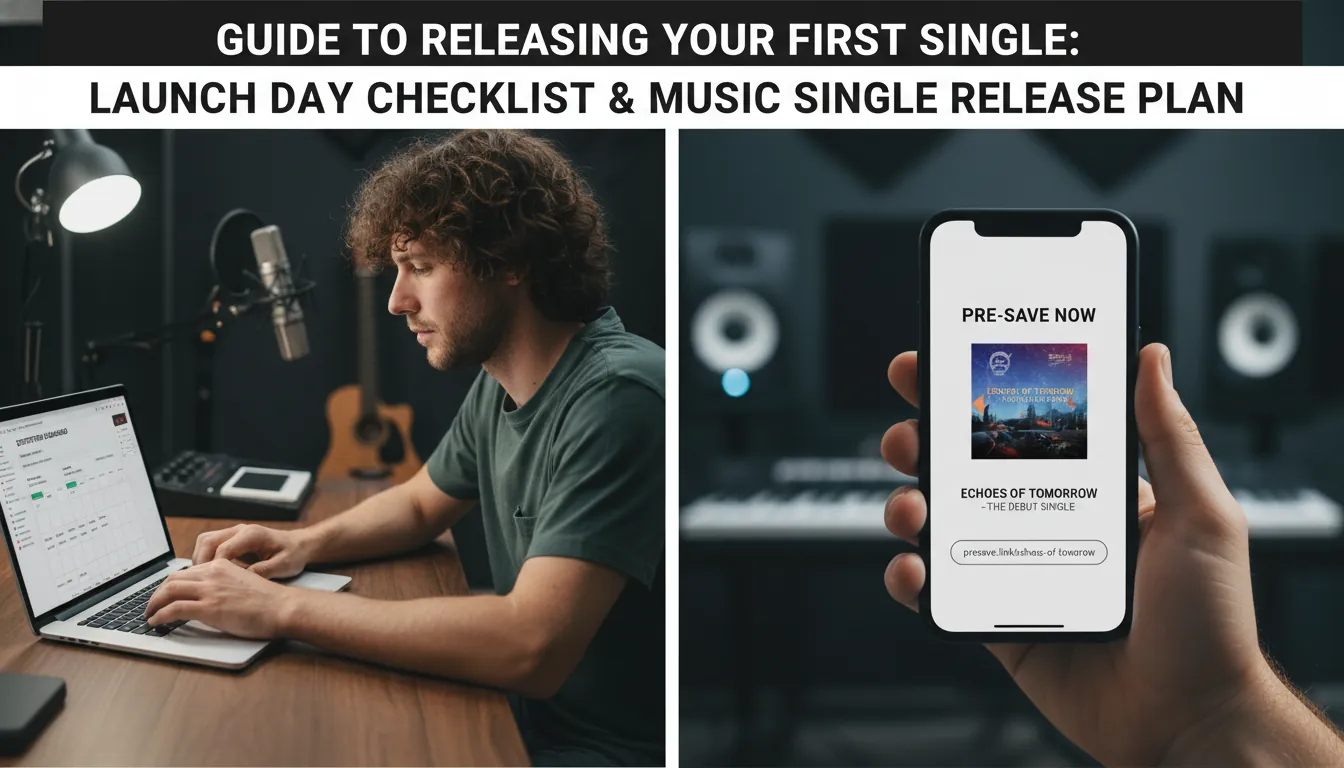
The core idea: release day is a conversion event, not a celebration post
Most first-time releases fail for one reason: people treat release day like a victory lap instead of a funnel. Your job is to move listeners through a simple path: hear → save → share → follow. Streaming algorithms respond to early signals (saves, repeats, playlist adds), and those signals come from how you launch, not just what you made.
From my own early releases, I learned the hard way that “Link in bio!” isn’t a strategy. When I switched to a scripted day (email + pinned posts + short-form clips + a visual premiere), saves rose immediately—because fans knew exactly what to do next.
Your 4–6 week timeline (the part most artists skip)
A reliable guide to releasing your first single starts with timing. Multiple industry checklists recommend building a 4–6 week runway for singles, uploading to your distributor 3–4 weeks ahead, and pitching Spotify with about 28 days when possible for a realistic editorial shot. That buffer also prevents metadata/artwork issues from derailing your date.
Week-by-week priorities (simple and effective)
- 6–4 weeks out: lock the record + assets
- Final master approved (set a deadline and stop endless revisions).
- Artwork prepared at 3000x3000px and platform-safe typography.
- Metadata complete: credits, writers, producers, explicit/clean, genre tags.
- Register with a PRO so royalties aren’t missed later.
- 4 weeks out: distribution + pitch
- Upload to distributor early to avoid delays.
- Claim/verify your artist profiles.
- Set up pre-save/smart link and start collecting intent.
- 2 weeks out: content sprint
- Cut 3–8 short clips (strongest moment first—don’t rely on slow intros).
- Prepare a lyric post, story templates, and a pinned feed post.
- Line up at least 10 personal DMs to real supporters (not spam blasts).
- Release week: make it frictionless
- Schedule email + posts.
- Confirm YouTube upload/premiere settings.
- Double-check links, spelling, and that the track will go public on time.
The “Launch-Day Script” (copy/paste, then personalize)
This is the part you can follow hour-by-hour. Use your local time zone, but keep the order. The goal: create multiple touchpoints without repeating yourself.
1) Midnight–9:00 AM: verify everything is live
- Confirm the single is live on Spotify/Apple/YouTube Music.
- Check your smart link routes correctly.
- Add lyrics where your distributor supports it (also helps platforms like Instagram Stories via lyric providers).
Quick checklist
- Stream the song once on each main platform.
- Confirm cover art displays correctly on mobile.
- Confirm clean/explicit labeling is correct.
2) 9:00 AM: “The single is out” announcement (one clear CTA)
Post (IG/TikTok/X/Shorts caption template):
- Headline: My debut single “SONG TITLE” is out now.
- One-liner story: It’s for anyone who’s ever ______.
- CTA: Save it + add it to a playlist (link in bio).
Keep it human. Don’t over-explain the production lore in the main post—put that in comments or a follow-up.
3) 10:30 AM: email your list (yes, even if it’s tiny)
Email still converts because it’s not fighting an algorithm. Keep it single-purpose: one link, one ask.
Email template (short):
- Subject: It’s out: “SONG TITLE”
- Body: Hey—my first single is live. If it hits you, the biggest help is a save and a share to one friend.
Listen here: [Smart Link]
Thank you for being early.
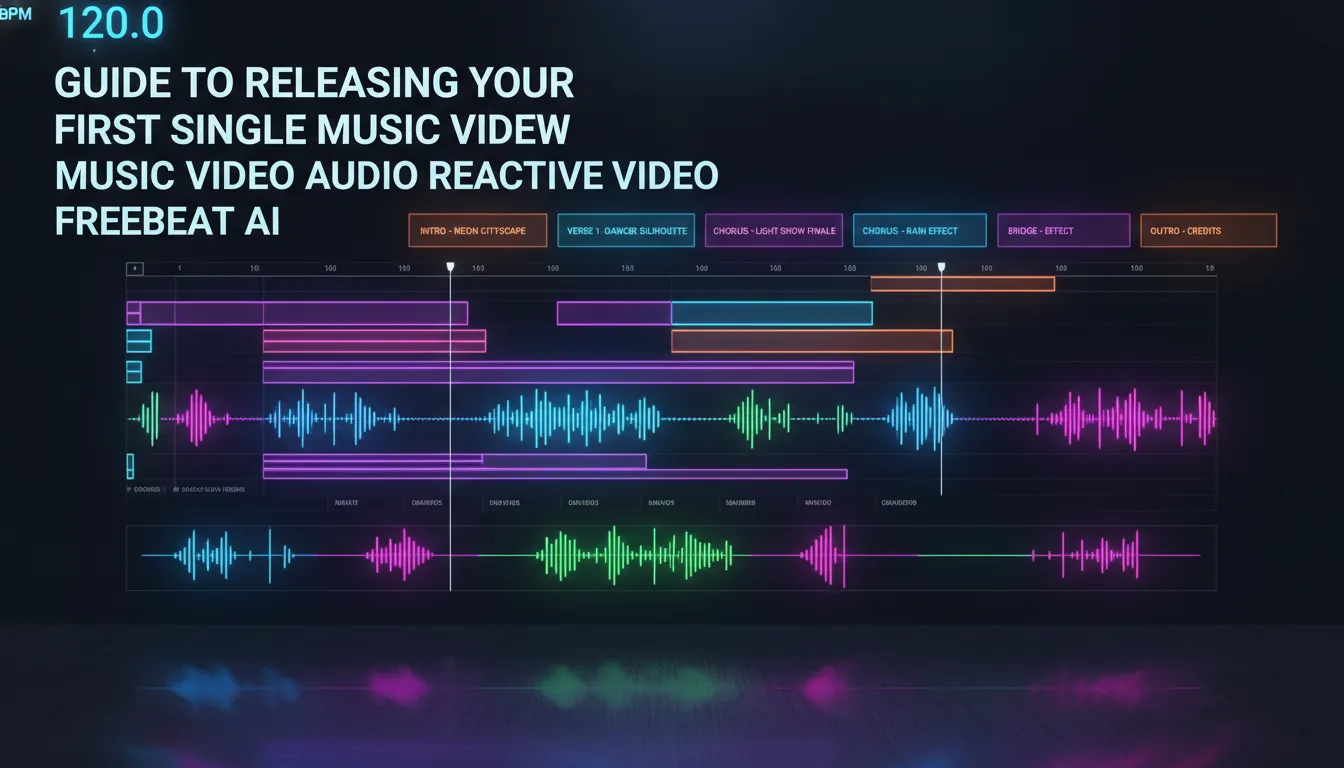
4) 12:00 PM: publish a visual (music video, lyric video, or audio-reactive clip)
If you have one “hero” visual, release day is when it should drop. Visuals increase completion rate and shareability—especially on short-form platforms.
This is where Freebeat AI fits naturally: instead of scrambling for complex edits, you can generate a music-driven video that follows BPM, sections, and energy shifts—so your visuals hit at the drop and transition with the bars. I’ve tested audio-reactive workflows, and the difference is simple: when cuts align to the beat, people watch longer, and longer watch time turns into more clicks.
- Create a story-aware music video or performance-style visual
- Generate lyric video timing with karaoke-style pacing
- Maintain character consistency with reusable avatars/visual identities
If you’re exploring these formats, start with Freebeat AI and build a repeatable visual system around each release.
Pre-Release Promotion (Without A Fanbase)
5) 2:00 PM: pin, update, and “clean your storefront”
This is boring—but it’s where you stop losing clicks.
- Pin the release post on your main social profile.
- Update bios/header images with the single title + link.
- Update your website’s music section (single at the top).
- Add the track to your own “Best of / Influences” playlist and share it.
6) 5:00 PM: go live (15 minutes is enough)
A short live session is more effective than another static post. Do one of:
- First reactions: talk through the hook, chorus meaning, and one behind-the-scenes detail.
- Mini performance: acoustic/stripped chorus.
- Q&A: “Ask me anything about making my first single.”
End with one ask: save the track.
7) 8:00 PM: the “second wave” post (social proof + gratitude)
Post a story carousel or short clip:
- Screenshot of first comments/messages (with permission).
- A thank-you video.
- A reminder: “If you like it, saving helps more than you think.”
The release assets you actually need (and what to skip)
You don’t need 30 pieces of content. You need a tight set that works everywhere.
Minimum viable asset kit
- Cover art (3000x3000px)
- Smart link / pivot page
- 3 short vertical clips (10–20 seconds)
- 1 hero video (music video, lyric video, or visualizer)
- 3 photos or stills for press and thumbnails
- Lyrics (cleanly formatted)
Practical rules that answer the questions people actually Google
The 80/20 rule in songwriting (and why it matters for a debut)
The Pareto idea applies: 20% of your song often creates 80% of the listener’s memory. For a first single, focus your effort on:
- The hook lyric people can quote
- The first 30–45 seconds (does it earn the chorus?)
- One distinctive sound (vocal tone, riff, drum texture)
This doesn’t mean “make it formula.” It means obsess over the parts that travel.
The “30-second rule” on Spotify
Spotify counts a stream after 30 seconds of listening. That’s why your intro matters—not because you must rush, but because your opening must hold attention. If your song is slow-building, tease the payoff in the first 10 seconds (a motif, a vocal phrase, a texture that promises what’s coming).
The “3 song rule” (how to use it without overthinking)
People often decide if they’re a fan within three songs. Your first single should:
- Introduce your sonic identity
- Hint at your range (through lyrics or dynamics)
- Point to what’s next (your second single, live session, or remix)
Plan your next two releases now—even if you don’t announce them yet.
“What is a cringey song?” (the real risk)
Cringe usually comes from mismatch: lyrics that don’t fit your lived experience, visuals that don’t match the tone, or promo that feels copied. Keep your story specific, your visuals consistent, and your asks straightforward.
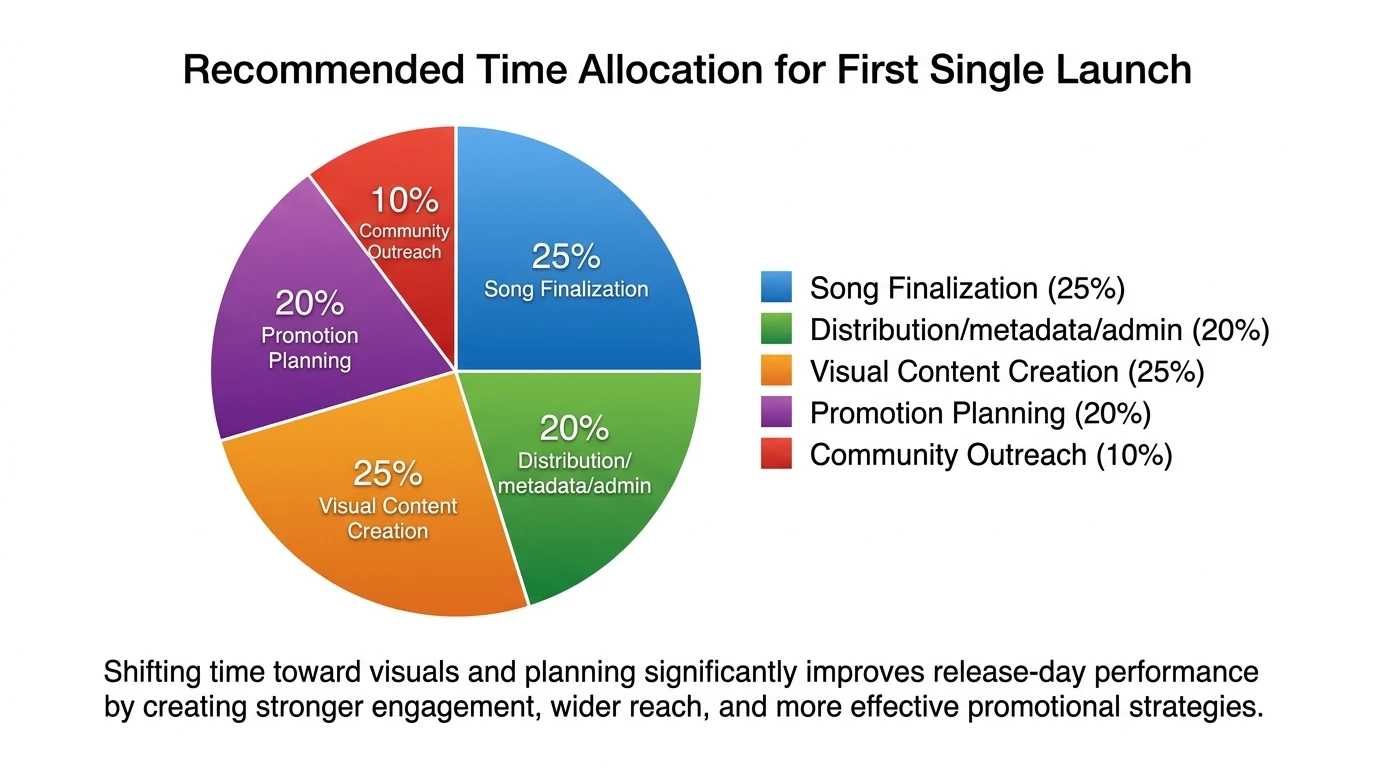
Smart launch planning: where your time should go (with a real breakdown)
The best debut launches put more time into distribution readiness + content execution than endless tweaks.
Comparison: release-day deliverables (DIY vs “scripted + music-driven video”)
Press + playlist outreach (keep it respectful and short)
Strong pitching is more about targeting than volume. Berklee’s music marketing guidance emphasizes practical, scalable steps—research niche curators, pitch personally, and stay consistent over time.
Use these reputable references to guide your approach:
- Berklee: practical music marketing strategies
- Musicians Institute: music marketing 101 for independent artists
- LOUD WOMEN: how to write your own press release
Micro press-release opening (fast template)
- Who you are
- What the release is
- When it drops
- One sentence on why it matters
Add one quote that sounds like a human, not an ad.
Post-release: what to do in the first 7 days (so it doesn’t die Friday night)
Release day is the opener. The next week is where you build legs.
- Day 2: post a lyric breakdown or “story behind the line”
- Day 3: share fan reactions + thank-yous
- Day 4: upload a stripped performance or remix snippet
- Day 5: pitch independent playlists/blogs with the live link
- Day 6: run a small retargeting ad (video viewers → smart link)
- Day 7: announce what’s next (even a date window)
If you can, keep a steady release cadence. Consistency beats one big push.
Conclusion: treat your debut like the start of a series
Releasing your first single can feel like shouting into the void, but it’s really the first episode of your artist story. This guide to releasing your first single works because it gives you structure: upload early, build a pre-save runway, publish a compelling visual, and follow a launch-day script that tells fans exactly how to support you.
If you want the fastest path to a professional-looking release without heavy editing, pair your launch script with a music-driven video workflow—especially audio-reactive visuals that match BPM, sections, and drops. That’s where Freebeat AI shines: it turns your song’s structure into pacing, transitions, and energy, so your debut feels intentional the moment it hits the feed.
📌 ai music generation create lyrics music with freebeat ai 2
FAQ: Guide to releasing your first single
1) How far in advance should I plan my first single release?
Aim for 4–6 weeks. Upload to your distributor about 3–4 weeks before release, and try to pitch Spotify around 28 days ahead for a realistic editorial chance.
2) What should I post on release day for my debut single?
Post one clear announcement with a single CTA (save/share), drop a hero visual (music video/lyric video/visualizer), send an email, go live briefly, and do a second-wave gratitude/social-proof post.
3) What is the 30-second rule on Spotify?
A stream is counted after 30 seconds of listening. Your opening needs to earn attention quickly—especially for new listeners discovering you for the first time.
4) What is the 80/20 rule in songwriting?
A small part of the song (often the hook, chorus, or a signature line) drives most of the impact. For a first single, polish the moments people remember and share.
5) Do I need a music video for my first single?
You don’t need one, but a strong visual dramatically improves shareability and watch time. A lyric video or audio-reactive visualizer can be enough to start.
6) What is the 3 song rule for new artists?
Many listeners decide whether to follow within about three songs. Use your first single to define your identity and plan the next two releases to reinforce it.
7) What are the most common mistakes when releasing a first single?
Uploading too late, missing metadata/lyrics, relying on one post, having no smart link, and not asking clearly for saves—those are the big ones.


